The words you'll hear most
- Phoneme: a single sound in a word. "Cat" has three: c-a-t. "Ship" also has three: sh-i-p.
- Grapheme: how a sound is written. The sound in "rain" can be written ai, ay (play) or a-e (cake): three graphemes for one sound.
- Digraph: two letters that make one sound, such as sh, ch, th, ee, oa and ai.
- Trigraph: three letters that make one sound, such as igh (night), air (chair) and ear (hear).
- Split digraph: two letters that work together with another letter in between, such as a-e (make), i-e (bike) and o-e (home). Some schools call it "magic e"; the e isn't silent so much as changing the vowel.
- Blending: saying each sound and running them together to read a word: m-a-t, mat.
- Segmenting: splitting a word into its sounds to spell it: "frog" is f-r-o-g.
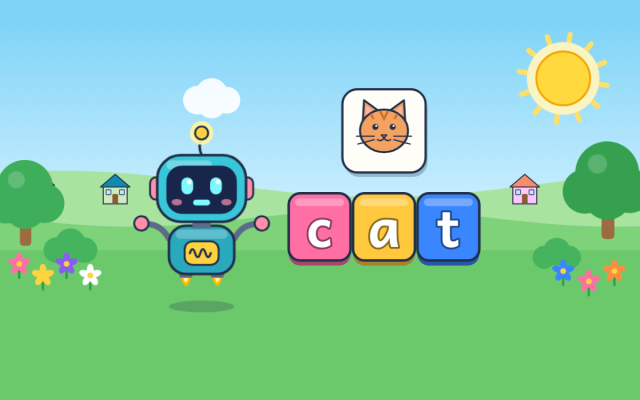
Letter Sounds and Blending: Read Words with Bip the Robot
Learn letter sounds and blending: match letters to sounds, hear first sounds and push sounds together to read…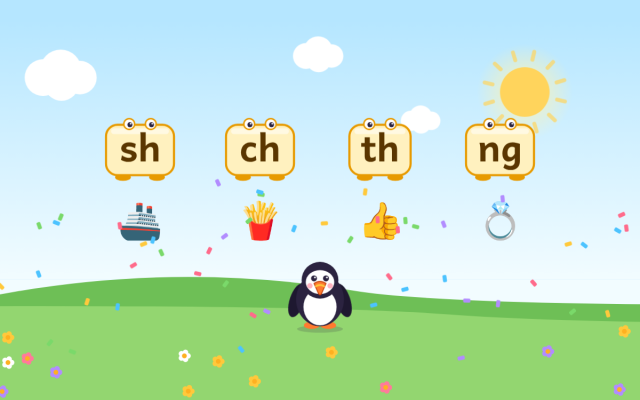
Phonics Digraphs: Two Letters, One Sound with Pip
Learn phonics digraphs such as sh, ch, ai and igh. Drag letters into teams, tap sound buttons and blend words…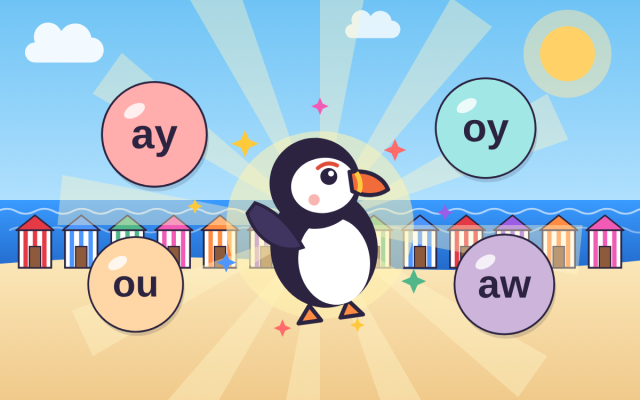
Digraphs and Trigraphs: A Letter Teams Island Adventure
Learn digraphs and trigraphs like ay, oy, ir and are, plus split digraphs, by joining letter teams, popping s…More words from the classroom
- Pure sounds: saying sounds without an extra "uh": "mmm", not "muh". It makes blending much easier.
- Sound buttons: dots and dashes under a word, one for each sound. A dash goes under a digraph or trigraph.
- Tricky words, or common exception words: words with an unusual spelling that children learn by sight, such as "the", "said", "was" and "people". Some become decodable later, once children learn the sounds.
- Alien words, or pseudo-words: made-up words, such as "blim" or "strom", used in the Year 1 phonics check to see if children can really decode rather than remember.
- Decodable books: reading books that only use sounds your child has learned so far.
- CVC words: short words with a consonant, a vowel and a consonant, such as cat, pin and dog. Usually the first words children read.
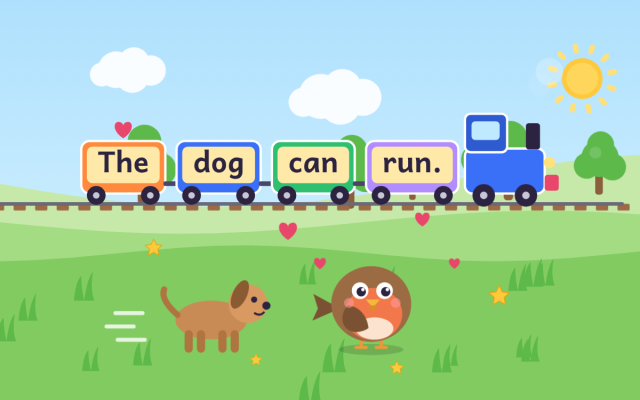
Tricky Words for Reception: Read with Pip the Robin
Learn to read the tricky words the, I, to, no and go, spot the tricky part of each, then read sentences and a…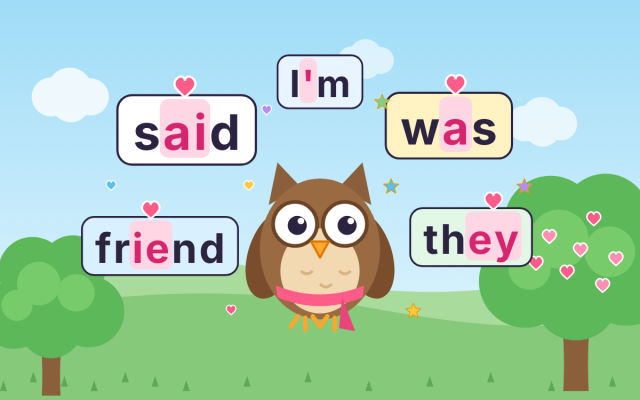
Year 1 Tricky Words: Heart Words and Days of the Week
Learn to read and spell Year 1 tricky words and the days of the week, find each word's tricky part and read I…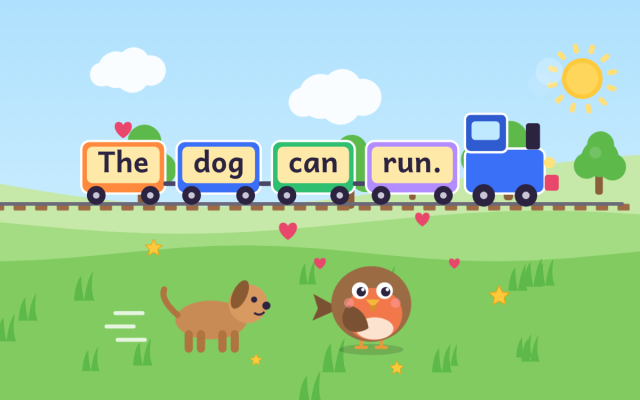
Year 2 Common Exception Words: An Island Word Hunt
Learn to read and spell the Year 2 common exception words by spotting each tricky part, waking silent letters…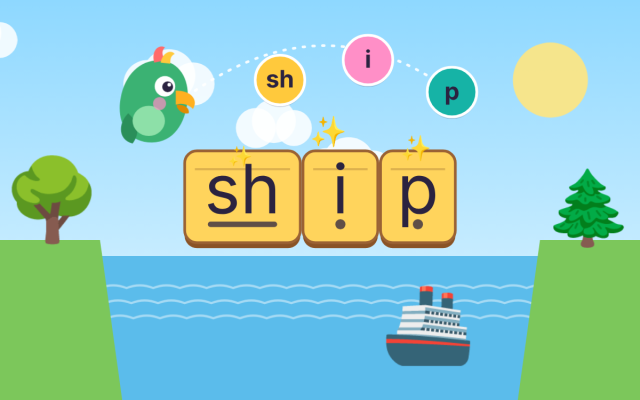
Year 2 Phonics: Blend, Read and Spell on Word Island
Learn Year 2 phonics: blend new words, try alternative sounds, read long words and suffixes, and spell with n…Why the words matter
Schools in England use a systematic synthetic phonics programme, and each programme teaches the sounds in its own order. When you use the same words as the teacher, and say sounds the same way, your child doesn't have to translate between home and school. If you're not sure how the school says a sound, ask: many schools share short videos.
How you can help
- When your child gets stuck on a word, ask "What sounds can you see?" before telling them.
- Spot digraphs on signs and packets: "Can you find 'sh' on that sign?"
- Write a few tricky words on sticky notes and swap them around each week.
 TapLearn