Ate, ise and ify suffixes worksheet for Year 5: Making verbs
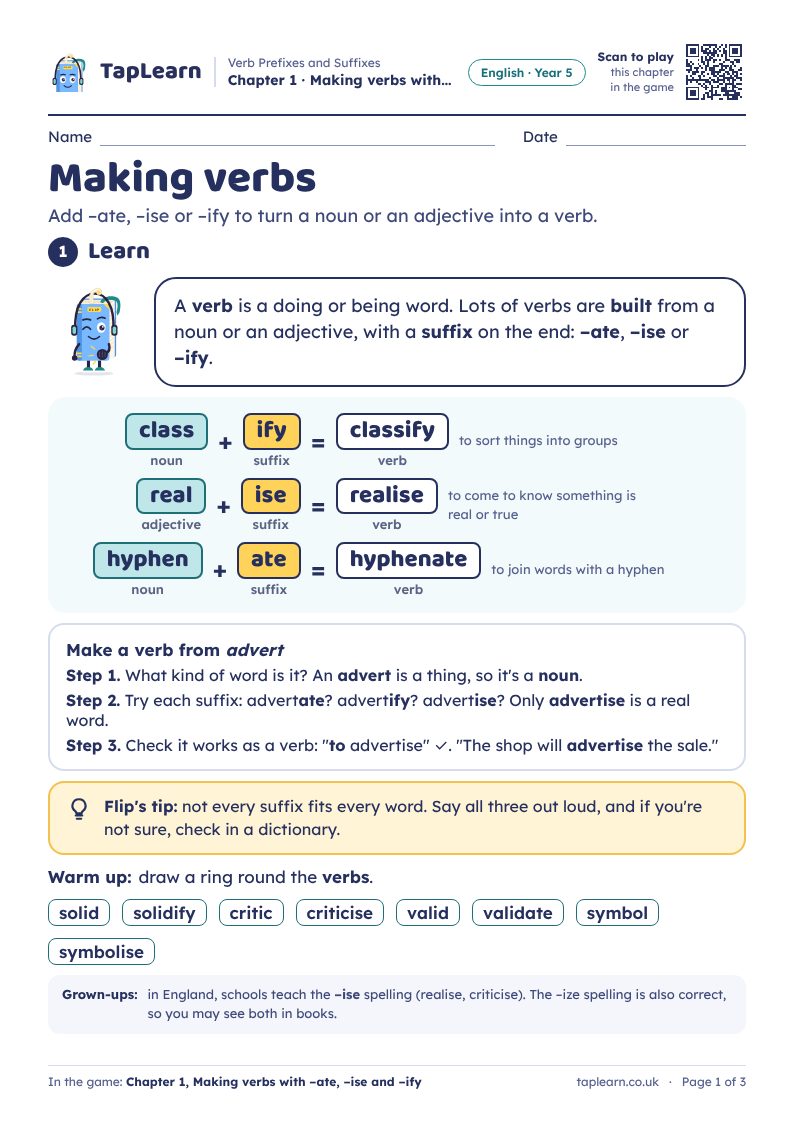
Making Verbs is a printable ate, ise and ify suffixes worksheet for Year 5 (ages 9 to 10) that teaches children to turn a noun or adjective into a verb, like class into classify and real into realise, and to check the new word is real. It covers the Year 5 statement on converting nouns or adjectives into verbs using suffixes.
Free to print, no account needed.
Print it on A4, in colour or black and white. Do it after the chapter, or before it to see what your child already knows.
What's on the worksheet
Your child turns nouns and adjectives into verbs with the suffixes –ate, –ise and –ify, and checks the new word is a real verb. Includes a verb hunt on packets and leaflets and an answers sheet.
- Page 1 · Learn
- How a noun or adjective plus a suffix makes a verb (classify, realise, hyphenate), a worked example making a verb from advert, Flip's tip to say all three aloud, and a ring-the-verbs warm-up.
- Page 2 · Try it together
- Verb hunt: search packets, instructions and leaflets for verbs ending in –ate, –ise or –ify, write where you found each, then cover the suffix to find the noun or adjective inside.
- Page 3 · Practise
- Tick the suffix that makes a real verb, make verbs to finish sentences, correct verbs like equalify, make verbs from symbol and electric, and a challenge about hyphen.
- Answers sheet
- Every answer, mix-ups like using the noun where a verb is needed, and suffix ping-pong and which-suffix ideas.
3 A4 pages and an answers sheet · about 25 minutes
Using it at home
- Schools in England teach the –ise spelling (realise, criticise). The –ize spelling is also correct, so you may see both in books.
- In the verb hunt, some –ate verbs have no English word inside, like create or debate. Write them in anyway and talk about it.
- Say a noun or adjective (pure, standard, hospital) and your child says the verb (purify, standardise, hospitalise).
Watch out for
- Using a suffix that doesn't make a real word, like equalify or classate.
- Say all three out loud: usually only one sounds right. Then check in a dictionary.
- Using the noun or adjective where a verb is needed, like "they will advert it".
- Ask, "What is the action? Can you put to in front?"
Questions from the worksheet
- Tick the suffix that makes a real verb, –ate, –ise or –ify. Then write the verb: equal, solid, origin, fossil, humid.
- Make a verb from the word in brackets to finish each sentence: The scientists will ___ the rocks by their colour. (class)
- Is the word in bold right? Tick it, or cross it out and write the correct verb: We need to equalify the two teams. Can you classate these shapes?
- Ava writes: "Remember to hyphen the two words." She says hyphen and hyphenate mean the same, so either is fine. Is she right? Explain.
The answers are on the answers sheet, for grown-ups.
National curriculum in England
This worksheet practises this statement from the Year 5 english programme of study:
- Word: converting nouns or adjectives into verbs using suffixes
In the classroom
- Play suffix ping-pong as a starter: call a root word and pupils write the verb on mini whiteboards.
- Use the verb hunt with a set of leaflets or non-fiction books in groups.
Questions and answers
How do you turn a noun into a verb?
Add a suffix such as –ate, –ise or –ify, then check it's a real word: class becomes classify, advert becomes advertise and hyphen becomes hyphenate.
Which suffixes make verbs in Year 5?
Year 5 children use –ate, –ise and –ify to make verbs from nouns and adjectives, as in activate, realise and solidify.
Is it -ise or -ize?
Both are correct. Schools in England usually teach –ise (realise, criticise), but you may see –ize in some books.
 TapLearn