What you'll learn
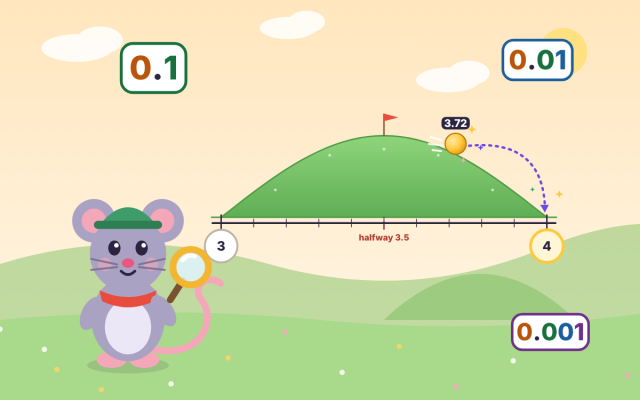
- The value of each digit in numbers like 6.374, including thousandths
- Why placeholder zeros matter, as in 3.405
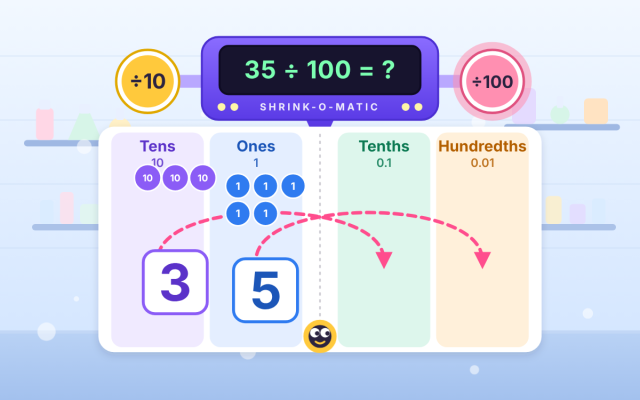
- Multiplying and dividing by 10, 100 and 1,000 by moving digits
- Multiplying decimals like 0.8 and 2.45 by whole numbers
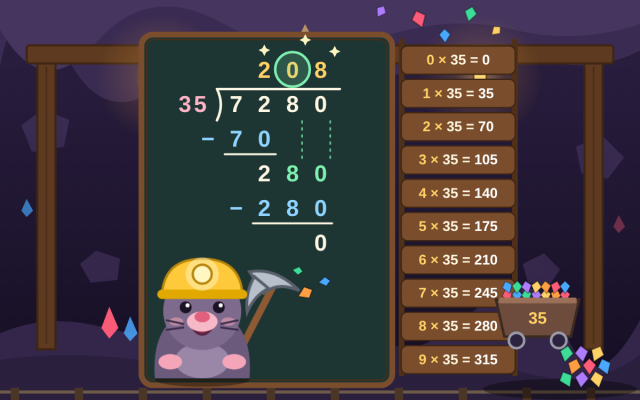
- Using short division to get answers like 7 ÷ 4 = 1.75
- Estimating to check whether a decimal answer makes sense
Chapter by chapter
- Value of each digit in numbers to 3 decimal places Free to try
Year 6 maths · 1
- Multiplying decimals by 10, 100 and 1,000
Year 6 maths · 1
- Dividing by 10, 100 and 1,000 to 3 decimal places
Year 6 maths · 1
- Multiplying decimals like 0.8 and 2.45 by whole numbers
Year 6 maths · 2
- Dividing with answers up to 2 decimal places
Year 6 maths · 3
- Decimals challenge: 12 mixed questions (12 questions)
See every Maths chapter in the chapter library
What the chapters cover in the national curriculum in England:
- Year 6 maths: Identify the value of each digit in numbers given to 3 decimal places and multiply and divide numbers by 10, 100 and 1,000 giving answers up to 3 decimal places
- Year 6 maths: Multiply one-digit numbers with up to 2 decimal places by whole numbers
- Year 6 maths: Use written division methods in cases where the answer has up to 2 decimal places
About this adventure
Year 6 Decimals is an interactive maths game that teaches children aged 10–11 the value of each digit to three decimal places and how to multiply and divide with decimals.
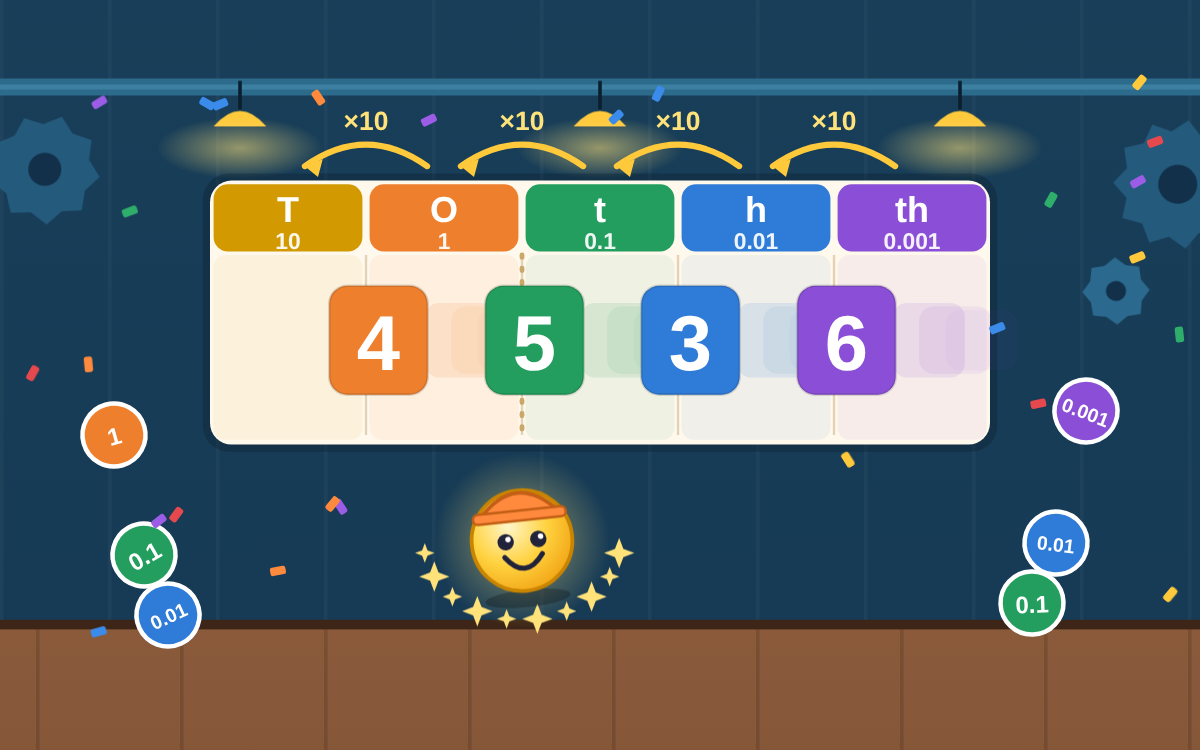
Players join Dot, a decimal point in a hard hat who never moves. They pull levers to slide digits across a place value chart, watch placeholder zeros pop in, and exchange 10 tenths for 1 one using counters. They practise the column method for questions like 2.45 × 4 and short division (the bus stop method) for questions like 7.35 ÷ 5.
The game also tackles mistakes children often make, such as "just add a zero" when multiplying by 10, or writing 13 ÷ 4 as 3.1 instead of 3.25. A wrong answer gets a hint about that exact mistake, and each chapter ends with a recap and a fun fact. A 12-question challenge tests everything at the end.
Questions and answers
How do you multiply a decimal by 10, 100 or 1,000?
Move every digit one, two or three places to the left, one place for each zero. For example, 0.38 × 100 = 38. The decimal point stays where it is, and zeros fill any empty places up to the ones column.
Why is "just add a zero" wrong when multiplying decimals by 10?
Adding a zero to the end of a decimal does not change its value, so 3.2 would become 3.20, which is the same number. Multiplying by 10 makes every digit worth ten times more, so 3.2 × 10 = 32.
How do you divide and get a decimal answer instead of a remainder?
Keep dividing past the decimal point by writing zeros after it. For 7 ÷ 4, 4 goes into 7 once with 3 left over. Then 30 tenths ÷ 4 = 7 r 2, and 20 hundredths ÷ 4 = 5, so the answer is 1.75.
What age is this decimals game for?
It is written for children aged 10 to 11, which is Year 6 in England. It follows the Year 6 national curriculum for decimals. Two optional warm-ups recap thousandths and short division for children who need a reminder first.
What does the game include and how long does it take?
It has five chapters, two optional warm-ups and a 12-question final challenge, and takes about 50 minutes to play through. Children can choose any chapter from the map, and each one works on its own, so it can be played in short sessions.

 TapLearn