What you'll learn
- Read the common exception words the, I, to, no and go
- Spot the tricky part of a word that doesn't sound out
- Know that t and h join to make the digraph 'th'
- Hear how the letter o says 'oh' in go but 'oo' in to
- Read simple sentences aloud, pointing to each word from left to right
- Read a short book that mixes decodable and tricky words
Chapter by chapter
- Tricky words: reading 'the' and 'I' Free to try
Reception english · 1
- Tricky words: reading 'to', 'no' and 'go'
Reception english · 1
- Spot the tricky part in common exception words
Reception english · 1
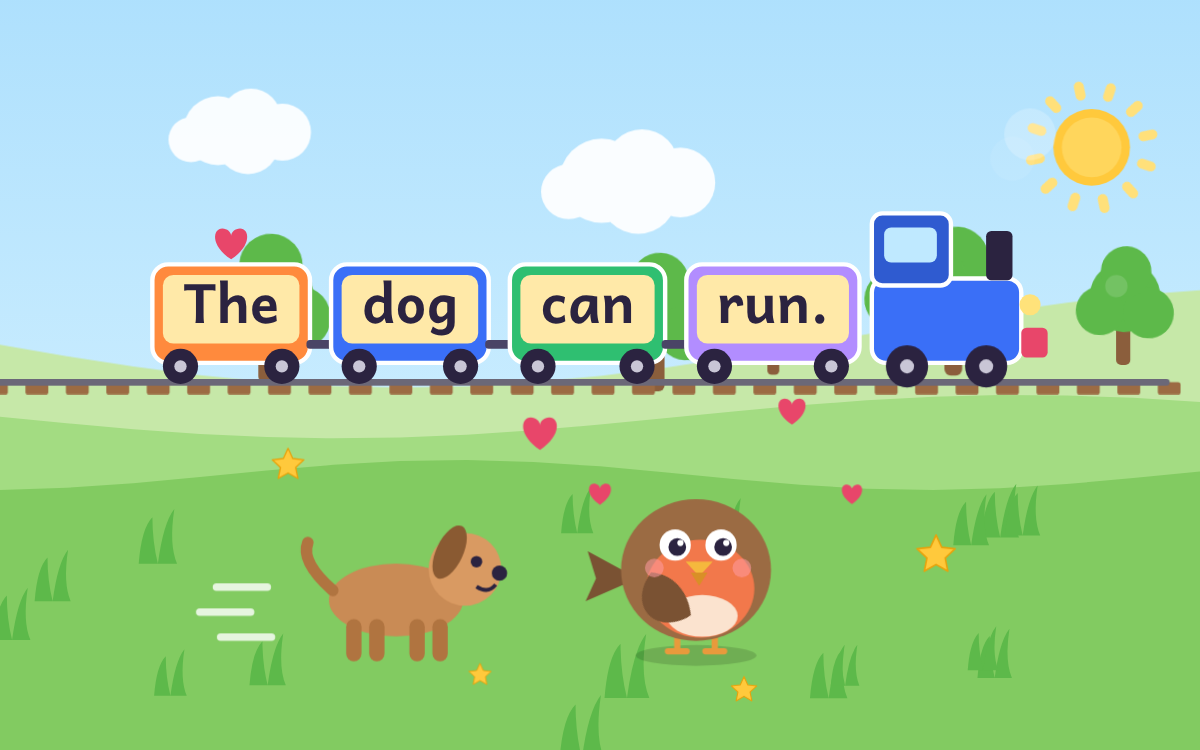
- Read aloud simple sentences with tricky words
Reception english · 2
- Read aloud a little book with tricky words
Reception english · 2 Reception english · 1
- Star Hill: tricky words challenge (8 questions)
See every English chapter in the chapter library
What the chapters cover in the national curriculum in England:
- Reception english: Read a few common exception words matched to the school's phonic programme
- Reception english: Read aloud simple sentences and books that are consistent with their phonic knowledge, including some common exception words
About this adventure
Tricky Words for Reception is an interactive phonics game that teaches children aged 4–5 to read the common exception words the, I, to, no and go. Tricky words are everyday words with a part that does not sound out the usual way, so children learn that part by heart.
Guided by Pip the robin, children see each word with sound buttons: a dot under each part that sounds out as normal and a heart under the tricky part. They discover that t and h join to make 'th', that the e in 'the' says 'uh', and that the o in 'no' and 'go' says its name.
Children then read short sentences and a little book aloud, tapping each word from left to right. Every line is spoken with captions, and the game works on phones, tablets and computers.
Questions and answers
What are tricky words in phonics?
Tricky words are common words with a part that does not sound out the way children expect from their phonics. Children learn that tricky part by heart so they can read the whole word quickly.
Why is 'the' a tricky word?
'The' is tricky because its e says 'uh' rather than the 'e' sound in 'bed'. The t and h also join to make one sound, 'th', so sounding it out letter by letter gives 't-h-e' instead of the real word.
Which tricky words do children learn in Reception?
Most children start Reception with tricky words such as the, I, to, no and go, then add more during the year. The exact list and order depend on the school's phonics programme, such as Little Wandle.
What age is this tricky words game for?
The game is made for children aged 4–5 in Reception and follows the EYFS early reading goals. Children in Year 1 who still find these words hard can also use it to practise.
What does the tricky words game include and how long does it take?
The game has five chapters and a final eight-question challenge, which take about 35 minutes to play in full. Every instruction is spoken aloud, and children can choose any chapter from the map and play it on its own.
 TapLearn