TapLearn
Learning gameYear 2 · Start for free
Tricky Vowel Spellings: A Year 2 Island Adventure
Learning gameYear 2 · Start for free

Tricky Vowel Spellings: A Year 2 Island Adventure

Learn the tricky vowel spellings in cry, ball, mother, key, was, word and warm by exploring an island, fixing mistakes and building words.

Online game, chapter 1 free · Year 2 (KS1) · ages 6–8 · national curriculum in England · no adverts · plays on a phone, tablet or computer · no sign-up to start.

Play the game

300+ learning games · Reception to Year 6
At a glance

An online English game for Year 2 (KS1). It covers the national curriculum in England, Year 2 english: “The /aɪ/ sound spelt –y at the end of words”, and 6 more statements listed under the chapters.

7 short chapters, about 35 minutes in all. Children can stop after any chapter.

Start playing for free. Plays in the browser on phones, tablets and computers: no app, no adverts.

Free for teachers: every chapter on the whiteboard with a free teacher account.

Last updated · Checked against the national curriculum in England by the TapLearn team

What you'll learn

  • Why y, not i, spells the igh sound at the end of cry
  • How a before l or ll says or, as in ball and talk
  • Spotting the o that says u in mother, brother and Monday
  • Spelling words ending in ey, like donkey, and adding s for donkeys
  • How w changes the vowel in was, word and warm
  • Telling worm and warm apart by their or and ar spellings

Chapter by chapter

  1. y says igh at the end of words: cry, fly Start playing for free

    Year 2 english · 1

  2. a before l and ll says or: ball, talk

    Year 2 english · 2

  3. o says u: mother, brother, Monday

    Year 2 english · 3

  4. ey says ee at the end: key, donkey

    Year 2 english · 4

  5. a after w and qu says o: was, swan, squash

    Year 2 english · 5

  6. or after w says ur: word, worm

    Year 2 english · 6

  7. ar after w says or: war, warm

    Year 2 english · 7 Year 2 english · 6

  8. Tricky vowels challenge: all seven spellings (14 questions)

See every English chapter in the chapter library

What the chapters cover in the national curriculum in England:

  1. Year 2 english: The /aɪ/ sound spelt –y at the end of words
  2. Year 2 english: The /ɔ:/ sound spelt a before l and ll
  3. Year 2 english: The /ʌ/ sound spelt o
  4. Year 2 english: The /i:/ sound spelt –ey
  5. Year 2 english: The /ɒ/ sound spelt a after w and qu
  6. Year 2 english: The /ɜ:/ sound spelt or after w
  7. Year 2 english: The /ɔ:/ sound spelt ar after w

About this adventure

Tricky Vowel Spellings is an interactive game for children aged 6–8. It teaches the seven Year 2 vowel sounds that are spelt in less common ways, such as y in cry, a in ball and ar in warm.

Children explore an island with Echo the parrot and visit one place for each spelling pattern. In each place they tap pictures to hear words, build word families like ball, call and tall, and fill gaps with the right letters. Then they spot and fix a misspelt word in a sentence. The wrong choices are the real mistakes children make, like 'cri' or 'wurm', so they learn why the correct grapheme (the letters that spell a sound) is right.

A short, skippable sound warm-up comes first. A mixed challenge at the end checks all seven patterns. Every word is read aloud.

Questions and answers

Why do words like cry and fly end in y instead of i?

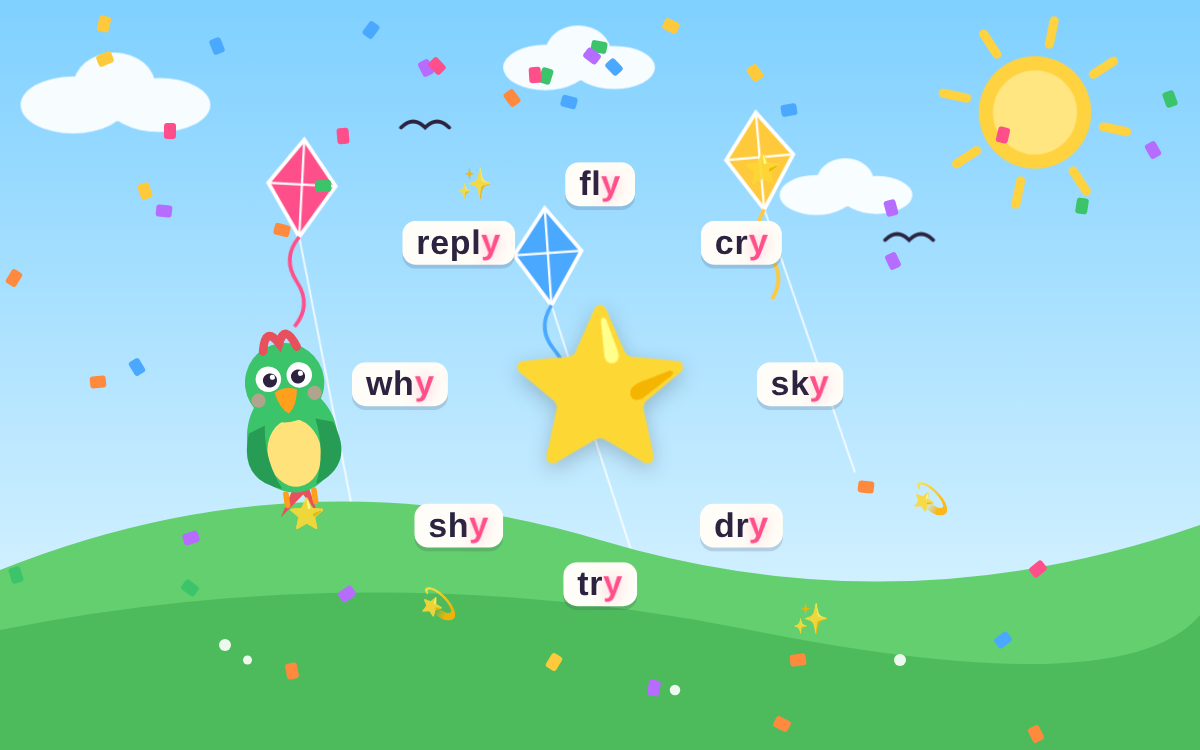
English words hardly ever end in the letter i, so y spells the igh sound at the end of a word instead. That is why we write cry, fly, sky, dry and July.

Why is was spelt with an a when it sounds like o?

After w and qu, the short o sound (as in hot) is often spelt with an a. That is why we write was, want, watch, swan and squash. Saying w rounds your lips, which changes how the a sounds.

What is the difference between worm and warm in spelling?

After w, the letters or usually say ur, as in worm, word and work. The letters ar usually say or, as in warm, war and towards. Children often mix these two patterns up.

What age is this tricky vowel spelling game for?

It is made for children aged 6–7 in Year 2 (Key Stage 1), following the English national curriculum. It also works as revision for 8-year-olds who still mix up these spellings.

What does the game include and how long does it take?

There are seven short chapters, one for each spelling pattern, plus an optional sound warm-up and a 14-question final challenge. Playing everything takes about 35 minutes, and children can stop after any chapter.

More to explore

See all