Learn when to change y to i, drop the e or double the last letter before adding suffixes, by running the machines in Cog the robot's Ending Factory.
Online game, chapter 1 free · Year 2 (KS1) · ages 6–8 · national curriculum in England · no adverts · plays on a phone, tablet or computer · no sign-up to start.
An online English game for Year 2 (KS1). It covers the national curriculum in England, Year 2 english: “Adding –es to nouns and verbs ending in –y”, and 3 more statements listed under the chapters.
5 short chapters, about 35 minutes in all. Children can stop after any chapter.
Start playing for free. Plays in the browser on phones, tablets and computers: no app, no adverts.
Free for teachers: every chapter on the whiteboard with a free teacher account.
Last updated · Checked against the national curriculum in England by the TapLearn team
What you'll learn
Change y to i before adding –es: flies, babies, cries
Change y to i before –ed, –er and –est: cried, happier
Keep the y before –ing so you never write ii: crying
Drop the final e before –ing, –ed, –er, –est and –y
Double the last consonant after a short vowel: hopping, sadder
Choose which suffix rule a root word needs
Chapter by chapter
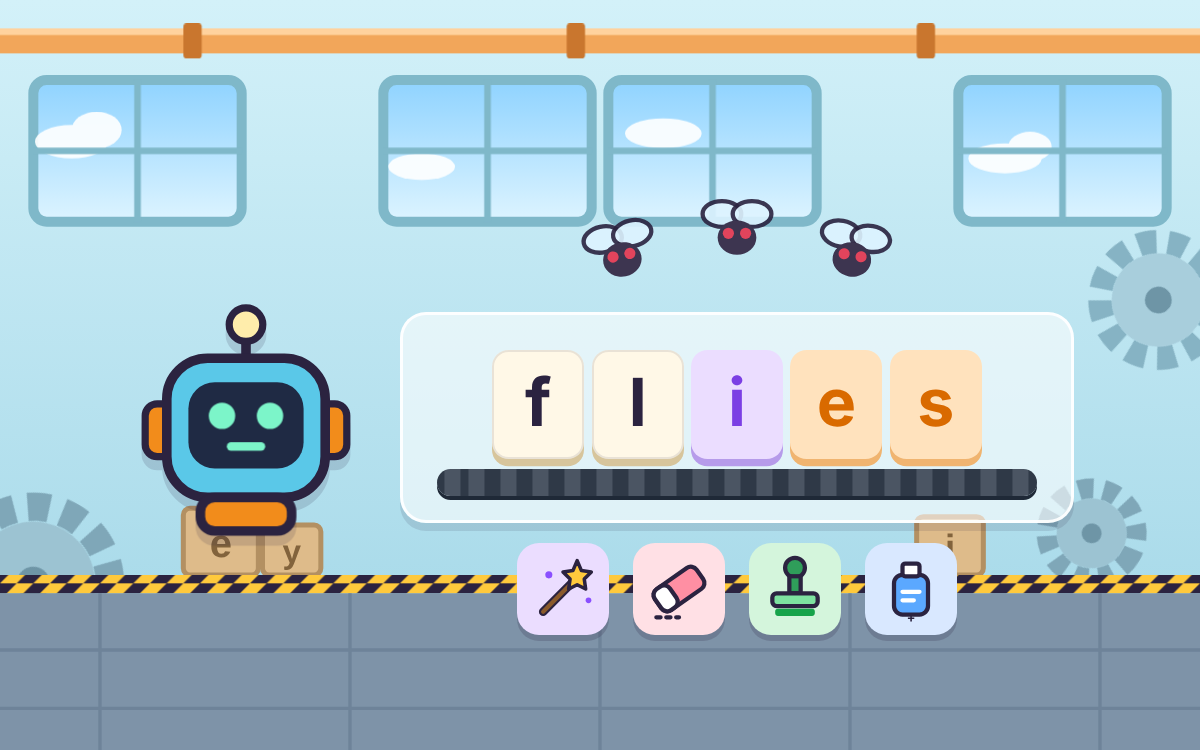
Change y to i and add –es: fly → flies, cry → criesStart playing for free
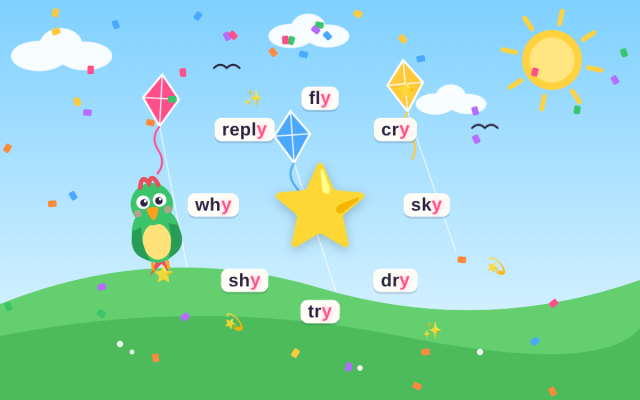
Learn to add –es to nouns and verbs ending in y by changing the y to i first, by zapping the y on fly, baby and cry and spotting why toys and days just add s.
Year 2 english · 1
Change y to i before –ed, –er and –est (cried, happier), but keep the y for –ing (crying)
Learn to change y to i when adding –ed, –er and –est to a root word ending in a consonant and y, and to keep the y before –ing, by building happiest and sorting words like dried and drying.
Year 2 english · 2
Drop the e before –ing, –ed, –er, –est and –y: hiking, nicer, shiny
Learn to drop the final e of a root word like hike, nice or shine before adding –ing, –ed, –er, –est or –y, by rubbing out the e and building hiking, nicer and shiny.
Year 2 english · 3
Double the last letter after a short vowel: patting, hummed, sadder
Learn to double the last consonant of one-syllable words with a short vowel before adding –ing, –ed, –er, –est or –y, comparing hopping with hoping and finding words that never double (the doubling rule).
Year 2 english · 4
Choosing the right rule: change the y, drop the e, double the letter or just add
Practise all four choices together by picking the right tool for root words such as cry, smile, hop, jump and play, then fixing misspelt factory signs like Hikeing club.
Year 2 english · 1Year 2 english · 2Year 2 english · 3Year 2 english · 4
Ending Factory challenge: all the rules (10 questions)
What the chapters cover in the national curriculum in England:
Year 2 english: Adding –es to nouns and verbs ending in –y
Year 2 english: Adding –ed, –ing, –er and –est to a root word ending in –y with a consonant before it
Year 2 english: Adding the endings –ing, –ed, –er, –est and –y to words ending in –e with a consonant before it
Year 2 english: Adding –ing, –ed, –er, –est and –y to words of one syllable ending in a single consonant letter after a single vowel letter
About this adventure
Adding Suffixes: Run the Ending Factory with Cog is an interactive spelling game that teaches children aged 6–8 the Year 2 rules for adding suffixes such as –es, –ed, –ing, –er, –est and –y to a root word.
Players help Cog the robot work five factory machines. They tap a y to turn it into an i (fly becomes flies), rub out a final e (hike becomes hiking) and stamp a copy of the last consonant after a short vowel (pat becomes patting). Along the way they see what goes wrong without the rule, such as flyes, criing and hikeing, and hear why the y stays in crying.
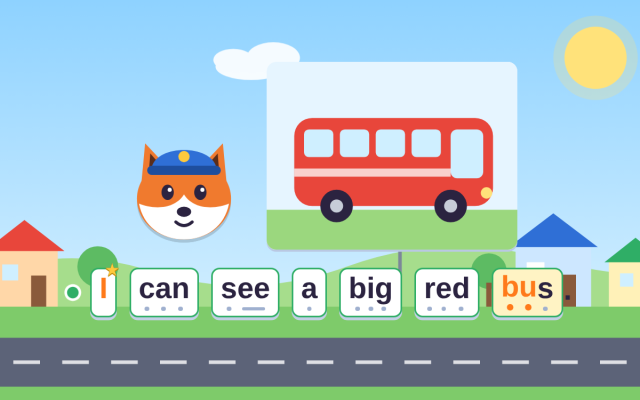
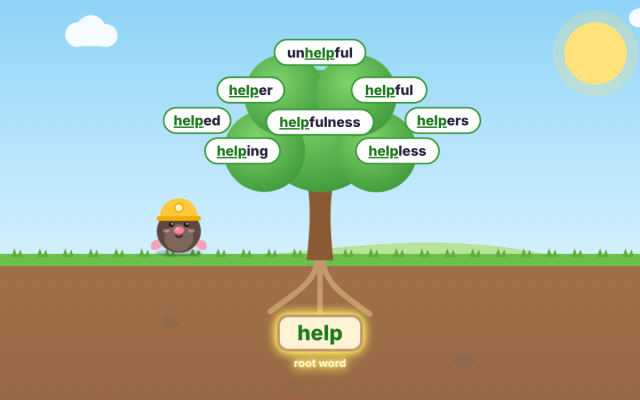
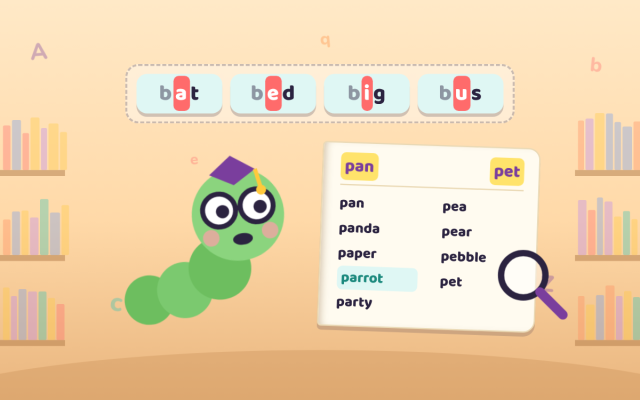
Each machine opens with a short animated demo, then guided building, sorting baskets, sentence questions and spelling with letter tiles. A final 10-question challenge mixes every rule, and an optional warm-up recaps vowels, consonants, root words and short and long vowel sounds.
Questions and answers
What is the rule for adding –es to a word ending in y?
If a consonant comes before the y, change the y to i and then add –es, so fly becomes flies and baby becomes babies. If a vowel comes before the y, just add s, as in days and toys.
Why does crying keep its y when cried changes it?
Changing the y to i before –ing would put two i's together (criing), which English spelling almost never does. Only skiing and taxiing have ii, so we write crying, copying and hurrying, but cried, copied and hurried.
When do you double the last letter before adding –ing or –ed?
Double the last letter when a short word has a short vowel followed by one consonant, as in pat, patting and hum, hummed. Don't double when the word ends in two consonants (jumping), has two vowels together (raining) or ends in x (mixing).
What age is this suffix spelling game for?
It is written for children aged 6 to 8 and follows the Year 2 spelling rules in England's national curriculum. Older children who still mix up words like hoping and hopping can use it for revision.
What does the Ending Factory game include and how long does it take?
It has five machines covering each suffix rule, an optional warm-up and a 10-question final challenge, which takes about 35 minutes in total. Children can pick any machine from the factory floor and come back to it later.
We count visits to make TapLearn better.We use one cookie, only on this site, to see how families find and use it. No adverts, and nothing is shared.One cookie, only on this site. No adverts.How we measure

 TapLearn