TapLearn
Learning gameYear 3 · Start for free
Sun Safety: Protect Your Eyes with Mika the Meerkat
Learning gameYear 3 · Start for free

Sun Safety: Protect Your Eyes with Mika the Meerkat

Learn why sunlight can be dangerous and how to protect your eyes. Test sunglasses under a UV lamp, try the shadow rule and build a pinhole viewer.

Online game, chapter 1 free · Year 3 (KS2) · ages 7–9 · national curriculum in England · no adverts · plays on a phone, tablet or computer · no sign-up to start.

Chapter 4: When the Sun is strongest: midday, cloudy days, snow and water
Press Play to go straight there.

Play the game

300+ learning games · Reception to Year 6
At a glance

An online science game for Year 3 (KS2). It covers the national curriculum in England, Year 3 science: “Recognise that light from the sun can be dangerous and that there are ways to protect their eyes”.

5 short chapters, about 35 minutes in all. Children can stop after any chapter.

Start playing for free. Plays in the browser on phones, tablets and computers: no app, no adverts.

Free for teachers: every chapter on the whiteboard with a free teacher account.

Last updated · Checked against the national curriculum in England by the TapLearn team

What you'll learn

  • Why sunlight helps us but its UV can harm skin and eyes
  • Why you must never look straight at the Sun, even wearing sunglasses
  • How to choose sunglasses with a UV400 or CE label
  • How sun hats and shade protect your eyes
  • How to use the shadow rule to spot strong sunshine
  • How a pinhole viewer lets you watch an eclipse safely

Chapter by chapter

  1. Sunlight helps us, but its light can be dangerous Start playing for free

    Learn that the Sun gives us light and warmth but also invisible ultraviolet (UV) light that can harm skin and eyes, by finding UV with a spotter lens and testing UV beads.

    Year 3 science · 1

  2. Never look straight at the Sun: how sunlight can hurt your eyes

    Learn how light enters the eye through the pupil and why the Sun's light can burn the back of the eye, then practise looking away and bust myths about sunglasses and clouds.

    Year 3 science · 1

  3. Protecting your eyes: UV sunglasses, sun hats and shade

    Learn the ways to protect your eyes from the Sun: test four pairs of sunglasses under a UV lamp, compare a cap with a wide-brimmed hat, and use an umbrella for shade.

    Year 3 science · 1

  4. When the Sun is strongest: midday, cloudy days, snow and water

    Learn that the Sun's UV is strongest around midday and from spring to autumn, even when cloudy, by moving the Sun across the sky, using the shadow rule and seeing UV bounce off snow.

    Year 3 science · 1

  5. Watching the Sun safely: pinhole viewers and eclipses

    Learn a safe way to watch the Sun by building a pinhole viewer with your back to the Sun, then watch a partial eclipse appear on the card and try the colander trick.

    Year 3 science · 1

  6. Sun Safety Ranger Challenge (10 questions)

See every Science chapter in the chapter library

What the chapters cover in the national curriculum in England:

  1. Year 3 science: Recognise that light from the sun can be dangerous and that there are ways to protect their eyes

About this adventure

Sun Safety is an interactive science game that teaches children aged 7–9 why light from the Sun can be dangerous and how to protect their eyes, following the Year 3 light topic in England. Mika the meerkat reads every step aloud.

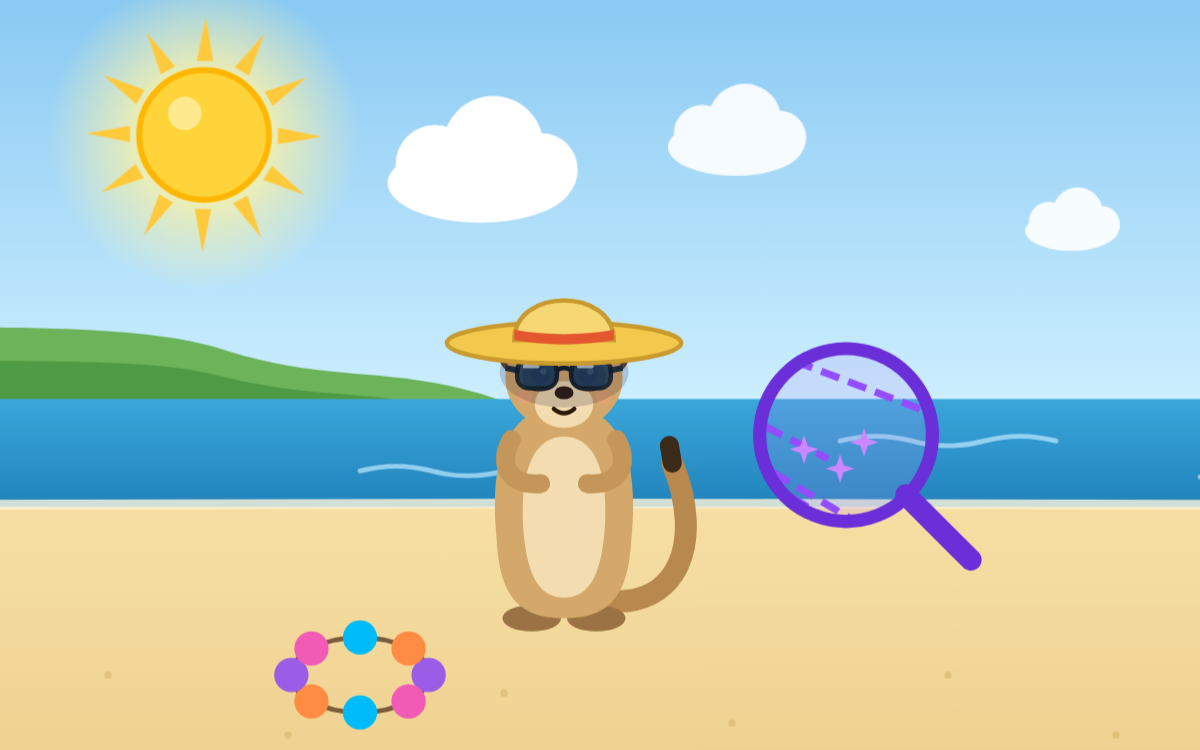
Players use a UV spotter to find invisible ultraviolet (UV) light around a beach and watch UV beads change colour in the sunshine. Inside a giant model eye, they turn up the brightness to see why sunlight can burn the back of the eye (the retina), then bust myths about sunglasses, cloudy days and quick peeks.

In Mika's lab they test four pairs of sunglasses and discover that a UV400 label matters more than how dark the lenses are. They move the Sun across the sky to find when UV is strongest, use the shadow rule, and watch an eclipse safely through a pinhole viewer.

Questions and answers

Why should you never look directly at the Sun?

Looking straight at the Sun, even for a few seconds, can burn the back of the eye, called the retina, and permanently damage eyesight. It doesn't hurt while it happens, so the rule is never to look at the Sun, even with sunglasses or on a cloudy day.

What is UV light, in simple words?

UV, or ultraviolet, light is a kind of light from the Sun that our eyes cannot see and our skin cannot feel. Too much UV causes sunburn and can damage the eyes, and plenty of it gets through clouds.

How can children protect their eyes from the sun?

Children can protect their eyes with sunglasses marked UV400 or carrying a CE or UKCA mark, a wide-brimmed hat and shade, especially from about 11am to 3pm. Darker lenses are not always safer, because the UV filter is what blocks the harmful light.

What age is this sun safety game for?

The game is designed for children aged 7 to 9 and follows the Year 3 science statement about recognising that light from the Sun can be dangerous and that there are ways to protect our eyes. Younger children can enjoy it with a grown-up.

What does the sun safety game include, and how long does it take?

It has five chapters, each with an animated introduction and recap, an optional warm-up on light sources and a 10-question Sun Safety Ranger Challenge. Playing everything takes about 35 minutes, and children can start any chapter from the beach map.

More to explore

See all