Soft G and Soft C: A Spelling Trip Through Softville
Learn soft g and soft c: when g says j, when c says s, and when to write dge or ge, by fixing a bridge and popping balloons.
Online game, chapter 1 free · Year 2 (KS1) · ages 6–7 · national curriculum in England · no adverts · plays on a phone, tablet or computer · no sign-up to start.
An online English game for Year 2 (KS1). It covers the national curriculum in England, Year 2 english: “The /dʒ/ sound spelt as ge and dge at the end of words, and sometimes spelt as g elsewhere in words before e, i and y”, and 1 more statement listed under the chapters.
3 short chapters, about 25 minutes in all. Children can stop after any chapter.
Start playing for free. Plays in the browser on phones, tablets and computers: no app, no adverts.
Free for teachers: every chapter on the whiteboard with a free teacher account.
Last updated · Checked against the national curriculum in England by the TapLearn team
What you'll learn
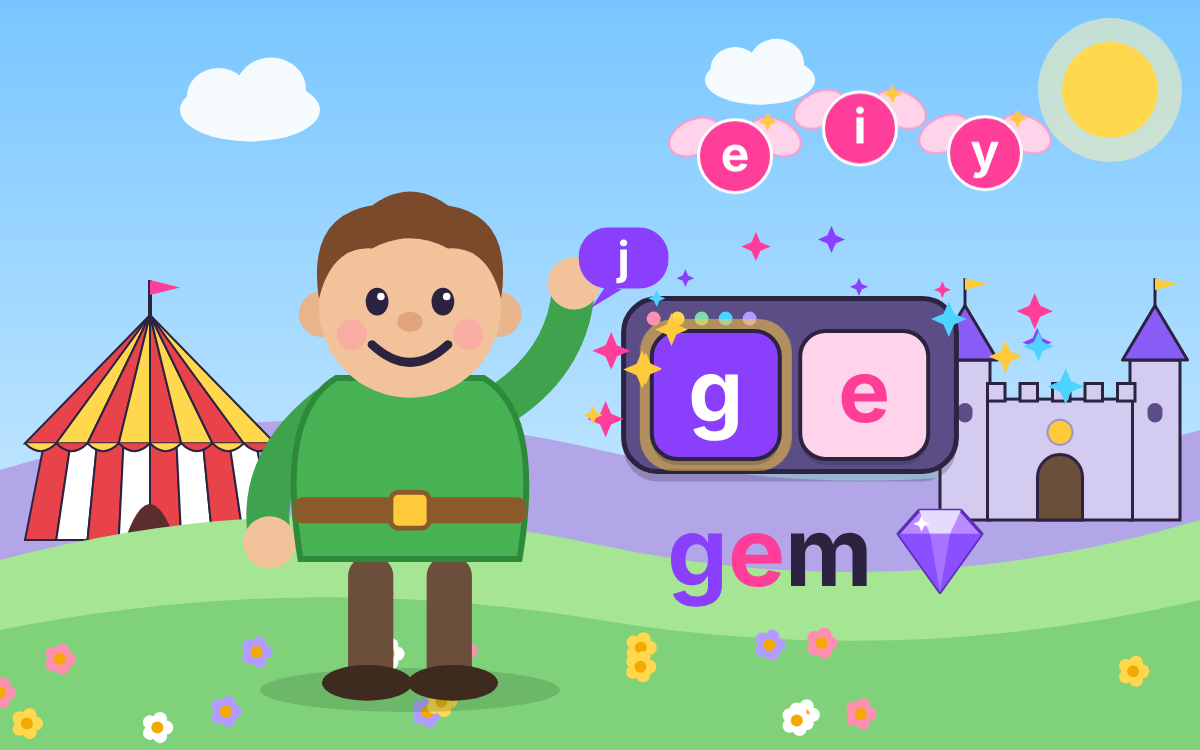
That g often says j before e, i or y: giant, gym
That the j sound is spelt j before a, o and u
When to write dge after a short vowel, as in badge
When to write ge, as in cage, huge and large
That c says s before e, i or y: city, race, fancy
That no English word ends in the letter j
Chapter by chapter
Soft g: g says j before e, i and y (giant, gym)Start playing for free
Year 2 english · 1
Ending words with dge after a short vowel, or ge (badge, cage)
Year 2 english · 1
Soft c: c says s before e, i and y (city, race, fancy)
Year 2 english · 2
Soft g, soft c, dge and ge challenge (10 questions)
What the chapters cover in the national curriculum in England:
Year 2 english: The /dʒ/ sound spelt as ge and dge at the end of words, and sometimes spelt as g elsewhere in words before e, i and y
Year 2 english: The /s/ sound spelt c before e, i and y
About this adventure
Soft G and Soft C is an interactive spelling game that teaches children aged 6–7 when g makes a j sound, when c makes an s sound, and when to end a word with dge or ge. It follows the Year 2 spelling rules in the national curriculum for England.
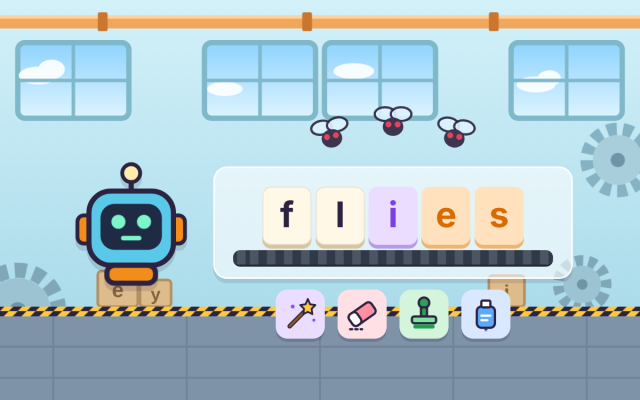
Children explore Softville, where the letters e, i and y act as softeners. They drag letters into a Softening Machine to hear g and c change sound, sort words into hard and soft, and pop balloons for every soft c. They also meet tricky words such as get and girl, where g stays hard.
To choose between dge and ge, children listen for a short vowel. After a short vowel, a d guards it, as in badge and bridge. After anything else the ending is ge, as in cage and large. A final 10-question challenge checks everything.
Questions and answers
When does g make a j sound?
G often makes a j sound when it comes just before e, i or y, as in gem, giant and gym. This is only usually true, because some common words, such as get, girl and gift, keep a hard g.
When do you use dge instead of ge at the end of a word?
Use dge straight after a short vowel sound, as in badge, edge, bridge and fudge. After any other sound, whether a long vowel or a consonant, write ge instead, as in cage, huge and large.
When does c make an s sound?
C makes an s sound when the next letter is e, i or y, as in race, ice, city and fancy. Before a, o or u, c makes a hard k sound, as in cat, cow and cup.
What age is this soft g and soft c game for?
It is made for children aged 6 to 7 in Year 2, when these spellings are taught in the national curriculum for England. Older children who still mix up dge and ge can also use it for revision.
What is in the game and how long does it take?
There are three chapters, on soft g, dge and ge endings, and soft c, followed by a 10-question challenge. Each chapter has an animated introduction, voice-over and hands-on activities. Playing everything takes about 25 minutes.
We count visits to make TapLearn better.We use one cookie, only on this site, to see how families find and use it. No adverts, and nothing is shared.One cookie, only on this site. No adverts.How we measure

 TapLearn