What you'll learn
- When to spell the 'shus' ending –cious or –tious
- Clues for choosing –ant/–ance or –ent/–ence, like a related –ation word
- How to choose –able or –ible and make –ably and –ibly adverbs
- Rules for adding suffixes: drop or keep e, y to i, doubling r
- When to use a hyphen after a prefix, as in co-ordinate
- How to split new words into prefix, root and suffix to read them
Chapter by chapter
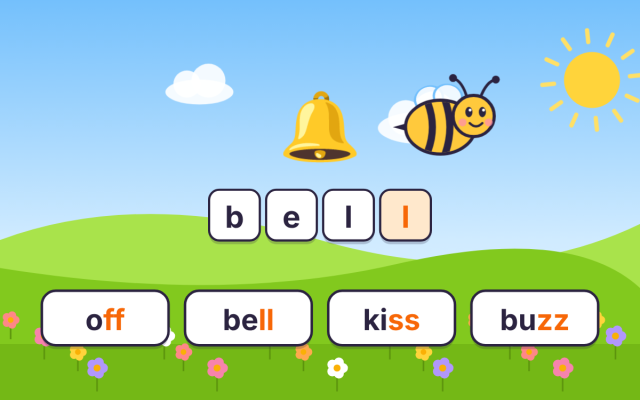
- –cious and –tious: spelling the 'shus' sound Free to try
Years 5–6 english · 1
- –ant and –ance or –ent and –ence: choosing the right ending
Years 5–6 english · 1
- –able and –ible (and –ably, –ibly): choosing the right ending
Years 5–6 english · 1
- Rules for adding suffixes: drop or keep the e, y to i, and –fer words
Years 5–6 english · 1
- Hyphens after prefixes: co-ordinate and re-enter
Years 5–6 english · 1
- Word detective: using roots, prefixes and suffixes to read and understand new words
Years 5–6 english · 2
- Suffix Master Challenge (10 questions)
What the chapters cover in the national curriculum in England:
- Years 5–6 english: Use further prefixes and suffixes and understand the guidance for adding them
- Years 5–6 english: Apply their growing knowledge of root words, prefixes and suffixes (morphology and etymology), as listed in English appendix 1, both to read aloud and to understand the meaning of new words that they meet
About this adventure
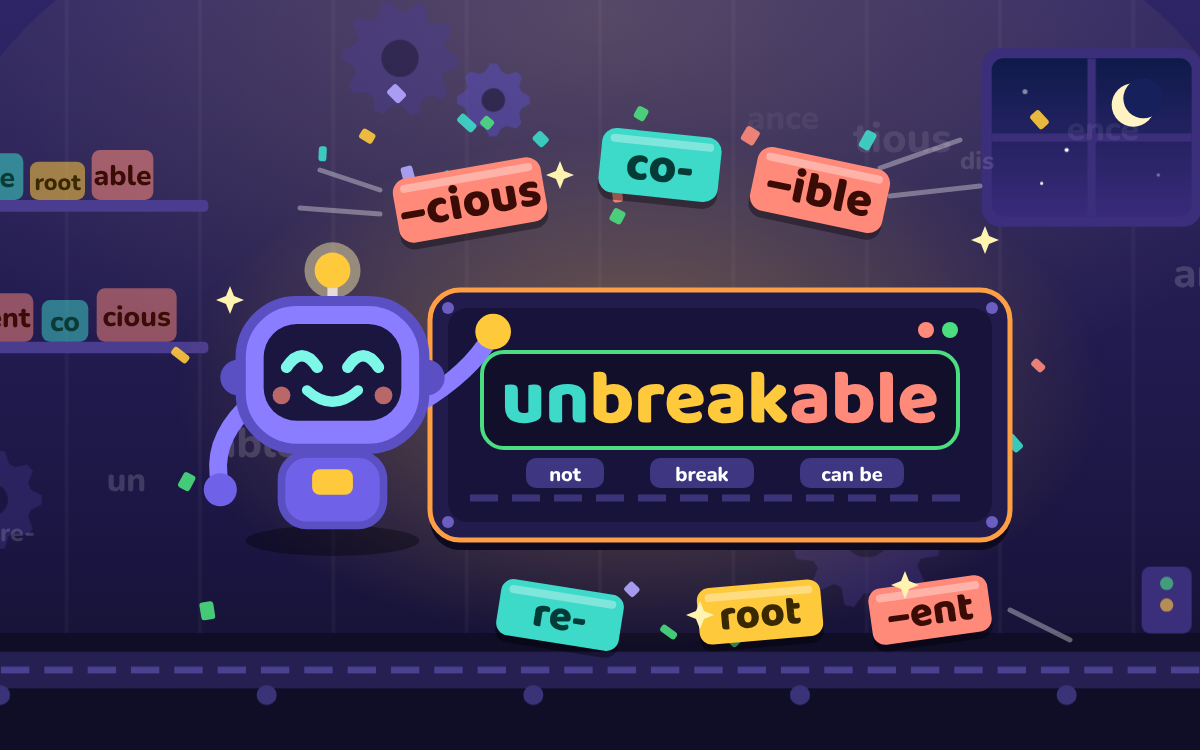
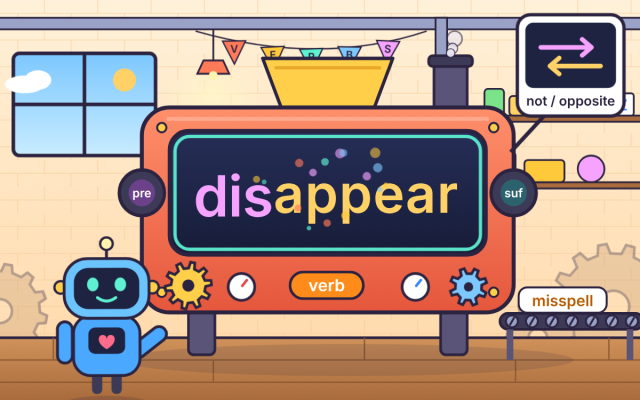
Prefixes and Suffixes is an interactive game that teaches children aged 9–11 the Year 5 and 6 spelling rules for prefixes and suffixes from the national curriculum in England. Tink the robot guides players round a word workshop where they tap, join and split word parts: the root word (the main part), a prefix at the start and a suffix at the end.
Players learn clues for tricky endings, such as using –cious when a root ends in ce (space, spacious) and –able when a complete root word can be heard (dependable). They practise the rules for adding suffixes, see when a hyphen goes after a prefix, as in re-enter, and use word parts to read and understand new words.
Each section has a narrated, animated introduction, hands-on activities, sorting jars, multiple-choice and typed questions, and the game ends with a ten-question challenge.
Questions and answers
When do you use –cious or –tious?
Use –cious when the root word ends in ce, so space becomes spacious and grace becomes gracious. Use –tious when there is a related word ending in –tion, such as caution and cautious. A few words, like precious and delicious, just need to be learnt.
How do you know whether a word ends in –able or –ible?
Cover the ending and check whether a complete word is left: if it is, the ending is usually –able, as in dependable. If not, it is usually –ible, as in possible. A related word ending in –ation also points to –able, as in adorable.
When does a prefix need a hyphen?
A hyphen is often used when a prefix ends in a vowel and the root word also starts with one, as in co-ordinate, re-enter and co-own. It keeps the two vowels apart so the word is easier to read, while words like rebuild don't need one.
What age is this prefixes and suffixes game for?
It is designed for children aged 9 to 11 in Years 5 and 6 at Key Stage 2. An optional warm-up first reminds players what roots, prefixes and suffixes are, so they can start with confidence.
What does the game include and how long does it take?
The game has six chapters, an optional warm-up and a ten-question final challenge, and takes about 50 minutes to finish altogether. Each chapter has a narrated introduction, hands-on activities and practice questions, and chapters can be played in any order.
 TapLearn