More and Fewer: Matching Fun with Bunnies and Bo the Bear
Learn more and fewer by matching groups one to one, spotting groups that look different, making equal groups and comparing numbers to 10.
- Ages 4–5
- About 25 min
- Easy start
- Numbers
Learn more and fewer by matching groups one to one, spotting groups that look different, making equal groups and comparing numbers to 10.
Reception maths · 1
Reception maths · 1
Reception maths · 1
Reception maths · 2 Reception maths · 1
See every Maths chapter in the chapter library
What the chapters cover in the national curriculum in England:
More and Fewer is an interactive maths game that teaches Reception children aged 4–5 to compare two groups of up to 10 objects, and two numbers to 10, and say which has more, fewer or the same.
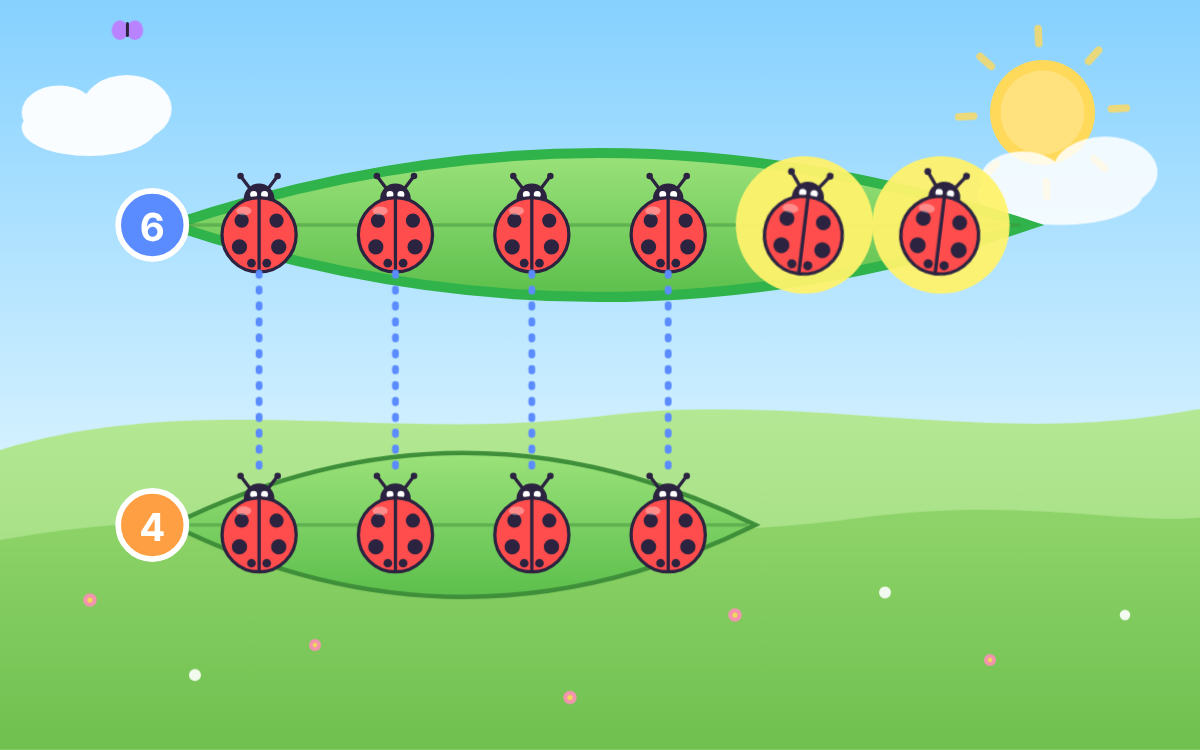
Children drag carrots to bunnies and flowers to bees, matching one to one: if some are left over, that group has more. They meet groups that try to trick the eye, such as a long spread-out row or a few big elephants beside lots of little mice, and learn to match or count to check. Then they pick apples to make a group with more, fewer or the same as Bo the bear's.
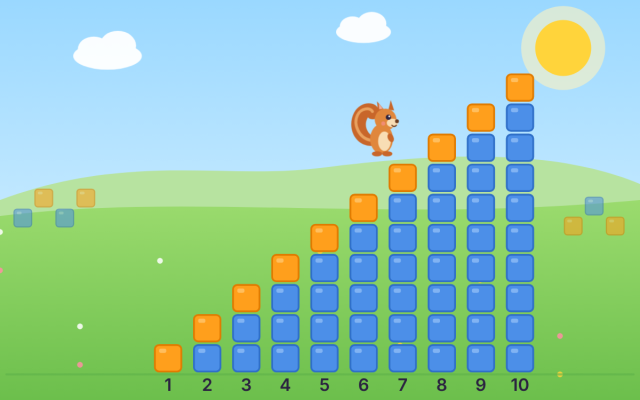
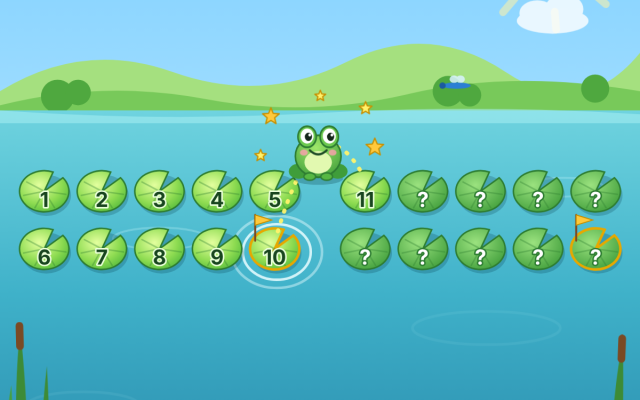
Finally, children compare numerals with Hop the frog. Cube towers and a 1 to 10 number track show that a number that comes later when we count is more. Friendly narration reads every instruction aloud.
Start by matching two groups one to one, such as one spoon for each teddy. Whichever group has some left over has more, and the other has fewer. Then count both groups to check and use the words more, fewer and the same.
Fewer is used for things you can count, like fewer apples or fewer bees. Less is used for amounts you cannot count, like less water, and when comparing numbers, as in 3 is less than 5.
Young children often judge by how much space a group takes up rather than how many things are in it. Matching each object with a partner, or counting both rows, shows them that spreading things out does not change the number.
It is made for children aged 4 to 5 in Reception, matching the Early Years Foundation Stage goal of comparing quantities up to 10. Older children who are still unsure about more, fewer and the same can use it too.
There are four short chapters and a 10-question challenge, taking about 25 minutes altogether. Each chapter has a narrated animated introduction, hands-on tasks with gentle feedback, and can be played on its own in any order.
 TapLearn
Getting it ready…
Great work on chapter 1! To open the next chapters, ask a grown-up to take a look.
To play this game, ask a grown-up to take a look. There are lots of free games you can play right now too!
Playing in class? Ask your teacher to get a free class link. Then your teacher can open every chapter on the board, and you can keep playing at home.
Teachers: play every chapter with your class, free
taplearn.co.uk/teachers
A free teacher account: games on the board, a class link for home, and no pupil data.
A teacher? Every chapter is free for your class. Get a free teacher account
A teacher? Every chapter is free for your class. Get a free teacher account
Create a free family account and your child can play every chapter of every game for 7 days, with no card needed. Their progress is kept. After that, the free plan is free for ever, and membership is £6.99 (about $9.35) a month if you'd like to keep every chapter.
That's all the learning time for today. Great work! Flip will be ready to play again tomorrow.