What you'll learn
- How a dead sea creature becomes a fossil in sedimentary rock
- Why deeper rock layers usually hold older fossils
- How fossils show horses and whales changed over millions of years
- What extinct means, with examples like the dodo and mammoth
- How animals and plants are adapted through body features and behaviour
- Why better adapted living things survive and pass on their features
Chapter by chapter
- How fossils form: from living thing to rock Free to try
Year 6 science · 1
- Fossils as clues: what palaeontologists learn about life long ago
Year 6 science · 1
- Living things have changed over time: fossils as evidence
Year 6 science · 1
- Adaptations: how animals and plants suit their environment
Year 6 science · 2
- How adaptation may lead to evolution: survival and passing on features
Year 6 science · 2
- Fossil Coast Grand Challenge (10 questions) (10 questions)
What the chapters cover in the national curriculum in England:
- Year 6 science: Recognise that living things have changed over time and that fossils provide information about living things that inhabited the Earth millions of years ago
- Year 6 science: Identify how animals and plants are adapted to suit their environment in different ways and that adaptation may lead to evolution
About this adventure
Evolution and Adaptation: A Fossil Coast Adventure is an interactive science game that teaches children aged 9–11 how fossils form, what they tell us about life millions of years ago, and how adaptation may lead to evolution. It follows the Year 6 Evolution and inheritance unit in England's national curriculum.
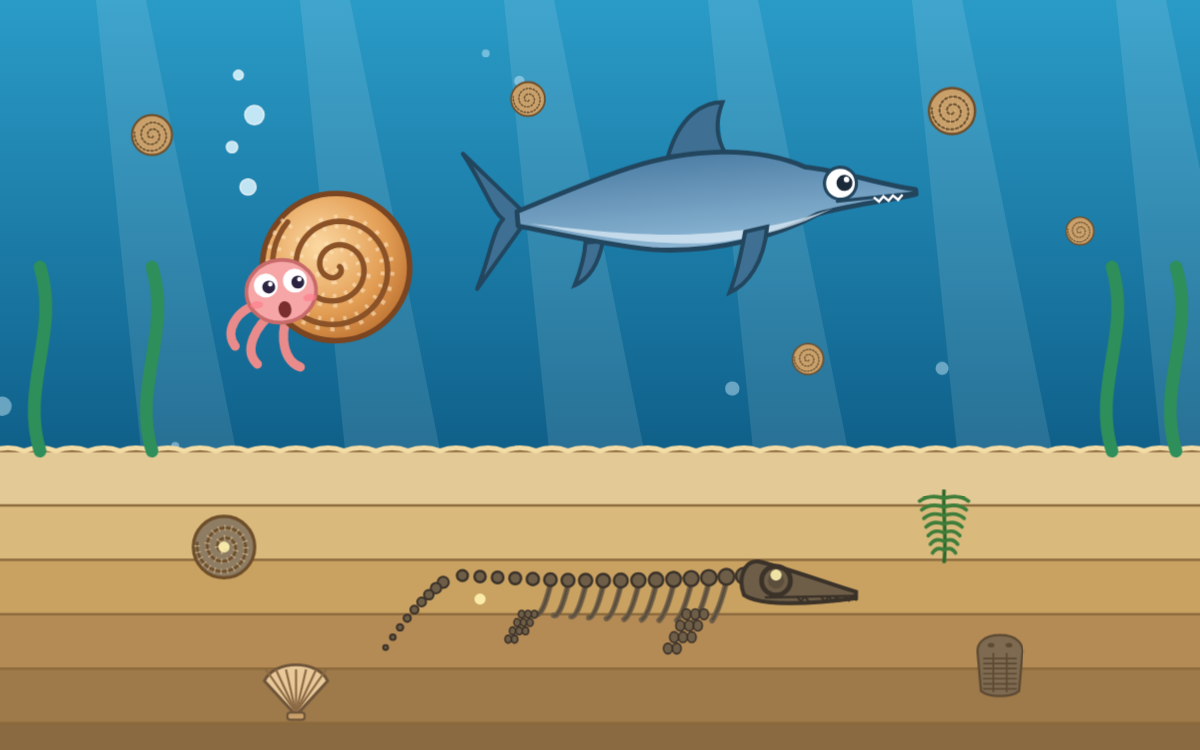
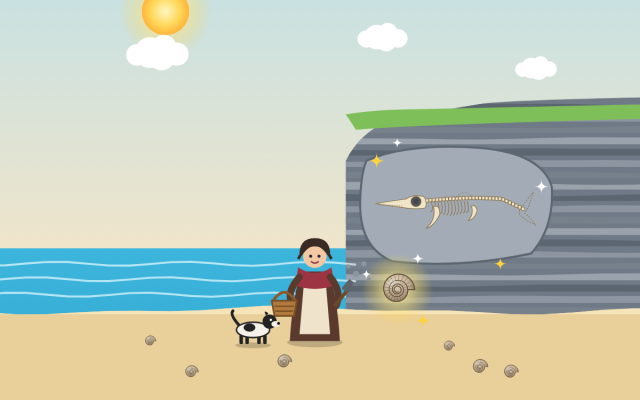
Guided by Ammy the ammonite, players bury an ichthyosaur in sediment, speed up time as the layers turn to rock, and brush away rock to uncover a fossil. They read teeth and rock layers like a palaeontologist, follow horse and whale fossils through time, and tap the adaptations on a polar bear, a camel and a cactus.
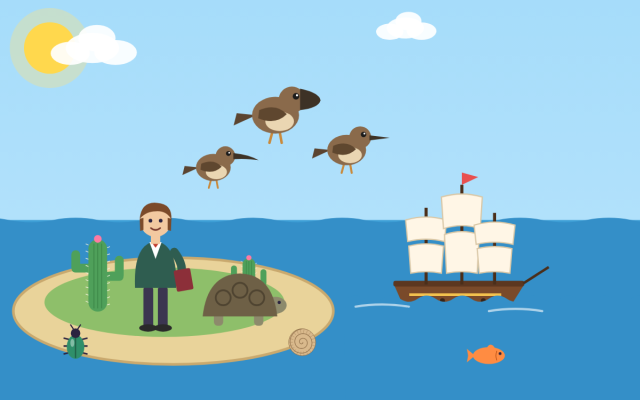
In the final chapter, children play a hungry bird hunting peppered moths and watch the population change over generations. They see why variation, survival and passing on features matter, and meet Mary Anning, Charles Darwin and Alfred Russel Wallace.
Questions and answers
How do fossils form, in simple words?
Most fossils form when a living thing dies and is quickly buried by sand and mud, called sediment. Over millions of years the layers harden into rock and minerals replace the bones, until erosion finally uncovers the fossil.
What is an adaptation in animals and plants?
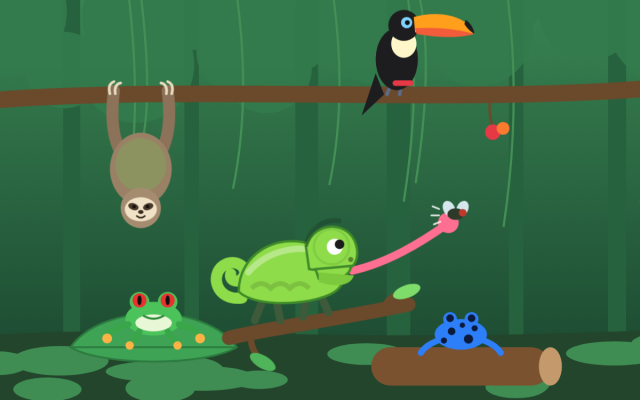
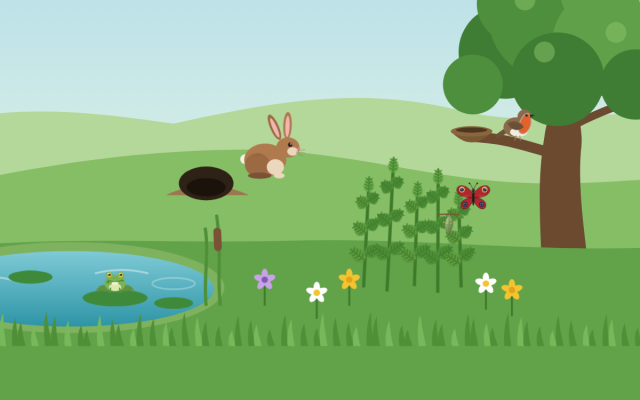
An adaptation is a feature that helps a living thing survive in its environment. A polar bear's thick fur keeps it warm, a cactus stores water in its stem, and hedgehogs hibernating through winter is an adaptation in behaviour.
How can adaptation lead to evolution?
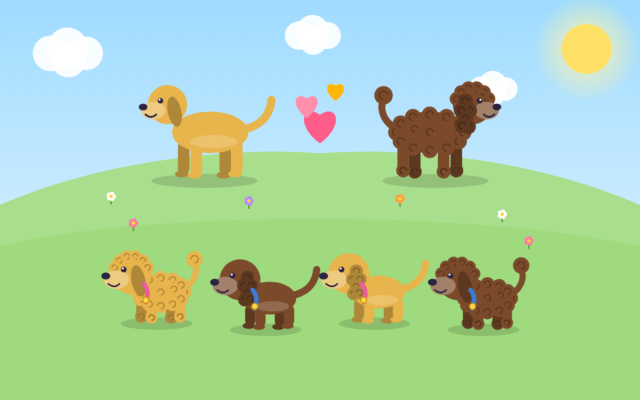
Living things of the same kind vary, and those best suited to their environment are more likely to survive and have young like them. Over many generations, this can slowly change a whole population, which is evolution.
What age is this evolution and adaptation game for?
It is designed for children aged 9 to 11, matching Year 6 science in England. Younger children who enjoy fossils and animals can play with an adult, as the narration reads every instruction aloud.
What does the game include and how long does it take?
The game has five chapters, two optional warm-ups and a 10-question Grand Challenge, and takes about an hour to play in full. Each chapter ends with a three-question quick check, and children can pick any chapter from the map.
 TapLearn