What you'll learn
- Living things produce offspring of the same kind as their parents
- Why offspring are similar to their parents but not identical
- What variation means and why brothers and sisters look different
- How offspring inherit a mix of characteristics from both parents
- Why boys and girls inherit features from both mum and dad
- Which characteristics are inherited and which, like scars, are not
Chapter by chapter
- Living things produce offspring of the same kind Free to try
Year 6 science · 1
- Offspring vary: similar but not identical to their parents
Year 6 science · 1
- Inherited characteristics: a mix from both parents
Year 6 science · 1
- Inherited or not? Characteristics offspring can and cannot inherit
Year 6 science · 1
- Inheritance challenge: offspring, variation and inherited characteristics (10 questions)
What the chapters cover in the national curriculum in England:
- Year 6 science: Recognise that living things produce offspring of the same kind, but normally offspring vary and are not identical to their parents
About this adventure
Inheritance and Variation is an interactive science game that teaches children aged 9–11 how living things produce offspring of the same kind that vary and are not identical to their parents. It follows the Year 6 Evolution and Inheritance objective in the English national curriculum.
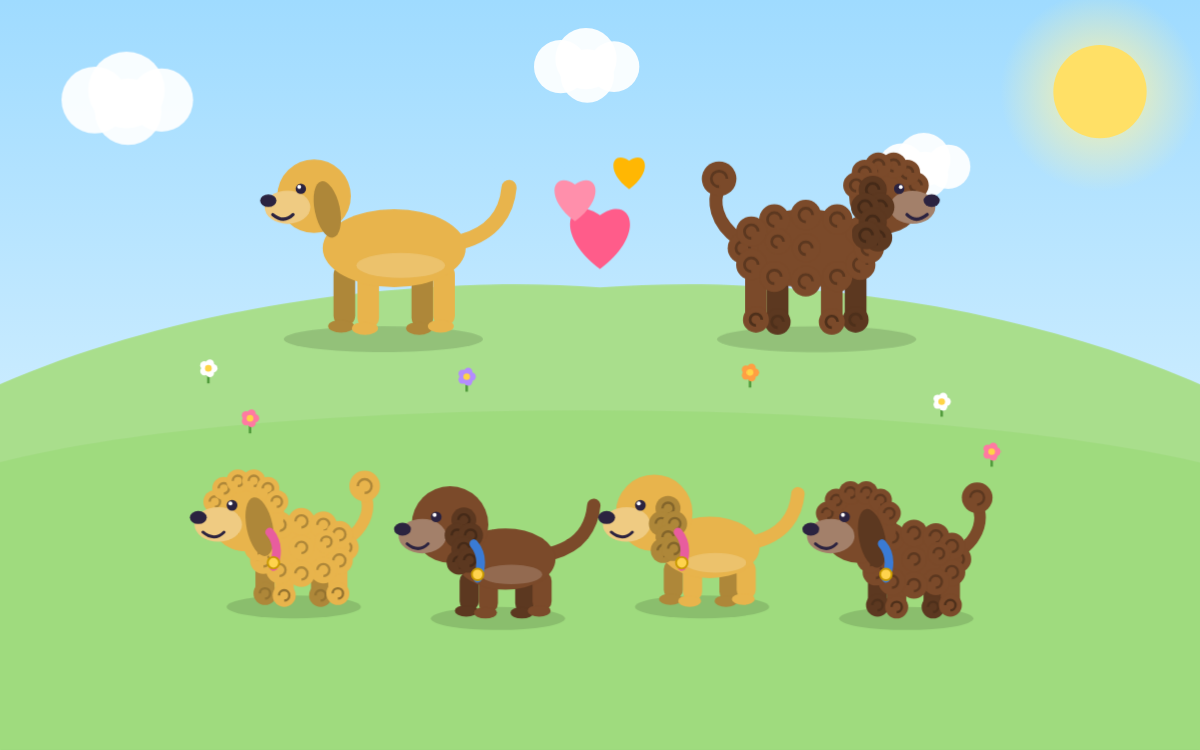
Players reunite lost babies with their parents, watch a tadpole turn into a frog, spot the differences between a rabbit and her grown-up young, and grow sunflowers from one parent plant. They cross a Labrador with a Poodle to make litters of puppies, then design a possible child from a mum's and dad's features.
They meet the key words offspring (the young of a living thing), characteristics (features such as eye colour) and variation (differences between living things of the same kind), and learn why scars and learned skills are not inherited.
Questions and answers
What is inheritance in science, in simple words?
Inheritance is when characteristics, such as eye colour or fur type, are passed on from parents to their offspring. Because offspring inherit features from both parents, they look similar to them but are not exact copies.
Why are offspring not identical to their parents?
Offspring get a mix of characteristics from both parents, so each one is a new combination rather than a copy of either parent. That is also why brothers and sisters from the same parents usually look different from each other.
Can scars or learned skills be inherited?
No, scars, dyed hair and learned skills cannot be inherited. They happen during a living thing's life, so they are not passed on to offspring. Inherited characteristics, such as natural hair colour or a leopard's spots, come from the parents.
What age is this inheritance game for?
This game is designed for children aged 9 to 11. It matches the Year 6 Evolution and Inheritance unit of the English national curriculum, so it suits Key Stage 2 pupils learning about offspring and variation at school or at home.
What does the inheritance game include and how long does it take?
The game has four short chapters, an optional life-cycle refresher and a 10-question challenge, and takes about 35 minutes to play through. Every line is read aloud, and children drag, tap and sort to discover the ideas for themselves.
 TapLearn