Micro-organisms: A Microscope Adventure in the Tiny Life Lab
Learn what micro-organisms are and how living things are classified, by zooming in on bacteria, yeasts and moulds and sorting helpful from harmful ones.
What the chapters cover in the national curriculum in England:
Year 6 science: Describe how living things are classified into broad groups according to common observable characteristics and based on similarities and differences, including micro-organisms, plants and animals
About this adventure
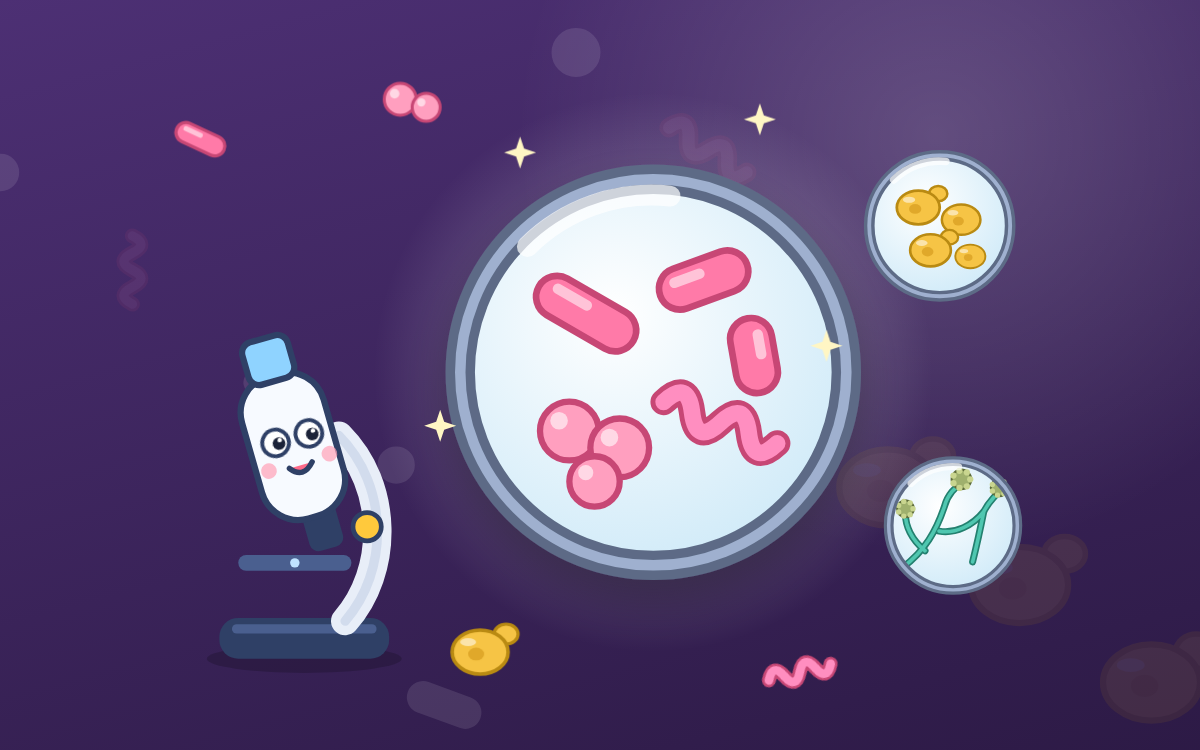
Micro-organisms: A Microscope Adventure is an interactive science game that teaches children aged 9–11 how living things are classified into plants, animals and micro-organisms, and what bacteria, yeasts and moulds are. It follows the Year 6 national curriculum in England.
Guided by Lenny, a talking microscope, players zoom into a fingertip until bacteria appear, watch a yeast cell grow a bud and see a mould puff out spores. They sort living things by observable features, follow a yes or no classification key to name mystery slides, and type answers to short questions.
Hands-on experiments show micro-organisms at work: yeast blowing up balloons, bacteria turning milk into yoghurt, decomposers making compost and the mould that gave Alexander Fleming penicillin. Players also find out how mould spoils food, how bacteria cause tooth decay and why washing with soap matters. Two optional refreshers and a 10-question challenge round it off.
Questions and answers
What are micro-organisms, in simple words?
Micro-organisms are living things so tiny you need a microscope to see them. Bacteria and microscopic fungi such as yeasts and moulds are examples. They feed, grow and reproduce, and they live almost everywhere, including on your skin and inside your gut.
Are all micro-organisms harmful?
No, many micro-organisms are helpful or harmless. Yeast makes bread rise, bacteria turn milk into yoghurt and cheese, and decomposers break down dead leaves into compost. Some, though, spoil food, cause tooth decay or make people ill, so washing hands with soap and cooking food properly matter.
Are fungi plants?
Fungi are not plants. They are not green and cannot make their own food from sunlight; instead they feed on whatever they grow on, such as bread or dead leaves. Mushrooms are big fungi, while yeasts and moulds are tiny fungi that count as micro-organisms.
What age is this micro-organisms game for?
The game suits children aged 9 to 11, especially Year 6 pupils studying living things and their habitats. Younger children who enjoy science can play too, as Lenny reads every line aloud and each station starts with a short guided introduction.
How long does the game take and what does it include?
Playing everything takes about 45 minutes. There are six stations, each ending with a three-question quick check, two optional refreshers on life processes and classification keys, and a 10-question final challenge. Children can stop after any station and come back later.
Can we count your visit? We'd like to use one cookie, only on this site, to see how families find and use TapLearn, so we can make it better. No adverts, and nothing is shared. How we measure
Create a free family account and your child can play every chapter of every game for 7 days, with no card needed. Their progress is kept. After that, the free plan is free for ever, and membership is £6.99 a month if you'd like to keep every chapter.
 TapLearn