What the chapters cover in the national curriculum in England:
Year 4 science: Observe that some materials change state when they are heated or cooled, and measure or research the temperature at which this happens in degrees Celsius (°C)
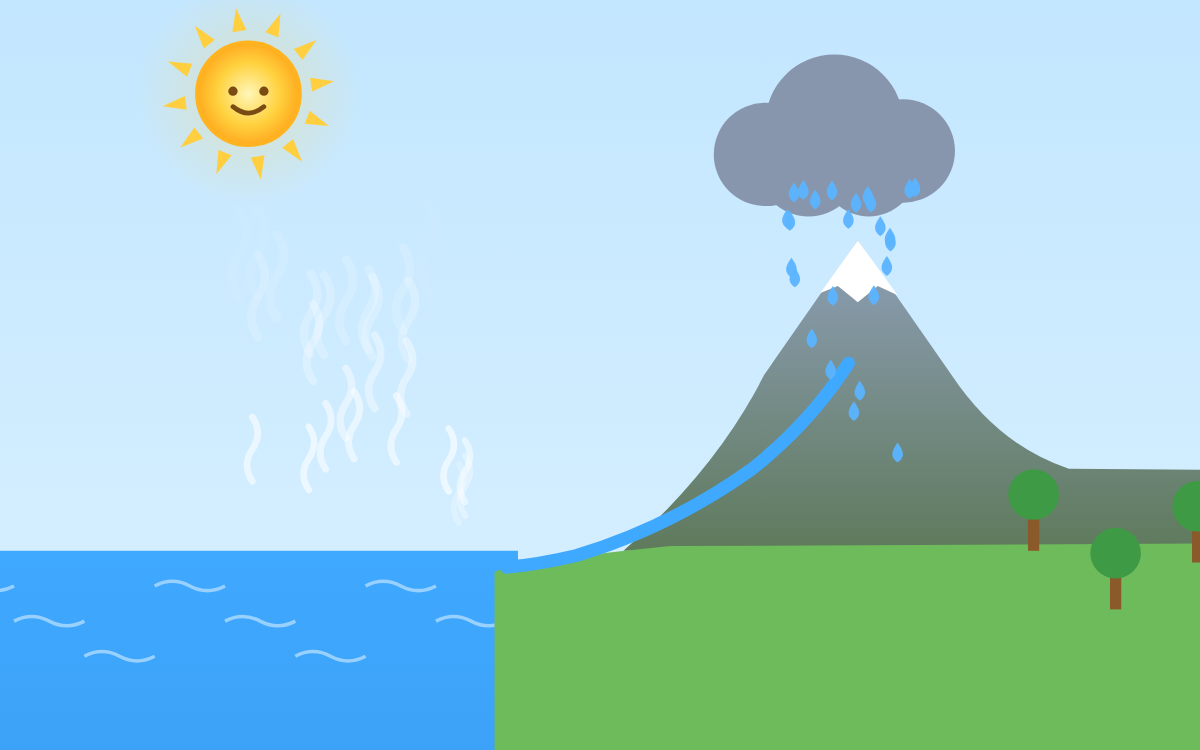
Year 4 science: Identify the part played by evaporation and condensation in the water cycle and associate the rate of evaporation with temperature
About this adventure
Melting, Freezing and Evaporation is an interactive science game that teaches children aged 7–10 how materials change state when they are heated or cooled, and the part evaporation and condensation play in the water cycle. It follows the Year 4 states of matter topic in the national curriculum for England.
Players melt an ice cube with the sun, freeze water in a freezer and use a thermometer to find the melting point of ice (0°C) and the boiling point of water (100°C). They spot invisible water vapour above a kettle, run a fair test to see that warmer water evaporates faster, and watch condensation form on a cold can.
A spoken narrator guides every step with short captions. Children type temperatures in degrees Celsius (°C) as well as answering choice questions, and a 10-question challenge checks what they remember.
Questions and answers
What is the difference between melting and freezing?
Melting is when a solid turns into a liquid because it is heated, like ice turning into water. Freezing is the opposite: a liquid cools down and turns into a solid. For water, both happen at 0°C.
Does water have to boil to evaporate?
No, water can evaporate at any temperature, even on a cold day. Boiling happens at 100°C and is very fast, but a puddle at 12°C still slowly turns into water vapour. The warmer the water, the faster it evaporates.
Why do water drops appear on a cold can of drink?
The drops come from water vapour in the air, not from inside the can. When the invisible vapour touches the cold metal, it cools down and condenses into tiny drops of liquid water. This change is called condensation.
What age is this melting and freezing game for?
It is made for children aged 7 to 10, and matches the Year 4 states of matter topic in the national curriculum for England. Younger players can follow along with help, because a narrator reads every instruction aloud.
What does the game include and how long does it take?
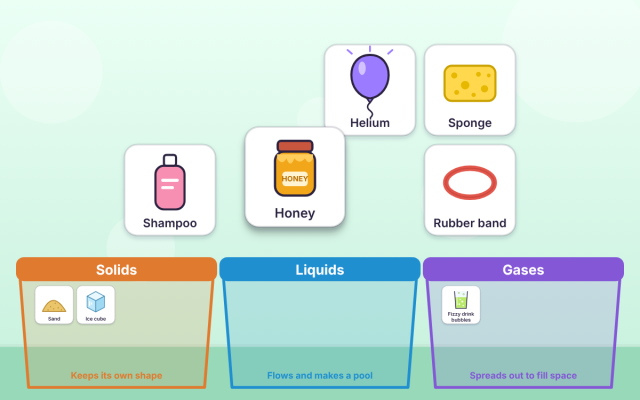
The game has a quick solids, liquids and gases refresher, six chapters and a 10-question final challenge. Playing everything takes about 45 minutes, and each chapter can be played on its own in roughly 6 to 8 minutes.
Can we count your visit? We'd like to use one cookie, only on this site, to see how families find and use TapLearn, so we can make it better. No adverts, and nothing is shared. How we measure
Create a free family account and your child can play every chapter of every game for 7 days, with no card needed. Their progress is kept. After that, the free plan is free for ever, and membership is £6.99 a month if you'd like to keep every chapter.

 TapLearn