How sloping roofs, thick walls and heating suit cool, rainy UK weather
How shade, breezes and makuti roofs keep Kenyan coast homes cool
What is the same and different about the UK and Kenya
What a house, farm, shop, office and factory are each for
How to order a village, town and city by size
That a harbour shelters boats and a port loads and unloads ships
Chapter by chapter
Homes in the UK: a seaside cottage for cool, rainy, windy weatherFree to try
Years 1–2 geography · 1
Homes in Kenya: a coast home for hot, sunny weather
Years 1–2 geography · 1
Same and different: comparing homes and places in the UK and Kenya
Years 1–2 geography · 1
Human features: house, farm, shop, office and factory
Years 1–2 geography · 2Years 1–2 geography · 1
Village, town and city: places where people live
Years 1–2 geography · 2Years 1–2 geography · 1
By the sea: what a harbour is and what a port is
Years 1–2 geography · 2Years 1–2 geography · 1
Big Explorer Quiz: homes, places and buildings (10 questions)
What the chapters cover in the national curriculum in England:
Years 1–2 geography: Understand geographical similarities and differences through studying the human and physical geography of a small area of the United Kingdom, and of a small area in a contrasting non-European country
Years 1–2 geography: Use basic geographical vocabulary to refer to key human features, including: city, town, village, factory, farm, house, office, port, harbour and shop
About this adventure
Homes Around the World is an interactive geography game that teaches children aged 5–7 how homes in the UK and Kenya are built to suit their weather and surroundings, matching KS1 geography in England. Shelly the sea turtle reads every step aloud, with captions on screen.
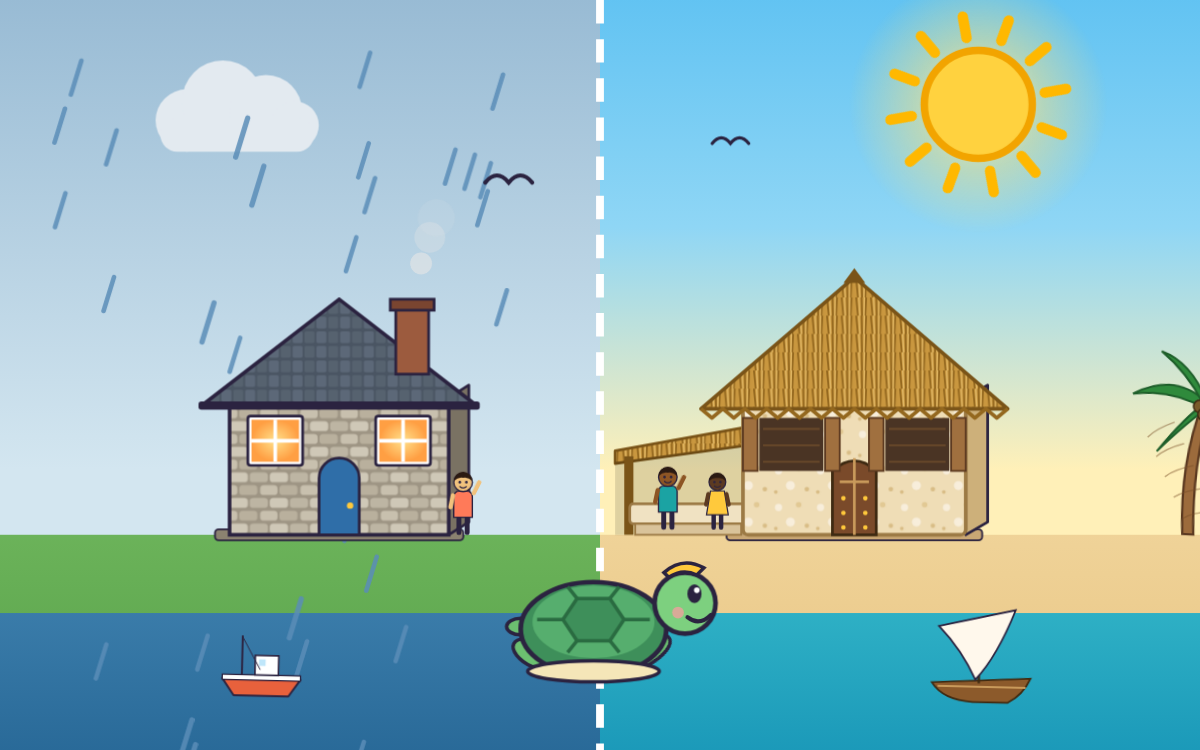
Children build a seaside cottage in Cornwall and a coast home near Mombasa, choosing walls, windows and roofs. Live weather tests each choice: a flat roof leaks in the rain, while a thick palm-leaf roof called makuti keeps a Kenyan home cool in the hot sun.
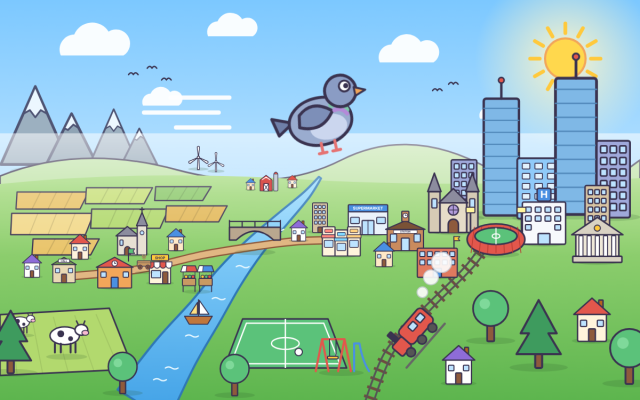
They then compare the two places, sorting what is the same and what is different, and learn the human features geographers name: house, farm, shop, office, factory, village, town, city, harbour and port. Along the way they discover that Kenya has busy cities as well as villages.
Questions and answers
Why are homes different in different parts of the world?
Homes are different because people build them to suit their local weather and the materials around them. In rainy places sloping roofs let water run off, in cold places walls and heating keep warmth in, and in hot places shade and breezes keep homes cool.
How are homes in Kenya different from homes in the UK?
Homes on the coast of Kenya are built to stay cool, while UK homes are built to stay warm and dry. Kenyan coast homes often have thick mud or coral-stone walls, wide shuttered windows and palm-leaf roofs, while UK homes have glass windows, chimneys or heating.
What is the difference between a harbour and a port?
A harbour is calm, sheltered water where boats stay safe, often behind a strong wall. A port is a place where big ships load and unload goods, usually with cranes. Many ports, such as Mombasa in Kenya, also have a harbour.
What age is the Homes Around the World game for?
It is for children aged 5 to 7 and is pitched mainly at Year 1, when homes and contrasting places are usually taught in KS1 geography. Every line is read aloud and shown as a caption, so children who are still learning to read can play.
What does the Homes Around the World game include and how long does it take?
The game has six chapters, each with an animated introduction, building, tapping and sorting activities and short questions, followed by a 10-question quiz. Playing everything takes about 45 minutes, and children can start any chapter from the menu.
Can we count your visit? We'd like to use one cookie, only on this site, to see how families find and use TapLearn, so we can make it better. No adverts, and nothing is shared. How we measure
Create a free family account and your child can play every chapter of every game for 7 days, with no card needed. Their progress is kept. After that, the free plan is free for ever, and membership is £6.99 a month if you'd like to keep every chapter.


 TapLearn