What you'll learn
- Spell words starting with silent letters: kn, gn and wr
- Choose between -le, -el, -al and -il endings
- Spell the 'shun' sound at the end of words as -tion
- Use dge, ge, g and c for the j and s sounds
- Spell sounds in new ways, like y in fly and ey in key
- Pick the right homophone, such as see or sea, by its meaning
Chapter by chapter
- Silent letters: kn, gn and wr Free to try
Year 2 english · 1 Year 2 english · 2
- Word endings: -le and -el
Year 2 english · 2
- Word endings: -al and -il, and choosing between all four
Year 2 english · 2
- The -tion ending: station, motion and fiction
Year 2 english · 2
- New ways to spell the j and s sounds: dge, ge, g and c
Year 2 english · 1 Year 2 english · 2
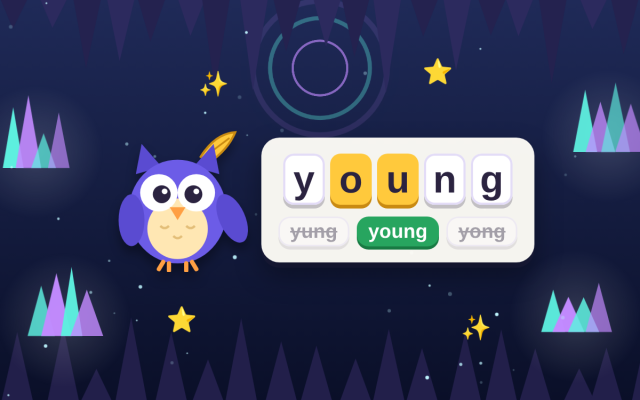
- New ways to spell known sounds: y, ey, al, wa and wor
Year 2 english · 1 Year 2 english · 2
- Homophones: words that sound the same but are spelt differently
Year 2 english · 1 Year 2 english · 2
- Spelling Champion challenge (10 questions)
See every English chapter in the chapter library
What the chapters cover in the national curriculum in England:
- Year 2 english: Spell by: learning new ways of spelling phonemes for which 1 or more spellings are already known, and learn some words with each spelling, including a few common homophones
- Year 2 english: Apply spelling rules and guidance, as listed in English appendix 1
About this adventure
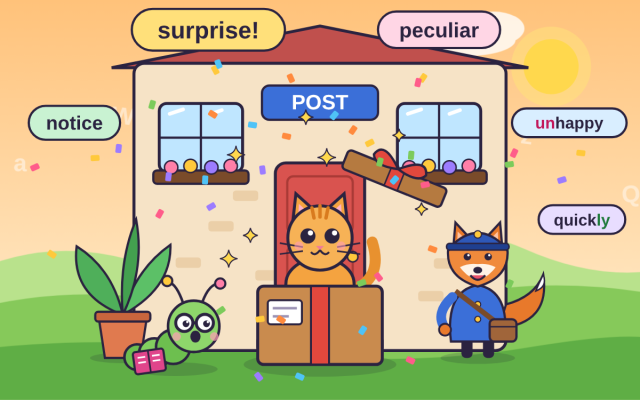
Spelling Village is an interactive game that teaches children aged 6 to 8 the Year 2 spelling rules: silent letters, word endings, new ways to spell known sounds and homophones. It follows the Year 2 spelling objectives in the national curriculum for England.
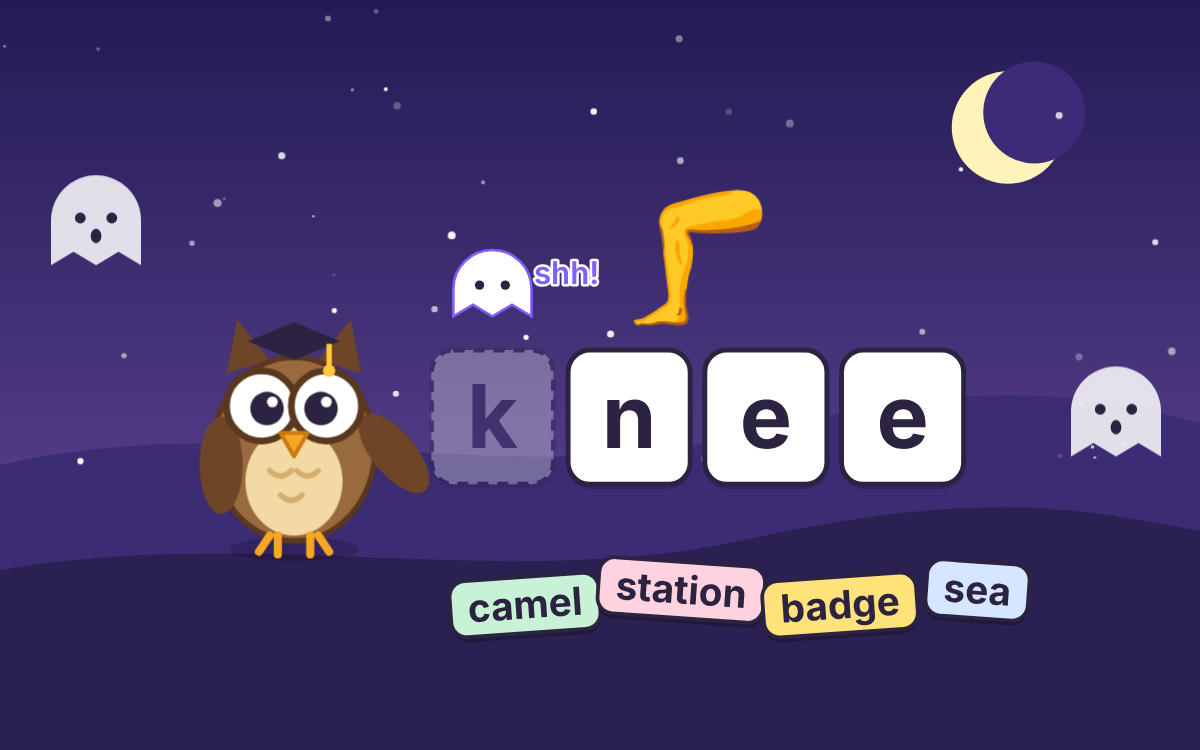
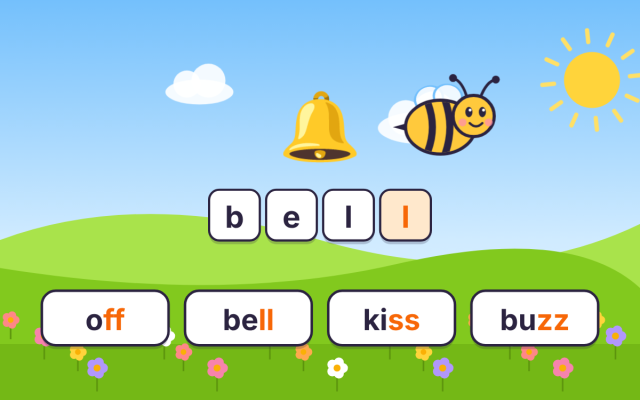
Children visit seven houses in a village, each with a short animated introduction. They tap the silent letter in knee, drag -le or -el onto table and camel, build station from sound chunks, and choose between dge and ge. Spoken instructions and on-screen captions guide every step, and a hint appears after a second try.
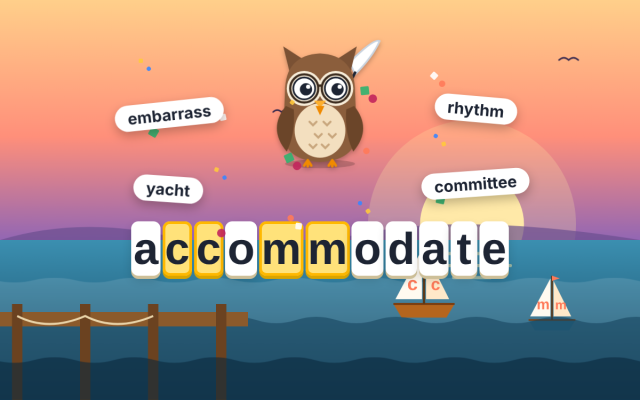
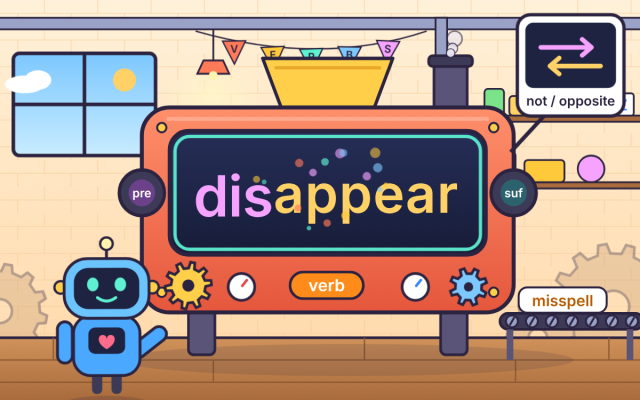
Along the way they meet key terms such as a silent letter (one that is written but not said) and a homophone (a word that sounds like another but has a different spelling and meaning). A 10-question Spelling Champion challenge at the end mixes all the rules together.
Questions and answers
What spelling rules do children learn in Year 2?
Year 2 children in England learn silent letters (kn, gn, wr), the endings -le, -el, -al, -il and -tion, dge and ge, soft c and g, and new spellings for sounds they know. They also learn common homophones such as see and sea, or to, too and two.
When do you use -le or -el at the end of a word?
Use -le most of the time, because it is by far the most common spelling, as in table, apple and bottle. The -el spelling usually comes after m, n, r, v and w, as in camel, tunnel, squirrel, travel and towel.
Why do words like knee and write have silent letters?
Hundreds of years ago people really said the k in knee and the w in write. The way we speak changed over time, but the spellings stayed the same, so today those letters are written but not heard.
What age is this spelling game for?
It is made for children aged 6 to 7 in Year 2, the end of Key Stage 1. Seven-to-eight-year-olds in Year 3 can also use it to revise these rules, and younger confident readers can try the first chapters.
What does the Spelling Village game include and how long does it take?
The game has seven short chapters, each with an animated introduction, guided activities and a celebration, plus a 10-question final challenge. Playing everything takes about 40 minutes, and children can stop after any chapter and pick any house to visit next.
 TapLearn