Learn electrical safety: spot mains and battery appliances, fix hazards at home, stay safe near power lines and know what to do in an emergency.
Online game, chapter 1 free · Year 4 (KS2) · ages 7–10 · national curriculum in England · no adverts · plays on a phone, tablet or computer · no sign-up to start.
An online science game for Year 4 (KS2). It covers the national curriculum in England, Year 4 science: “Identify common appliances that run on electricity”.
6 short chapters, about 30 minutes in all. Children can stop after any chapter.
Start playing for free. Plays in the browser on phones, tablets and computers: no app, no adverts.
Free for teachers: every chapter on the whiteboard with a free teacher account.
Last updated · Checked against the national curriculum in England by the TapLearn team
What you'll learn
Spot common appliances that run on electricity
Sort appliances into mains, battery or rechargeable powered
Why 230 volt mains electricity is far more dangerous than batteries
Spot and fix electrical hazards such as overloaded sockets
Stay safe near power lines, pylons and substations
What to do if someone gets an electric shock
Chapter by chapter
Spot things that use electricityStart playing for free
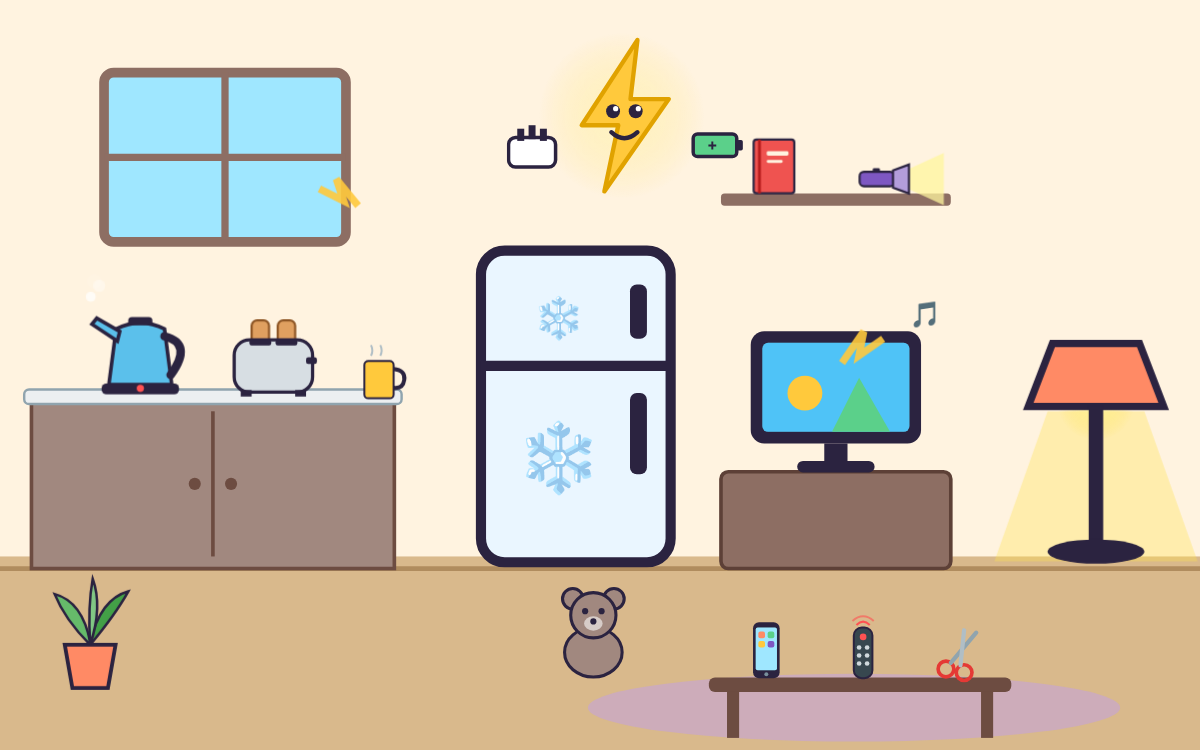
Identify common appliances that run on electricity by tapping around a house, seeing how they make heat, light, sound or movement, then sorting quick-fire items into electrical or not.
Year 4 science · 1
Mains or batteries? Sort the appliances
Follow mains electricity from a power station, along pylons and through a substation to a socket, then sort appliances into mains, battery or rechargeable powered.
Year 4 science · 1
Why mains electricity is dangerous
Compare the push of a 1.5 volt battery, a 9 volt battery and a 230 volt socket, learn why water and electricity must stay apart, and judge safe and dangerous actions.
Year 4 science · 1
Spot electrical dangers at home
Act as a safety inspector to find and fix six hazards at home, including an overloaded socket, a frayed cable, a fork in a toaster and a hairdryer by a sink.
Year 4 science · 1
Stay safe near power lines and substations
Help children in a park make safe choices near overhead power lines and a substation, read the yellow danger sign, and learn when a grown-up should phone 105.
Year 4 science · 1
What to do in an electrical emergency
Practise what to do if someone gets an electric shock or a plug starts smoking: don't touch, get a grown-up, switch off at the fuse box and call 999.
What the chapters cover in the national curriculum in England:
Year 4 science: Identify common appliances that run on electricity
About this adventure
Electrical Safety is an interactive science game that teaches children aged 7–10 which common appliances run on electricity and how to stay safe around it at home and outdoors.
Guided by Sparky, players tap around a house to find the things that use electricity, follow mains electricity from a power station along pylons to a substation and into a socket, and sort appliances into mains, battery or rechargeable. A Push-o-meter compares a 1.5 volt battery with a 230 volt wall socket, showing why mains electricity is dangerous and must be kept away from water.
Children then act as safety inspectors, fixing overloaded sockets, frayed cables and drinks next to laptops, help children in a park near power lines and a substation, and practise what to do if someone gets an electric shock. A ten-question challenge checks everything at the end.
Questions and answers
Which appliances use electricity?
Any appliance with a plug or a battery uses electricity, such as kettles, toasters, fridges, TVs, lamps, torches, phones and remote controls. Things like books, mugs and scissors don't need electricity at all.
Why is mains electricity more dangerous than batteries?
Mains electricity in UK homes is about 230 volts, while an AA battery gives only 1.5 volts. That much bigger push means mains electricity can cause serious burns or even kill, so only plugs should ever go into sockets.
What should a child do if someone gets an electric shock?
A child should never touch the person, because the electricity could pass into them too. They should shout for a grown-up, who can switch off the power at the fuse box and then call 999.
What age is this electrical safety game for?
The game is made for children aged 7 to 10. It matches the Year 4 science electricity unit in England, where pupils learn to identify common appliances that run on electricity, and it adds practical safety skills.
What does the game include and how long does it take?
The game has six chapters, from spotting electrical appliances to handling emergencies, plus a ten-question final challenge. Playing everything takes about 30 minutes, and each chapter can be played on its own.
We count visits to make TapLearn better.We use one cookie, only on this site, to see how families find and use it. No adverts, and nothing is shared.One cookie, only on this site. No adverts.How we measure
 TapLearn