Why this happens
Reading has two parts: working out the words on the page, and understanding what they mean together. Phonics teaches the first. The second depends on vocabulary, background knowledge and noticing what the writer hints at but doesn't say.
Many children go through a stage of reading aloud fluently but not being able to tell you much about what happened. Sometimes they're concentrating so hard on the words that there's little attention left for meaning. Sometimes the book has words or ideas they don't know yet. It's a common stage, and talking at home helps.
The skills, and questions to ask
Schools use some specific terms for comprehension skills, especially in Key Stage 2. Here's what they mean, with questions you can ask.
Vocabulary: what words mean
If a child doesn't know enough of the words in a passage, it's hard to follow. Talking about words is one of the most useful things you can do.
- "What do you think 'peered' means here? What else in the sentence helps you?"
- "The writer said the room was 'gloomy'. Why that word and not just 'dark'?"
- "Can you think of another word that would fit?"
When you meet an interesting word, explain it briefly and use it again later in the day. Reading aloud to your child from books above their own reading level is a rich source of new words.
Retrieval: finding information
Retrieval means finding facts that are stated in the text. It sounds simple, but children need to learn to go back and look, rather than guess from memory.
- "Where did they go after school?"
- "What was the dog called? Can you find where it says that?"
- "Find two things she packed in her bag."
Encourage your child to scan back over the page and point to the answer. That habit helps in class and in the Year 6 reading test.
Inference: reading between the lines
Inference means working out what the writer suggests but doesn't say directly, such as how a character feels or why they did something. Many children find this the hardest part.
- "How do you think Sam feels now? What makes you think that?"
- "Why do you think she slammed the door?"
- "Is the old man kind or unkind? Which clues tell you?"
The key question is "How do you know?" It teaches children to back up their ideas with evidence from the text. You can practise inference without a book too: films, pictures and everyday moments ("Why do you think that man is running?") all work.
Predicting and summarising
Predicting means using clues to suggest what might happen next. Stop at an exciting moment and ask, "What do you think will happen? Why?" Any prediction with a reason is a good one, and checking later keeps your child reading actively.
Summarising means picking out the most important points. After a chapter, ask, "Can you tell me what happened in three sentences?" or "What was the most important thing that happened?" Younger children can retell the story in order: beginning, middle and end.
Keep it a conversation, not a test
One or two questions per session is enough; too many turns a story into a quiz. Share your own thoughts ("I think he's hiding something") and let your child disagree with you. If understanding seems well behind their word reading, ask the class teacher what they see in school. They can tell you whether to focus on vocabulary, fluency or something else. See also how to help with reading at home.
What TapLearn has, and doesn't have yet
To be clear: TapLearn doesn't have a reading comprehension game yet. Games on retrieval, inference and summarising are planned, and you can vote for them below so we know families want them.
Coming soon: vote for the games you'd like first
- Reading detective: inferenceNot made yet
- Making inferences (KS1)Not made yet
- Finding information: retrieval (Years 3–4)Not made yet
In the meantime, our vocabulary games practise the word knowledge that understanding depends on.
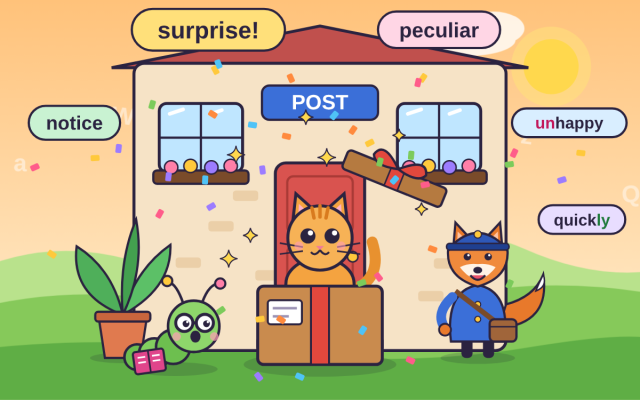
Year 3 Vocabulary: A Word Explorer Village Adventure
Learn the Year 3 vocabulary every child needs: story words, prefixes, synonyms and homophones, by exploring a…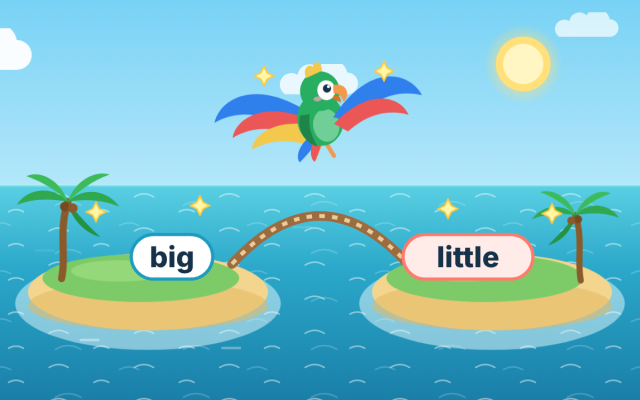
Synonyms and Antonyms: A Word Islands Adventure
Learn synonyms and antonyms, from big and large to big and little, by sailing round Word Islands, building br…
 TapLearn