What changed
Year 2 children in England used to take the key stage 1 tests, often called KS1 SATs, in reading and maths, and schools reported the results nationally. From the 2023 to 2024 school year the tests became optional. Schools can still use them, and the Standards and Testing Agency still publishes them, but there are no national results for Year 2 any more.
From 2028, progress through primary school will be measured from the Reception baseline assessment, a short check in the first six weeks of Reception, to the Year 6 SATs.
If your child's school uses the tests
- Subjects: reading (two papers), maths (arithmetic and reasoning) and, optionally, grammar, punctuation and spelling.
- When: the recommended time is May, but the school chooses the dates.
- How: in the classroom, usually in small groups. The tests aren't strictly timed, and many children don't realise they're doing a test.
- Results: the school decides whether to share them. Some put them in the end-of-year report. Your child's teacher will still tell you how they are getting on against what's expected for Year 2.
What is still required in Year 2
Children who didn't meet the standard in the Year 1 phonics screening check, or didn't take it in Year 1, take it in June of Year 2. Our guide to the Year 2 phonics retake explains what happens.
What Year 2 children learn
Whether or not there are tests, Year 2 is a busy year: place value to 100, the 2, 5 and 10 times tables, fractions such as a half and a quarter, telling the time to five minutes, and in English, longer sentences, apostrophes, commas in lists and the Year 2 common exception words. Our guide to what children learn in Year 2 has the full picture.
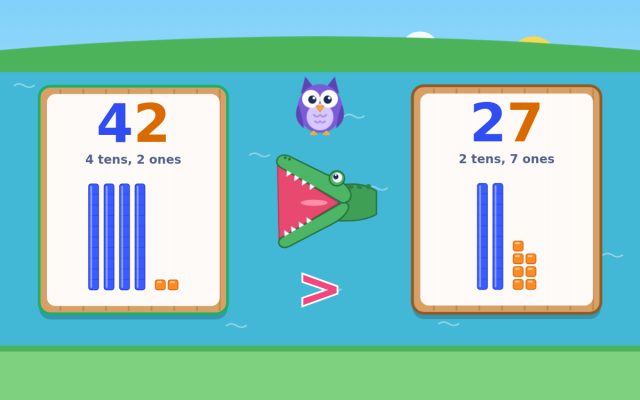
Place Value: Tens and Ones Adventure with Ollie the Owl
Learn place value with tens and ones: bundle cubes into tens, build and split numbers to 100, and compare the…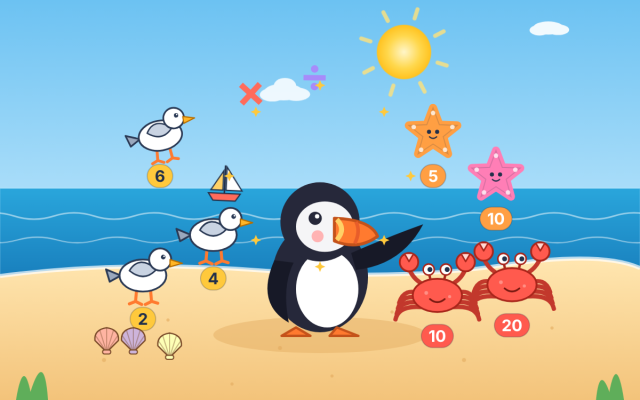
2, 5 and 10 Times Tables: A Beach Adventure with Pip
Learn the 2, 5 and 10 times tables, their division facts and odd and even numbers by calling seagulls, crabs…
Year 2 Common Exception Words: An Island Word Hunt
Learn to read and spell the Year 2 common exception words by spotting each tricky part, waking silent letters…
Expanded Noun Phrases: Paint Picture Town with Words
Learn how expanded noun phrases describe and specify, like the blue butterfly, by dragging describing words t…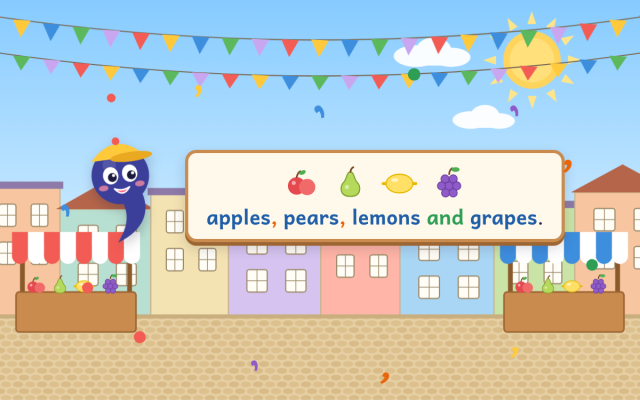
Commas in a List: A Market Adventure with Kit the Comma
Learn how to use commas in a list, with 'and' before the last item. Fill baskets, fix market signs and write…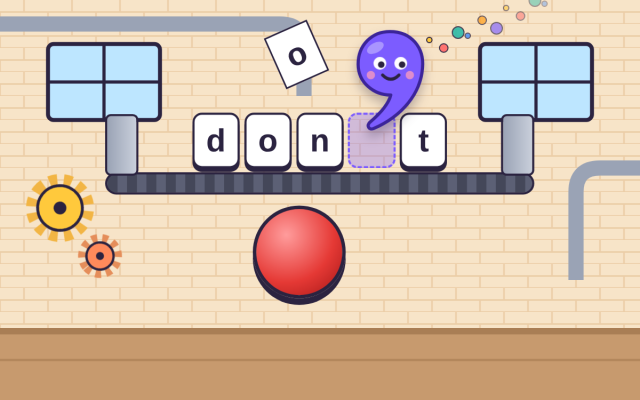
Apostrophes: Missing Letters and Belonging with Posy
Learn how apostrophes show missing letters (can't, I'll) and belonging (the girl's book) by squashing words,…How you can help at home
- Hear your child read most days, and talk about the story.
- Practise counting in 2s, 5s and 10s on walks or stairs.
- Keep it calm. Whether or not the school uses the tests, there's nothing to revise for.
 TapLearn