Past perfect worksheet for Years 5–6: Had: what came first?
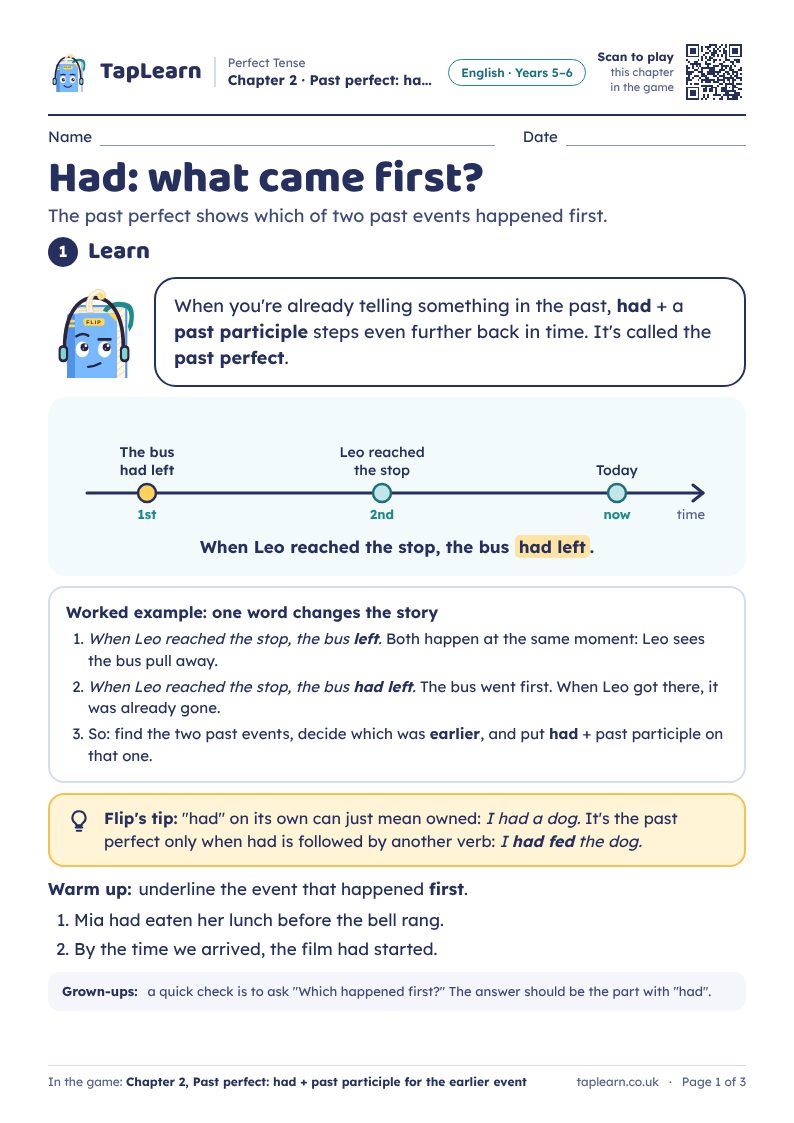
Had: What Came First? is a printable past perfect worksheet for Years 5 and 6 (ages 9 to 11) that teaches children to put had and a past participle on the earlier of two past events, as in "When Leo reached the stop, the bus had left." It covers the Years 5 to 6 statement on using the perfect form of verbs to mark relationships of time and cause.
This worksheet is for members
Membership opens every chapter of every game and every worksheet, for all your children.
See the plansAlready a member? Log in to print it.
Start with the free one: Has and have (chapter 1).
Print it on A4, in colour or black and white. Do it after the chapter, or before it to see what your child already knows.
What's on the worksheet
Your child uses the past perfect (had with a past participle, like had left) to show which of two past events happened first. Includes a story detectives hunt and an answers sheet.
- Page 1 · Learn
- A timeline showing the bus had left before Leo arrived, a worked example comparing "the bus left" and "the bus had left", Flip's tip on had on its own, and a warm-up.
- Page 2 · Try it together
- Story detectives: read a few pages of a storybook, hunt for had followed by another verb, read each sentence aloud and write which event happened first and next.
- Page 3 · Practise
- Tick sentences that use the past perfect, complete sentences with had and a past participle, number which event came first, fix had ate and had took, and a challenge.
- Answers sheet
- Every answer, mix-ups like thinking any had is past perfect, and an already-done idea.
3 A4 pages and an answers sheet · about 25 minutes
Using it at home
- A quick check is to ask "Which happened first?" The answer should be the part with had.
- In story detectives, if you find had on its own ("She had a red coat"), talk about why it doesn't count: there's no second verb.
- Say "When I woke up…" and your child finishes with had: "…the sun had risen."
Watch out for
- Thinking any had is past perfect, like "I had a dog".
- Ask, "Is there another verb straight after had?"
- Using the simple past where had is needed.
- "When we arrived, the film started" sounds as if it started as we walked in. Ask which came first, then add had.
- Writing had ate or had took.
- After had, use the past participle: eaten, taken, gone, seen.
Questions from the worksheet
- Tick the sentences that use the past perfect: Sam had a cheese sandwich. Sam had finished his sandwich. The snow had melted by noon.
- Complete each sentence with had + the past participle of the verb in brackets: The grass was wet because it ___ (rain) in the night.
- Each sentence uses the wrong verb form after had. Write it correctly: By lunchtime, Mia had ate all her snacks. The cat had took the last sausage.
- Mia says these two sentences mean different things: When I got home, Mum cooked tea. When I got home, Mum had cooked tea. Is she right? Explain.
The answers are on the answers sheet, for grown-ups.
National curriculum in England
This worksheet practises this statement from the Years 5–6 english programme of study:
- Develop their understanding of the concepts set out in English appendix 2 by: using the perfect form of verbs to mark relationships of time and cause
In the classroom
- Act out the bus-stop example: one pupil leaves before the other arrives.
- Use Practise C as a which-came-first discussion in pairs.
Questions and answers
What is the past perfect?
The past perfect is had plus a past participle, like had left. It shows which of two past events happened first.
What is the difference between "the bus left" and "the bus had left"?
"The bus left" when Leo arrived means at the same moment. "The bus had left" means it went first and was already gone.
Is "I had a dog" the past perfect?
No. Had on its own just means owned. It's the past perfect only when had is followed by another verb: "I had fed the dog."
 TapLearn