Was and were worksheet for Year 2: Is, are, was, were
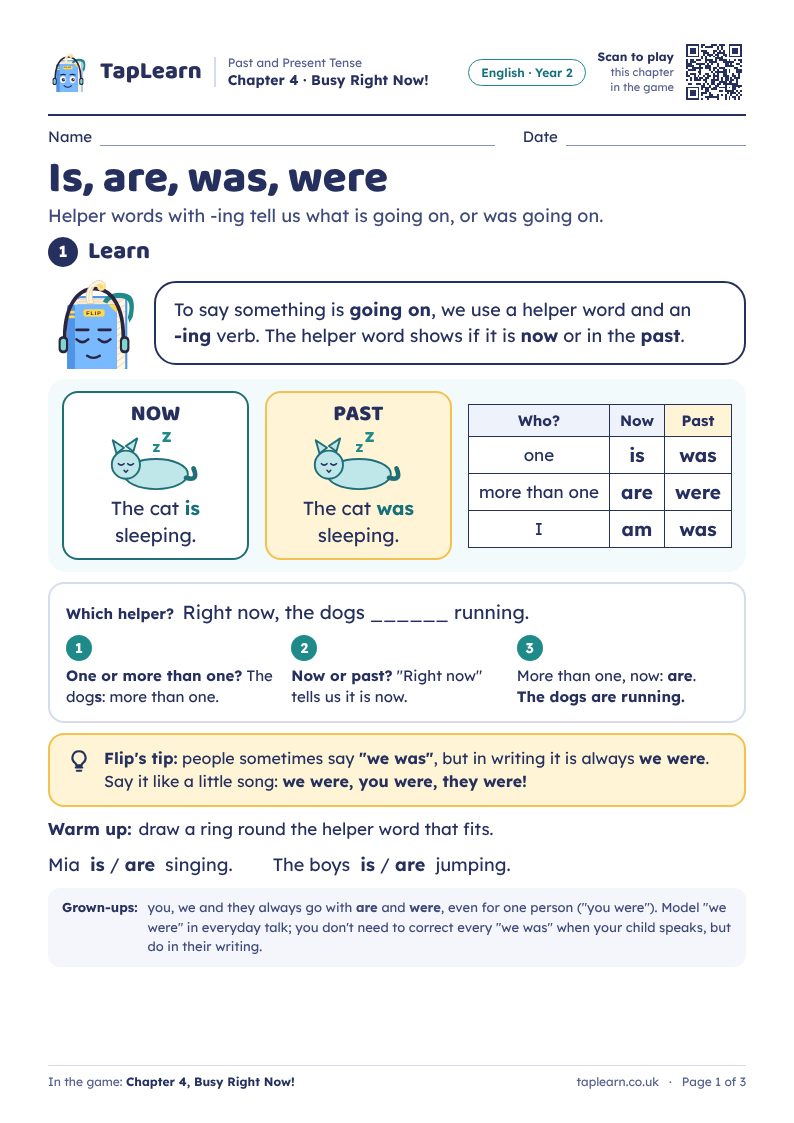
Is, Are, Was, Were is a printable was and were worksheet for Year 2 (ages 6 to 7) that teaches children to use is, are, was and were with -ing verbs and to write we were in place of we was. It covers the Year 2 English statement on learning to use the present and past tenses correctly and consistently, including the progressive form, and some features of written Standard English.
Free to print, no account needed.
Print it on A4, in colour or black and white. Do it after the chapter, or before it to see what your child already knows.
What's on the worksheet
Your child chooses is, are, was or were with -ing verbs to show what is going on now or was going on, and learns to write we were, not we was. Includes a freeze frame acting game and an answers sheet.
- Page 1 · Learn
- A table of helper words for one and more than one, now and past, a worked example for the dogs are running, Flip's we-were song, and a warm-up.
- Page 2 · Try it together
- Freeze frame: act something out while your child says what you are doing, then freeze so they say what you were doing. Make a teddy do things too. Then choose is or are.
- Page 3 · Practise
- Choose was or were, change sentences into the past, draw yourself doing something and write it now and in the past, and a challenge about we was playing football.
- Answers sheet
- Every answer, mix-ups like I was ate or leaving out the helper, and window watch and phone call ideas.
3 A4 pages and an answers sheet · about 25 minutes
Using it at home
- You, we and they always go with are and were, even for one person. Model "we were" in everyday talk.
- You don't need to correct every "we was" when your child speaks, but do in their writing.
- In freeze frame, point out that teddy (one) gets is and was, while "you" gets are and were.
Watch out for
- Writing we was, they was or you was.
- Sing the "we were" song from page 1 together: we were, you were, they were.
- Changing the -ing verb as well, as in I was ate.
- Only the helper word changes: I was eating.
- Leaving out the helper, as in The cat sleeping.
- Ask "Is it going on now, or was it?" and add is or was.
Questions from the worksheet
- It happened in the past. Draw a ring round was or were: We was / were swimming.
- Change each sentence into the past: We are walking to the park.
- Change into the past: I am eating a pear.
- Leo wrote: "We was playing football." Is that right? What should he write?
The answers are on the answers sheet, for grown-ups.
National curriculum in England
This worksheet practises these statements from the Year 2 english programme of study:
- Develop their understanding of the concepts set out in English appendix 2 by: learning how to use the present and past tenses correctly and consistently, including the progressive form
- Develop their understanding of the concepts set out in English appendix 2 by: learning how to use some features of written Standard English
- Text: correct choice and consistent use of present tense and past tense throughout writing
In the classroom
- Play freeze frame as a whole class: one child mimes and the class says the now and past sentences.
- Use Practise A and B as a mini-whiteboard check, writing just the helper word.
Questions and answers
When do you use was and were?
Use was for one person or thing (and for I) and were for more than one, and always with you, we and they. Both show something in the past.
Is 'we was' correct?
No. In written Standard English it is always "we were", even though "we was" is common in speech in some places.
What does is, are, was or were + -ing show?
It shows something going on. Is and are mean it is going on now; was and were mean it was going on in the past.
 TapLearn