Looking after teeth worksheet for Year 4
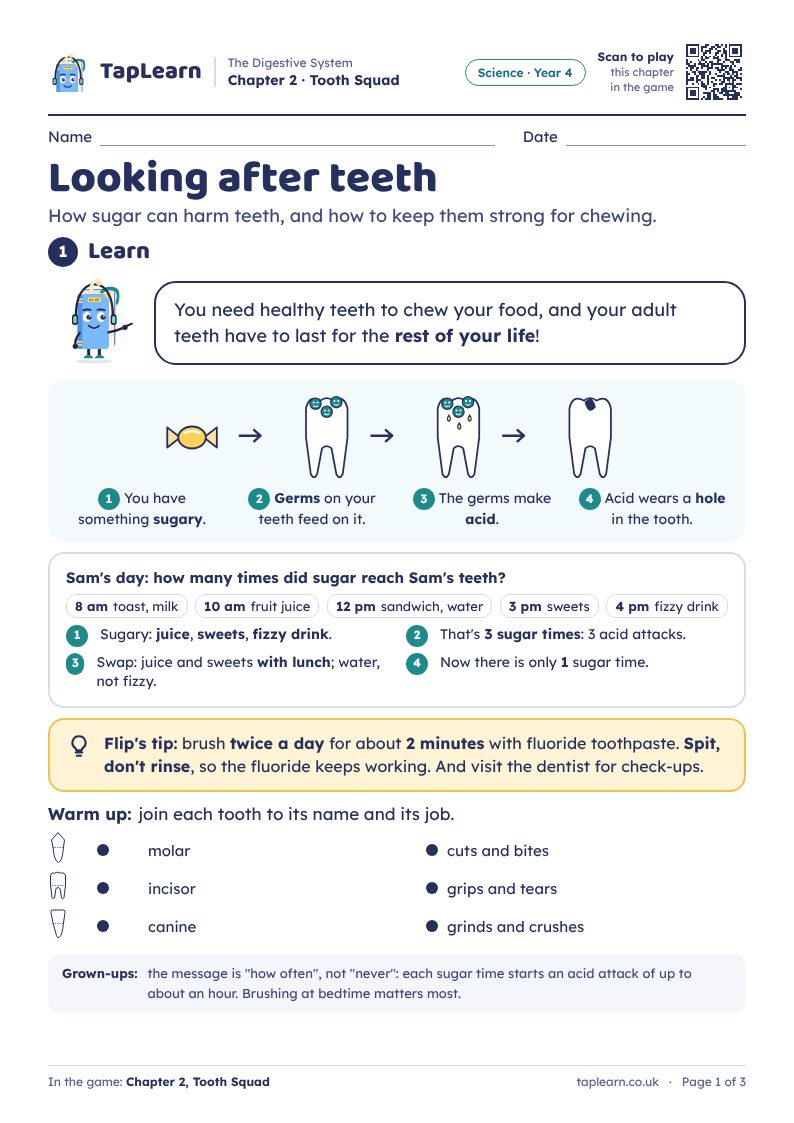
Looking After Teeth is a printable worksheet for Year 4 (ages 8 to 9) that teaches children how sugar helps germs make acid that harms teeth, and how brushing, snacks and dentist visits keep teeth healthy. It supports the Year 4 science national curriculum statement: describe the simple functions of the basic parts of the digestive system in humans.
This worksheet is for members
Membership opens every chapter of every game and every worksheet, for all your children.
See the plansAlready a member? Log in to print it.
Start with the free one: Teeth and their jobs (chapter 1).
Print it on A4, in colour or black and white. Do it after the chapter, or before it to see what your child already knows.
What's on the worksheet
Learn how sugar helps germs make acid that harms teeth, and how brushing, tooth-kind snacks and the dentist keep teeth healthy. With a snack sort and a two-minute brush together, and answers.
- Page 1 · Learn
- Four steps from a sugary snack to a hole in a tooth, Sam's day of sugar times and how swaps cut them, and Flip's brushing tips. Warm-up: join each tooth to its name and job.
- Page 2 · Try it together
- Snack sort and a 2-minute brush: sort 6 snacks or drinks into kind to teeth and sugary, then brush together for 2 minutes and spit without rinsing.
- Page 3 · Practise
- Ring tooth-kind foods, number the steps of tooth decay, a true or false quiz about brushing, write tips for Mia, and Leo's one-sweet-all-afternoon challenge.
- Answers sheet
- All answers, three mix-ups to watch for, and drink detective and brush tour ideas.
3 A4 pages and an answers sheet · about 25 minutes
In the classroom
- Pupils plan a day of snacks and drinks with as few sugar times as possible, then compare with a partner.
- Use the true or false statements as a whole-class thumbs up or down quiz.
Questions from the worksheet
- How does sugar make a hole in a tooth? Number the steps 1 to 4.
- True or false? After brushing, rinse with lots of water.
- True or false? Sipping a sugary drink slowly all afternoon is kind to teeth.
- Leo says, "Sugar can't hurt my teeth, because I only eat one sweet at a time, slowly, all afternoon." Is he right? Explain.
The answers are on the answers sheet, for grown-ups.
National curriculum in England
This worksheet practises this statement from the Year 4 science programme of study:
- Describe the simple functions of the basic parts of the digestive system in humans
Source: National curriculum in England: science programmes of study (DfE)
Using it at home
- Keep the message to "how often", not "never": each sugar time starts an acid attack, and no food is "bad".
- Help your child brush until about age 7 or 8, then keep checking, and do the bedtime brush together.
Watch out for
- Thinking sugary snacks and drinks don't harm teeth.
- They do, through acid made by germs. Juice and smoothies count as sugary, even though they come from fruit.
- Thinking a little bit is fine all day.
- How often matters more than how much: each sugar time starts a new acid attack.
- Rinsing after brushing.
- Rinsing washes the fluoride away. Spit out, don't rinse.
Questions and answers
How does sugar damage teeth?
Germs on teeth feed on sugar and make acid. The acid wears holes in the teeth, so each sugary snack or drink starts a new acid attack.
How long should children brush their teeth?
Children should brush twice a day for about 2 minutes with fluoride toothpaste, then spit without rinsing so the fluoride keeps working.
 TapLearn