What you'll learn
- Where the Second World War fits on a timeline of British history
- Why evacuees left cities in Operation Pied Piper in 1939
- How ration books shared out food fairly from 1940 to 1954
- How radar and The Few won the Battle of Britain
- What the Blitz was and how Anderson and Morrison shelters worked
- How the war changed Britain, including women's work and the NHS
Chapter by chapter
- The Second World War on the timeline: 1939 to 1945 Free to try
Years 3–6 history · 1
- Evacuees: why children left the cities
Years 3–6 history · 1
- Rationing: why and how food was shared out
Years 3–6 history · 1
- The Battle of Britain: the RAF and a turning point
Years 3–6 history · 1
- The Blitz: bombing, blackouts and air raid shelters
Years 3–6 history · 1
- How the war changed Britain: a turning point
Years 3–6 history · 1
- Home Front Challenge (12 questions)
What the chapters cover in the national curriculum in England:
- Years 3–6 history: A study of an aspect or theme in British history that extends pupils' chronological knowledge beyond 1066. Examples (non-statutory): the changing power of monarchs using case studies such as John, Anne and Victoria; changes in an aspect of social history, such as crime and punishment from the Anglo-Saxons to the present or leisure and entertainment in the 20th Century; the legacy of Greek or Roman culture (art, architecture or literature) on later periods in British history, including the present day; a significant turning point in British history, for example, the first railways or the Battle of Britain
About this adventure
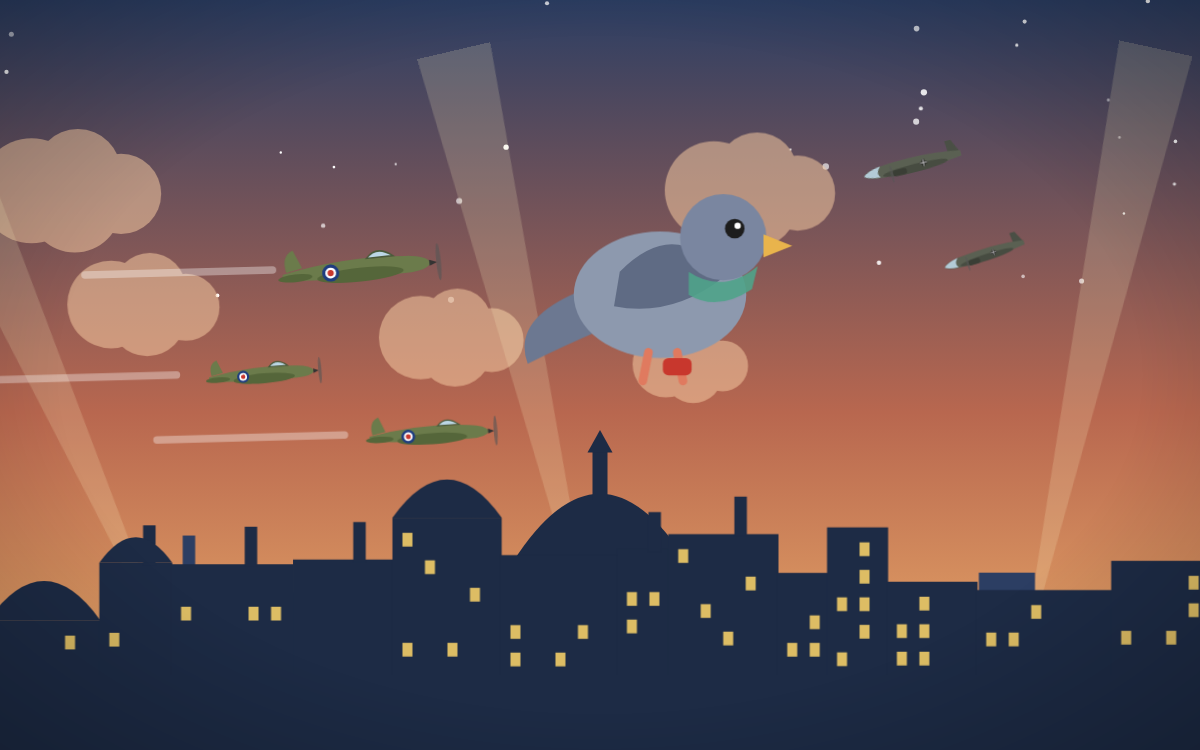
Britain at War is an interactive WW2 home front game for children aged 7–11 that teaches how the Second World War affected life in Britain and why the Battle of Britain was a turning point. Pip, a wartime messenger pigeon, reads every step aloud with captions.
Players place 1939–1945 on a timeline, then follow evacuees (children moved from cities to the safer countryside) on Operation Pied Piper. They shop with a ration book, the government's way of sharing food fairly when U-boats sank supply ships, and use radar to spot raids before the RAF scrambles.
In the Blitz, they close blackout curtains and choose between Anderson and Morrison shelters. Finally, they sort what changed after 1945, from women's war work to the NHS, and work out simple date sums along the way.
Questions and answers
What was the Blitz in World War 2?
The Blitz was the German bombing of British cities, mostly at night, from September 1940 to May 1941. London was bombed on 57 nights in a row, and cities such as Coventry, Liverpool and Glasgow were hit too, so families slept in air raid shelters.
Why were children evacuated in WW2?
Children were evacuated to keep them safe from bombs that were expected to fall on Britain's big cities. Operation Pied Piper began on 1 September 1939 and moved about 1.5 million people to the countryside in three days, each child wearing a name label and carrying a gas mask.
Why was the Battle of Britain a turning point?
The Battle of Britain was a turning point because the RAF stopped Germany's air force from controlling the skies, so Hitler postponed his invasion of Britain. Britain stayed free to keep fighting, and in 1944 the D-Day landings set off from its shores.
What age is this WW2 home front game for?
The game is for children aged 7 to 11 and is pitched mainly at Year 6, where the Second World War is usually taught in KS2 history. Every line is read aloud and shown as a caption, so younger or less confident readers can follow along.
What does the WW2 game include and how long does it take?
It includes six chapters with animated introductions, hands-on activities, typed date questions and a three-question check each, plus a 12-question Home Front Challenge. Playing everything takes about an hour, and children can choose any chapter from the map.
 TapLearn