Learn the difference between pulse and rhythm by tapping a steady beat, clapping words and names, copying rhythms and building your own beat band.
Online game, chapter 1 free · Years 1 and 2 (KS1) · ages 5–7 · national curriculum in England · no adverts · plays on a phone, tablet or computer · no sign-up to start.
An online arts and music game for Years 1 and 2 (KS1). It covers the national curriculum in England, Years 1–2 music: “Listen with concentration and understanding to a range of high-quality live and recorded music”, and 1 more statement listed under the chapters.
5 short chapters, about 30 minutes in all. Children can stop after any chapter.
Start playing for free. Plays in the browser on phones, tablets and computers: no app, no adverts.
Free for teachers: every chapter on the whiteboard with a free teacher account.
Last updated · Checked against the national curriculum in England by the TapLearn team
What you'll learn
The pulse is a steady beat that keeps going through music
How to tap a steady pulse, even when the music goes quiet
Clap the rhythm of words and names, one clap per syllable
Tell the steady pulse apart from the rhythm of the words
Listen to a short rhythm and clap it back accurately
Make a repeating rhythm pattern, an ostinato, that fits the pulse
Chapter by chapter
The pulse: feeling and tapping a steady beatStart playing for free
Learn that the pulse is a steady beat, like a heartbeat or a ticking clock, by listening to and sorting steady and unsteady sounds, spotting the steady drummer and tapping the pulse through a quiet gap.
Years 1–2 music · 1
Rhythm: clapping the pattern of words and names
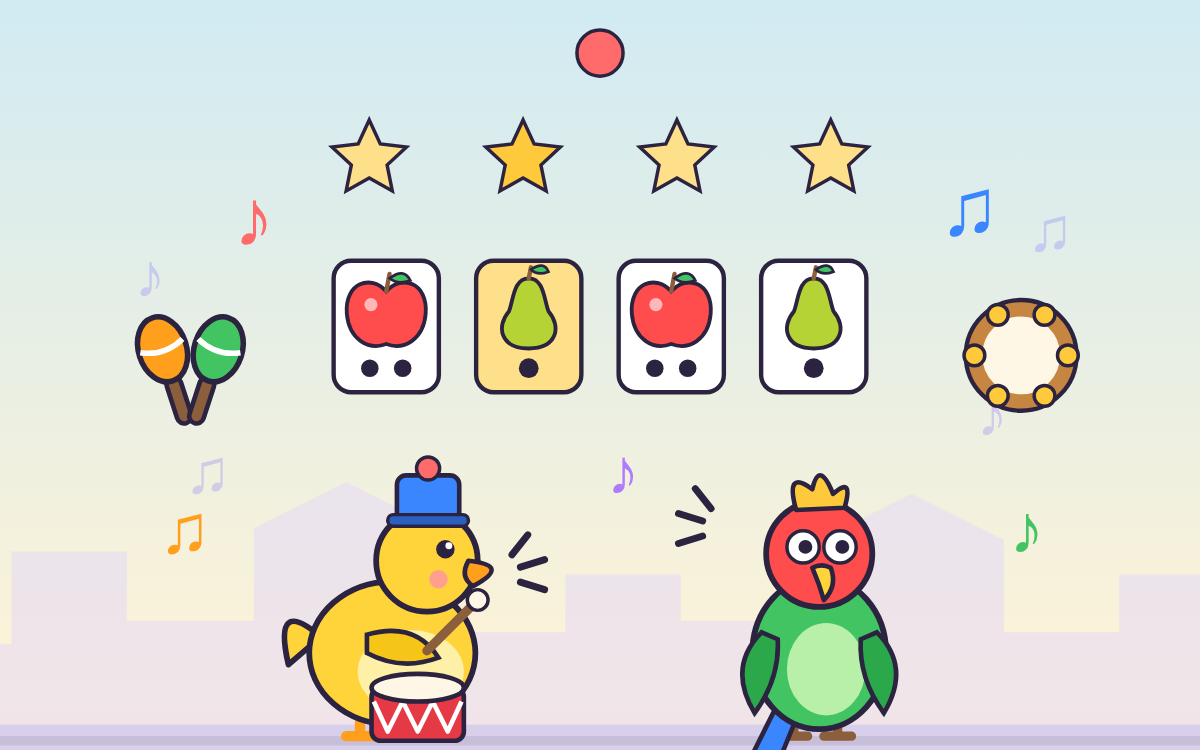
Learn that a rhythm is a pattern of sounds by clapping words and names one syllable at a time, then matching spoken chants to rhythm cards where a pear is one sound and an apple two.
Years 1–2 music · 1Years 1–2 music · 2
Pulse and rhythm: telling them apart
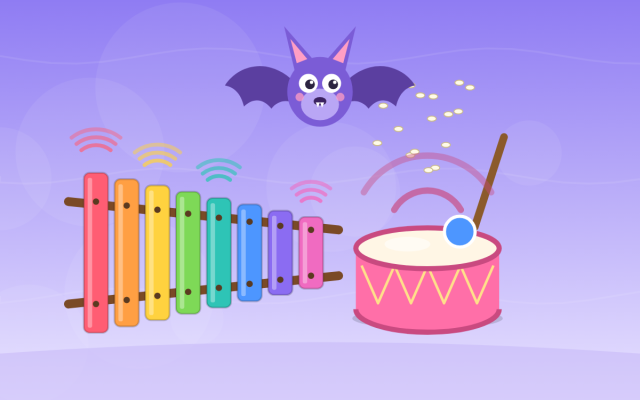
Listen to the pulse and the rhythm of Hot Cross Buns separately and together, sort recorded sounds into pulse or rhythm, then tap the steady pulse while the rhythm plays, and swap parts.
Years 1–2 music · 1
Copycat rhythms: listening and clapping back
Listen with concentration to short four-beat rhythms and pick the matching picture cards, then play copycat: clap each rhythm back in time on your turn, guided by a steady ticking pulse.
Years 1–2 music · 1Years 1–2 music · 2
Making music: repeating rhythms with a steady pulse
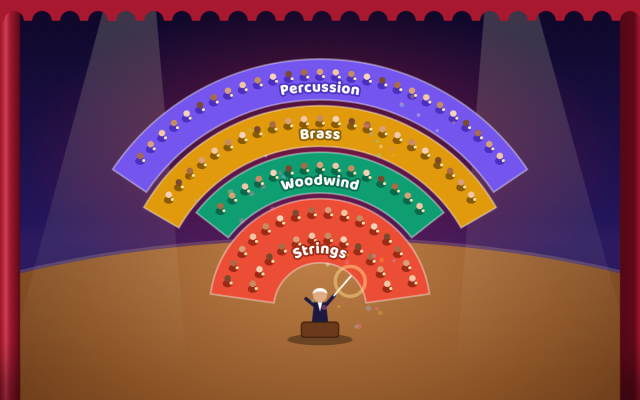
Combine sounds by layering repeating patterns, called ostinatos, over a steady pulse, find the player who isn't repeating or has lost the pulse, then make up, remember and perform your own rhythm.
Years 1–2 music · 2
Beat Street Show: pulse and rhythm challenge (10 questions)
What the chapters cover in the national curriculum in England:
Years 1–2 music: Listen with concentration and understanding to a range of high-quality live and recorded music
Years 1–2 music: Experiment with, create, select and combine sounds using the inter-related dimensions of music
About this adventure
Pulse and Rhythm: A Beat Street Band Adventure is an interactive music game that teaches children aged 5–7 to feel a steady pulse, clap rhythms and tell the two apart, following the KS1 music curriculum.
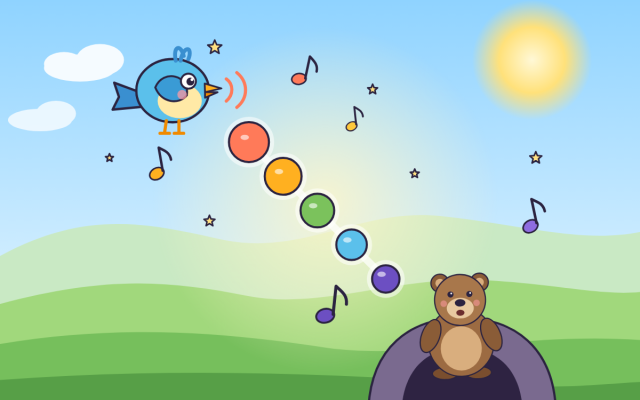
Children tap a drum in time with a bouncing ball, sort everyday sounds into steady and not steady, and clap words like ba-na-na one syllable at a time. Picture cards show each rhythm: a pear is one sound on a beat and an apple is two quick sounds. They hear the pulse and the rhythm of Hot Cross Buns played on their own and together, then play copycat rhythms with Dottie the drumming duck and Pip the parrot.
Finally they build a band in layers over a steady pulse, find out that a repeating pattern is called an ostinato, and make up, remember and play a rhythm of their own.
Questions and answers
What is the difference between pulse and rhythm?
The pulse is the steady beat that keeps going all through a piece of music, like a heartbeat or a ticking clock. The rhythm is the pattern of long and short sounds on top of it, often following the words of a song.
What is pulse in music, in simple words?
Pulse is the steady beat you can march, clap or tap along to. Every beat comes after the same gap, and it keeps going even when the music goes quiet for a moment.
How can young children learn to clap a rhythm?
Clapping the words of names, songs and chants is a simple start: one clap for each syllable, so ba-na-na gets three claps. Picture cards help too, and in this game a pear means one sound on a beat and an apple two quick sounds.
What age is this pulse and rhythm game for?
It is made for children aged 5 to 7 and follows the Key Stage 1 music curriculum in England, mainly Year 1. Older children who are new to music can also use it to practise keeping a steady beat.
What does the game include and how long does it take?
The game has five chapters and a ten-question final show, and takes about 30 minutes to play from start to finish. Children tap, clap, sort sounds, copy rhythms and build their own band, with spoken instructions all the way through.
We count visits to make TapLearn better.We use one cookie, only on this site, to see how families find and use it. No adverts, and nothing is shared.One cookie, only on this site. No adverts.How we measure
 TapLearn