What you'll learn
- Every number to 10 can be split into two smaller parts
- The whole stays the same when objects are moved or spread out
- Show numbers 6 to 9 as 5 and some more on fingers
- Read a ten frame and find how many more make 10
- Use a part-whole model to work out a hidden part
- Find all the ways to make 5 and spot the pattern
Chapter by chapter
- Build and split groups: numbers are made of parts Free to try
Reception maths · 1 Reception maths · 2 Reception maths · 3
- Fingers: making numbers to 10 on two hands
Reception maths · 2 Reception maths · 1
- Ten frames: seeing the parts of numbers to 10
Reception maths · 2 Reception maths · 1
- Part-whole pictures: the whole and its two parts
Reception maths · 2 Reception maths · 1
- All the ways to make a number: spot the pattern
Reception maths · 3 Reception maths · 2 Reception maths · 1
- Number parts challenge: have a go! (8 questions)
What the chapters cover in the national curriculum in England:
- Reception maths: Explore the composition of numbers to 10
- Reception maths: Have a deep understanding of numbers to 10, including the composition of each number
- Reception maths: It is important that children develop positive attitudes and interests in mathematics, look for patterns and relationships, spot connections, 'have a go', talk to adults and peers about what they notice and not be afraid to make mistakes
About this adventure
Number Bonds to 10 is an interactive maths game that teaches children aged 4–6 how each number up to 10 is made of two smaller parts, matching the EYFS Reception goals for number composition. Dotty the ladybird narrates every step and captions appear on screen, so children can play before they read confidently.
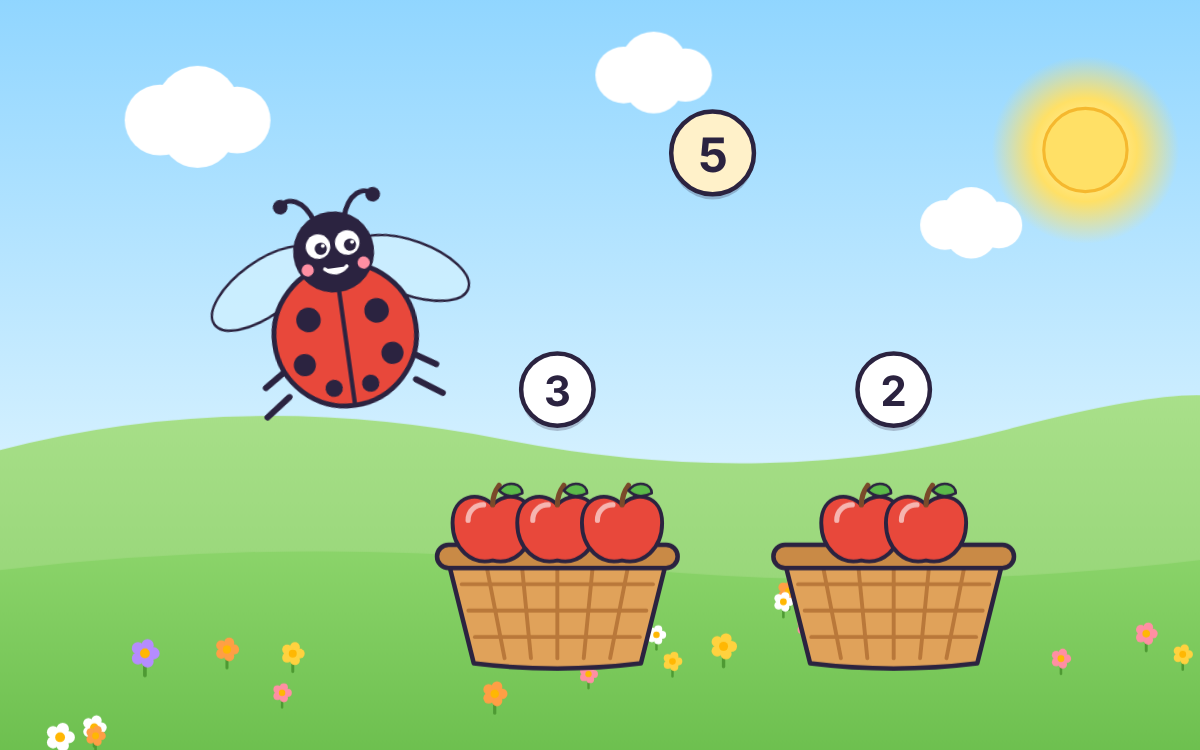
Children shake apples from a tree and share them between baskets, raise fingers on two hands, flip red and yellow counters on a ten frame and drag counters into a part-whole model. Along the way they meet the words whole and part, see 7 as 5 and 2, and work out how many are hiding when they know the whole and one part.
There is no timer. Children are encouraged to have a go, look for patterns and talk to a grown-up about what they notice, and mistakes are treated as part of learning.
Questions and answers
What are number bonds to 10?
Number bonds are pairs of numbers that join together to make a total, such as 3 and 2 making 5. Number bonds to 10 can mean every pair inside numbers up to 10, or the pairs that make exactly 10, like 6 and 4.
What is a part-whole model in maths?
A part-whole model is a picture with one big circle for the whole number and two smaller circles for its parts. If the whole is 6 and one part is 4, children can work out that the other part must be 2.
Why do children learn to see numbers as 5 and a bit?
Seeing 6 to 9 as 5 and some more helps children recognise amounts quickly without counting one by one. One full hand or one full row of a ten frame shows 5, so 7 is easy to spot as 5 and 2.
What age is this number bonds game for?
It is designed for children aged 4 to 6 and follows the EYFS Reception framework for maths. Older children who are still unsure how numbers to 10 split into parts can also use it for gentle practice.
How long does the number bonds game take to play?
Playing everything takes about 40 minutes, but each of the five chapters works on its own in roughly 5 to 10 minutes. There is also a short challenge at the end with no timer, and children can start with any chapter.
More to explore
See all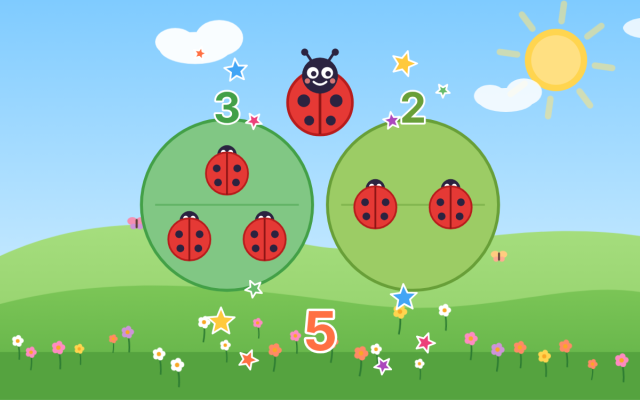
Subitising to 5: Spot It Quick with Dotty the Ladybird
Learn subitising to 5: seeing how many there are without counting. Spot dot patterns, dice, fingers and tens…
Odd and Even Numbers: Pair Up Puffins with Pip
Learn to spot odd and even numbers using pairs, the 2 times table and the ones digit, by pairing puffins in b…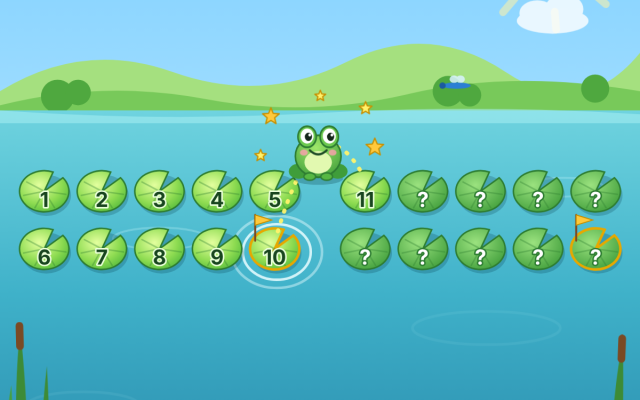
Counting to 20 and Beyond: Hop the Lily Pond with Pip
Learn counting to 20 and beyond, past 10 and on to 30, by tapping lily pads as Pip the frog hops along and ch…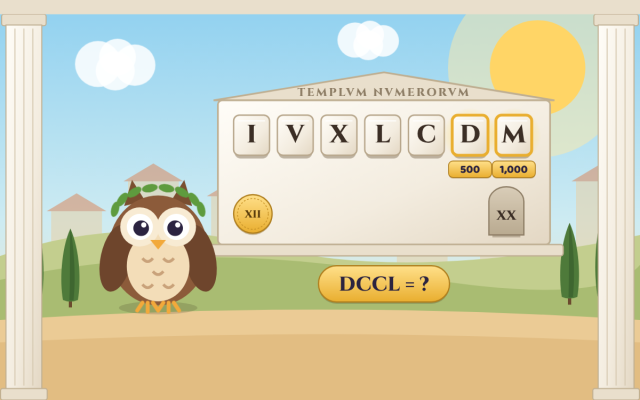
Roman Numerals to 1,000: A Roma Town Quest with Octavia
Learn to read Roman numerals to 1,000 and recognise years like MMXXVI by splitting numerals into chunks and s…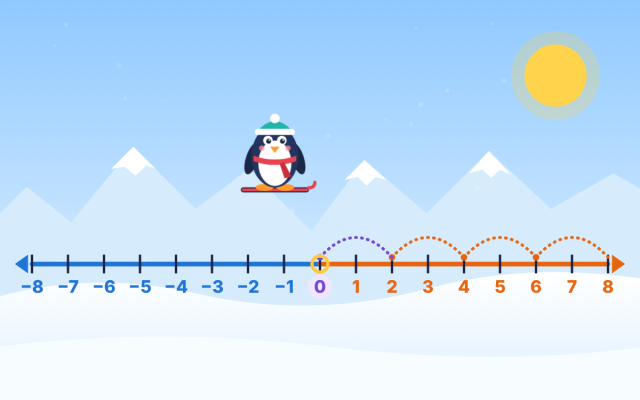
Negative Numbers: Counting Below Zero with Pip the Penguin
Learn what negative numbers are, read temperatures below zero and count through zero, helping Pip the penguin…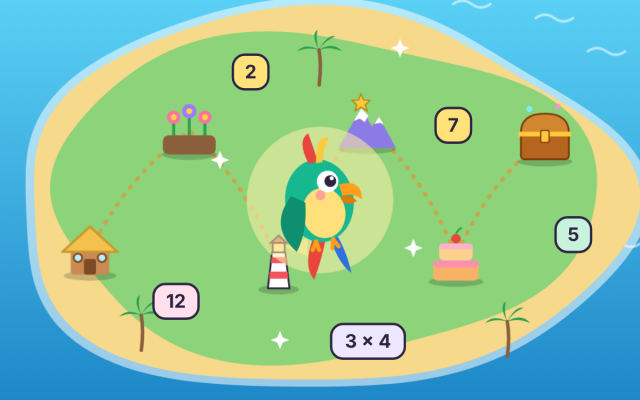
Factors, Multiples and Primes: A Number Isle Adventure
Learn to find common factors, common multiples and prime numbers by planting flower beds, timing lighthouse f…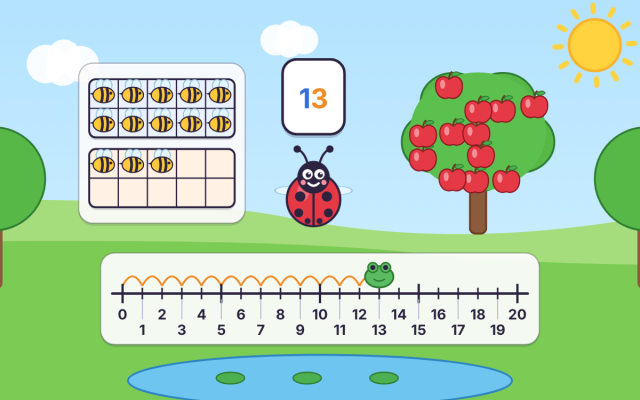
Numbers to 20: Count, Read and Compare with Dotty
Learn to read, write and compare numbers to 20 by counting apples, filling ten frames, hopping a frog along a…
 TapLearn