The difference between goods and services, and what barter is
Primary, secondary and tertiary economic activity, with real job examples
What imports and exports are, and why countries trade
How a supply chain moves products from factory to shop
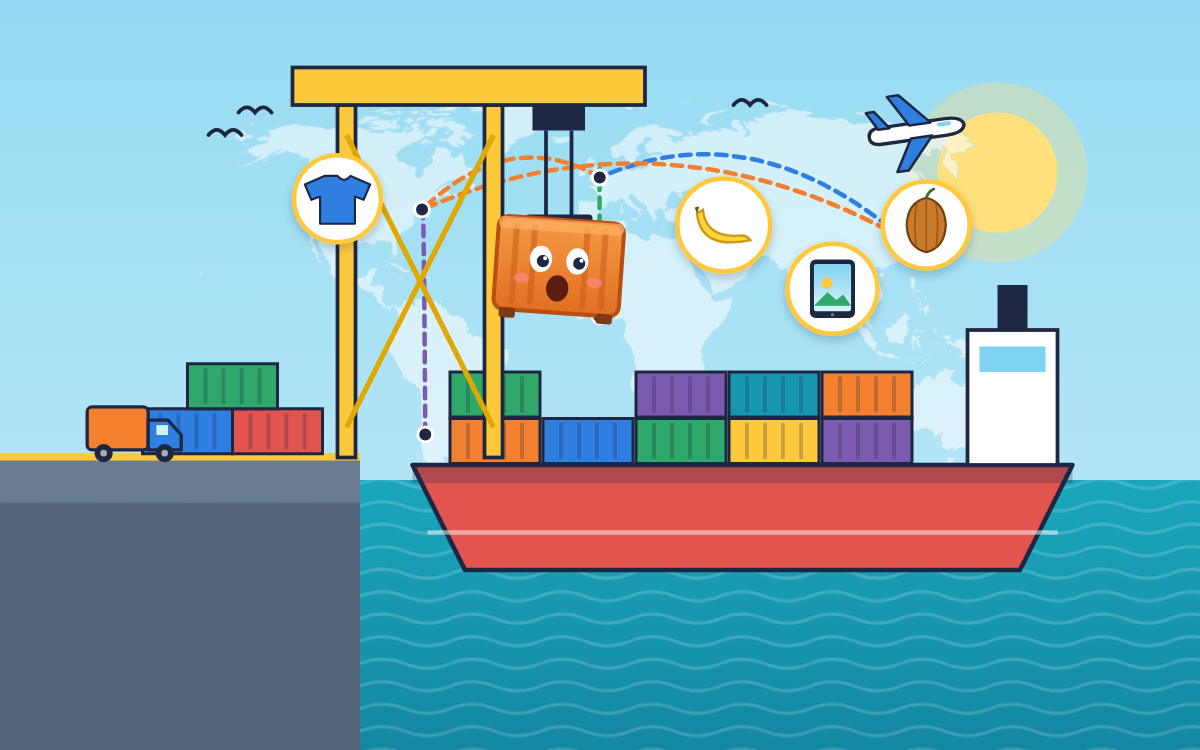
Why most traded goods travel by container ship through ports
How the Fairtrade Minimum Price and Premium help farmers
Chapter by chapter
What trade is: buying and selling goods and servicesFree to try
Years 3–6 geography · 1
Economic activity: primary, secondary and tertiary jobs
Years 3–6 geography · 1
Imports and exports: why countries trade and who the UK trades with
Years 3–6 geography · 1
Supply chains: how products travel from factories to our shops
Years 3–6 geography · 1
Fair trade: fair prices for farmers and workers
Years 3–6 geography · 1
World Trader Challenge: trade, jobs, imports, supply chains and fair trade (10 questions)
What the chapters cover in the national curriculum in England:
Years 3–6 geography: Describe and understand key aspects of human geography, including: types of settlement and land use, economic activity including trade links, and the distribution of natural resources including energy, food, minerals and water
About this adventure
Trade Around the World is an interactive geography game that teaches children aged 9–11 how global trade works: how countries make, buy and sell goods and services, and how products from around the world reach our shops. It matches the KS2 geography topic of economic activity and trade links, and Connie the shipping container reads every step aloud.
Players swap goods in a market and sort jobs into primary (taking raw materials from nature), secondary (making things) and tertiary (services). They drag goods onto import and export arrows, load a container ship with a crane and put a supply chain in order, from factory to port to shop.
Finally, they meet Ama, a cocoa farmer in Ghana, and see how the Fairtrade Minimum Price and Premium give farmers a fairer deal.
Questions and answers
What is the difference between imports and exports?
Imports are goods or services brought into a country from abroad, and exports are goods or services sent out to be sold in other countries. For example, the UK imports bananas from hot countries and exports things like Scotch whisky and medicines.
How do products made in other countries get to UK shops?
Most products travel in shipping containers on huge ships, which carry over 80% of the world's traded goods by volume. They are unloaded at ports such as Felixstowe, the UK's busiest container port, then taken by lorry or train to warehouses and shops.
What is Fairtrade, in simple words?
Fairtrade is a way of trading that makes sure farmers and workers get a fairer deal. They are paid at least a Minimum Price even when prices fall, plus extra Premium money that the community decides how to spend, such as on schools or wells.
What age is the Trade Around the World game for?
It is designed for children aged 9 to 11 and is pitched mainly at Year 6, matching the KS2 geography topic of economic activity and trade links. Every line is read aloud with captions, so less confident readers can follow along.
What does the trade game include and how long does it take?
The game has an optional warm-up, five chapters with hands-on activities and quick checks, and a 10-question World Trader Challenge with typed answers. Playing everything takes about 50 minutes, and children can start any chapter from the map.
Can we count your visit? We'd like to use one cookie, only on this site, to see how families find and use TapLearn, so we can make it better. No adverts, and nothing is shared. How we measure
Create a free family account and your child can play every chapter of every game for 7 days, with no card needed. Their progress is kept. After that, the free plan is free for ever, and membership is £6.99 a month if you'd like to keep every chapter.
 TapLearn