What natural resources are: energy, food, minerals and water
How coal, oil and natural gas formed over millions of years
Why fossil fuels are non-renewable and sunshine and wind are renewable
The best places for solar, wind, hydro, tidal and geothermal power
Where in the world oil, coal and renewable energy are found
What importing and exporting mean, and how energy travels
Chapter by chapter
Natural resources: energy, food, minerals and waterFree to try
Years 3–6 geography · 1
Fossil fuels: how coal, oil and natural gas formed
Years 3–6 geography · 1
Renewable energy: sun, wind, water and heat from the Earth
Years 3–6 geography · 1
Distribution of energy resources around the world
Years 3–6 geography · 1
Trade links: how countries import and export energy
Years 3–6 geography · 1
Energy Explorer Challenge: resources, distribution and trade (10 questions)
What the chapters cover in the national curriculum in England:
Years 3–6 geography: Describe and understand key aspects of human geography, including: types of settlement and land use, economic activity including trade links, and the distribution of natural resources including energy, food, minerals and water
About this adventure
Energy Explorers is an interactive geography game that teaches children aged 8–11 where energy resources come from, how they are spread around the world and how countries trade them. It follows the KS2 Geography objective on the distribution of natural resources, pitched at Year 6.
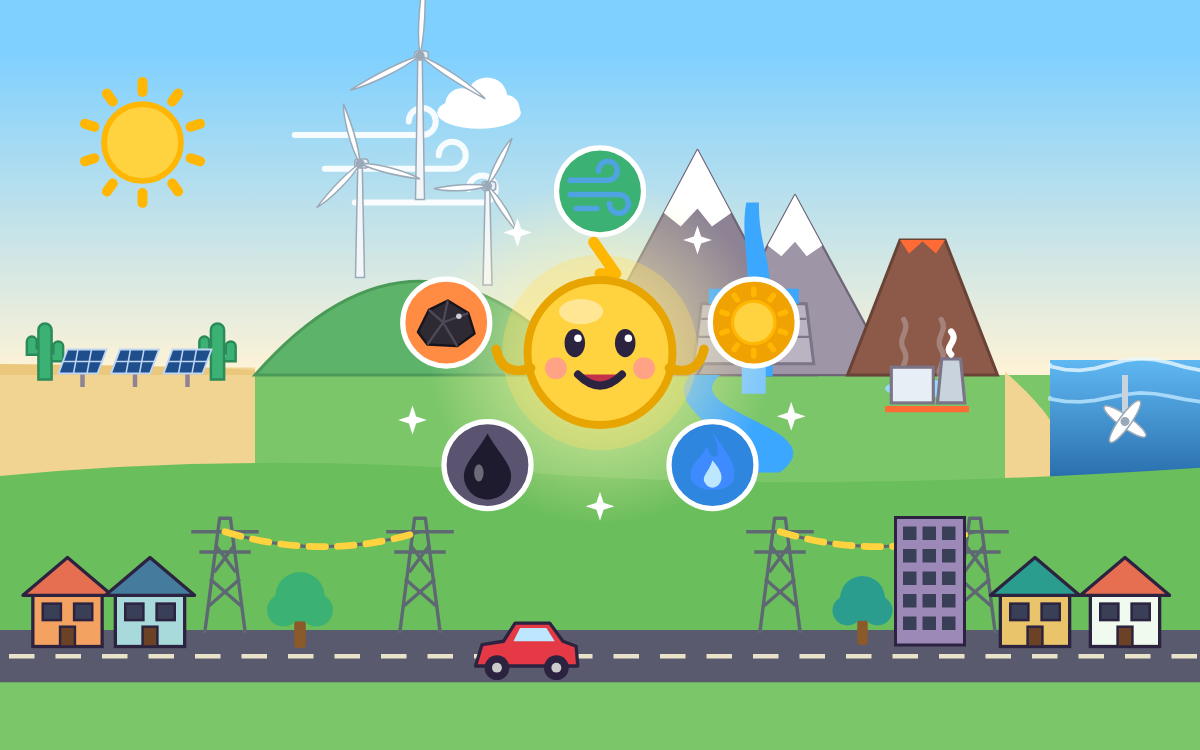
Guided by Watt, a friendly spark, players sort natural resources into energy, food, minerals and water, then travel 300 million years back in time to bury swamp plants and squeeze them into coal. They place solar panels, wind turbines and hydro dams where each works best, and learn the difference between renewable energy, which never runs out, and non-renewable fossil fuels, which will.
On a real world map they find oil in Saudi Arabia, coal in China and hot rocks in Iceland. Finally they connect a pipeline, a tanker ship and an undersea cable to see how the UK imports energy.
Questions and answers
Where does our energy come from?
Most of our energy comes from natural resources such as coal, oil, natural gas, sunshine, wind, flowing water and heat from inside the Earth. Power stations use these resources to make electricity, which travels to our homes along cables carried by pylons.
How are fossil fuels formed, in simple words?
Fossil fuels formed from living things that died millions of years ago. Coal came from giant swamp plants, while oil and natural gas came mostly from tiny sea creatures called plankton, buried under mud and rock and slowly squeezed and heated.
What is the difference between renewable and non-renewable energy?
Renewable energy, such as sunshine, wind and flowing water, will never run out. Non-renewable energy, such as coal, oil and natural gas, took millions of years to form, so once we use it up it is gone.
What age is this energy resources game for?
The game is designed for children aged 8 to 11 and matches the KS2 Geography curriculum in England, where natural resources are usually taught in Year 6. Spoken narration and short instructions help younger or less confident readers join in.
What does the Energy Explorers game include and how long does it take?
It includes five guided chapters, each with an animated introduction, hands-on activities and a quick check, plus a 10-question final challenge. Playing everything takes about 45 minutes, and children can start from any chapter on the map.
Can we count your visit? We'd like to use one cookie, only on this site, to see how families find and use TapLearn, so we can make it better. No adverts, and nothing is shared. How we measure
Create a free family account and your child can play every chapter of every game for 7 days, with no card needed. Their progress is kept. After that, the free plan is free for ever, and membership is £6.99 a month if you'd like to keep every chapter.

 TapLearn