What you'll learn
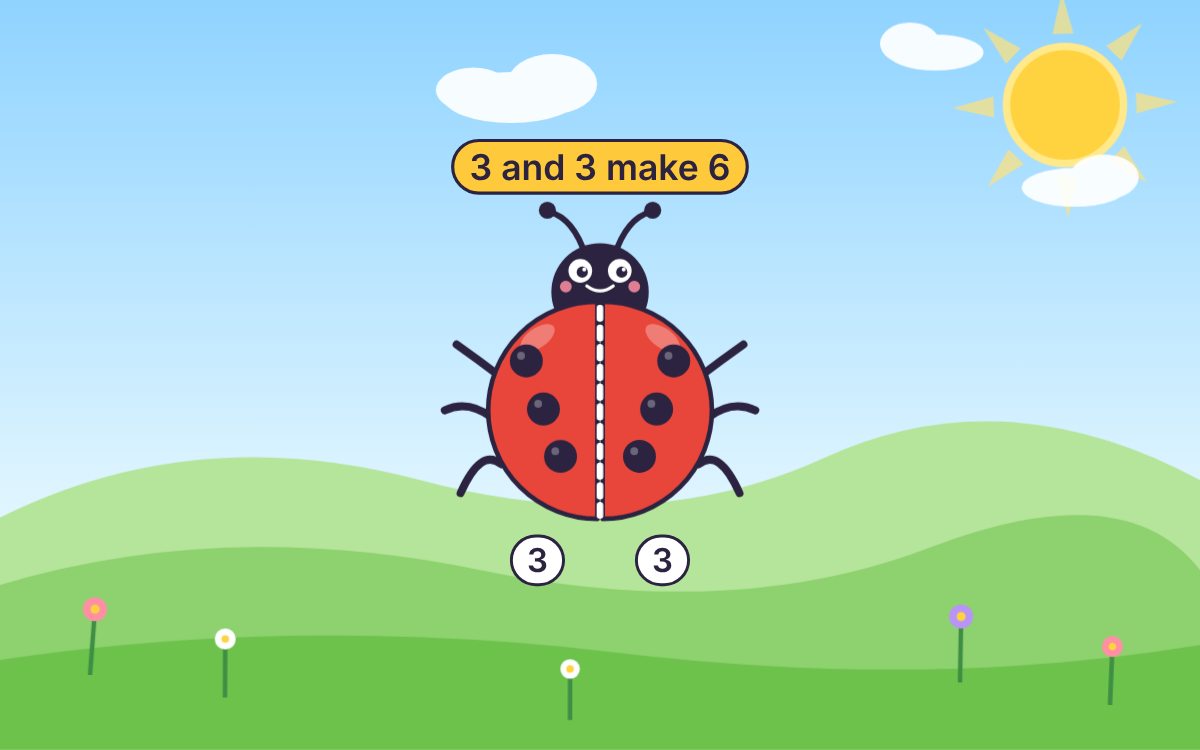
- A double is the same number again, like 3 and 3 make 6
- Make and spot doubles up to 5 and 5 make 10
- Even numbers make pairs with none left over
- Odd numbers leave one on its own when you make pairs
- Share up to 10 things equally by giving one at a time
- Notice when an amount cannot be shared equally between 2 or 3
Chapter by chapter
- Doubles: the same again (3 and 3 make 6) Free to try
Reception maths · 1 Reception maths · 2
- Odd and even numbers: making pairs
Reception maths · 1 Reception maths · 2
- Sharing equally: fair shares and some left over
Reception maths · 1 Reception maths · 2
- Pattern Party: doubles, odd and even, and sharing challenge (8 questions)
What the chapters cover in the national curriculum in England:
- Reception maths: Explore and represent patterns within numbers up to 10, including evens and odds, double facts and how quantities can be distributed equally
- Reception maths: It is important that children develop positive attitudes and interests in mathematics, look for patterns and relationships, spot connections, 'have a go', talk to adults and peers about what they notice and not be afraid to make mistakes
About this adventure
Doubles, Odd and Even Numbers is an interactive maths game that teaches children aged 4 to 6 to spot doubles, sort numbers up to 10 into odd and even, and share amounts equally. It follows the Reception (EYFS) early learning goal for numerical patterns.
A friendly narrator reads every instruction aloud. Children give a ladybird matching spots on both wings to see that a double is the same number again, like 3 and 3 make 6. They peg socks on a washing line in pairs: an even number gives every sock a partner, while an odd number leaves one sock on its own.
Teddies then share strawberries and cookies one at a time, so children notice when shares are fair and when one is left over. Gentle hints encourage them to have a go, talk about what they notice and learn from mistakes.
Questions and answers
What are odd and even numbers, in simple words?
Even numbers can be put into pairs with none left over, like 2, 4, 6, 8 and 10. Odd numbers always leave one on its own when you make pairs, like 1, 3, 5, 7 and 9.
What does double mean in maths for children?
Doubling means adding the same number again, so double 3 is 3 and 3, which makes 6. Children often see doubles on ladybird wings, dominoes and their own two hands, where 5 fingers and 5 fingers make 10.
How do you teach a child to share equally?
Share things out one at a time, giving one to each person in turn until none are left, then check that everyone has the same amount. If one is left over and cannot be split, the amount cannot be shared equally.
What age is this odd and even numbers game for?
The game is designed for children aged 4 to 6, matching the Reception year of the Early Years Foundation Stage in England. Older children who need a refresher on doubles, odd and even numbers or sharing can enjoy it too.
What is included in the game and how long does it take?
The game has three chapters, on doubles, odd and even numbers, and sharing equally, followed by an 8-question Pattern Party challenge. Playing everything takes about 30 minutes, and children can start any chapter from the garden map.
More to explore
See all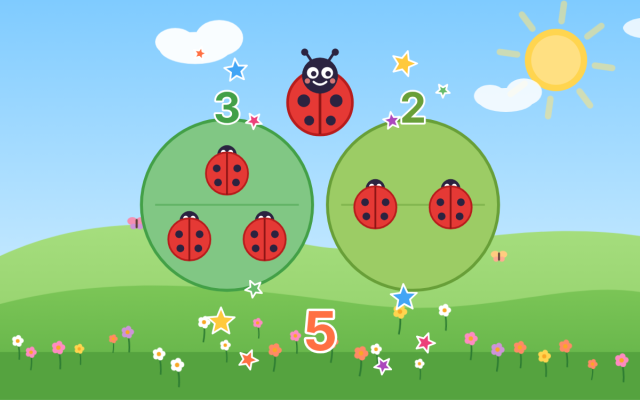
Subitising to 5: Spot It Quick with Dotty the Ladybird
Learn subitising to 5: seeing how many there are without counting. Spot dot patterns, dice, fingers and tens…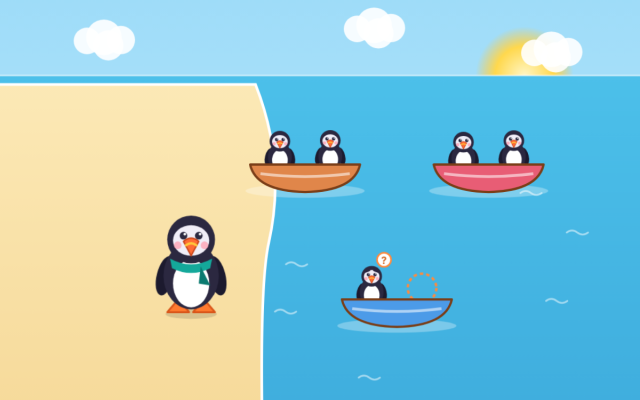
Odd and Even Numbers: Pair Up Puffins with Pip
Learn to spot odd and even numbers using pairs, the 2 times table and the ones digit, by pairing puffins in b…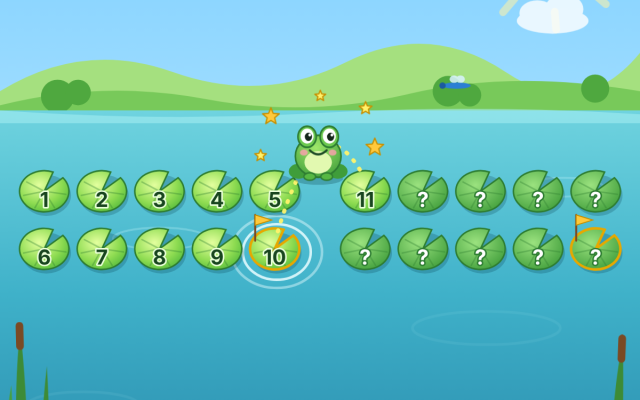
Counting to 20 and Beyond: Hop the Lily Pond with Pip
Learn counting to 20 and beyond, past 10 and on to 30, by tapping lily pads as Pip the frog hops along and ch…
Roman Numerals to 1,000: A Roma Town Quest with Octavia
Learn to read Roman numerals to 1,000 and recognise years like MMXXVI by splitting numerals into chunks and s…
Negative Numbers: Counting Below Zero with Pip the Penguin
Learn what negative numbers are, read temperatures below zero and count through zero, helping Pip the penguin…
Factors, Multiples and Primes: A Number Isle Adventure
Learn to find common factors, common multiples and prime numbers by planting flower beds, timing lighthouse f…
Numbers to 20: Count, Read and Compare with Dotty
Learn to read, write and compare numbers to 20 by counting apples, filling ten frames, hopping a frog along a…
 TapLearn