What you'll learn
- Say one number for each thing when counting objects
- The last number you say tells you how many there are
- Moving things around does not change how many there are
- Count out a set number of pebbles into a tens frame
- Count actions like jumps and claps as they happen
- Count sounds like drum beats and bells by listening
Chapter by chapter
- Counting objects: one number for each thing Free to try
Reception maths · 1 Reception maths · 2
- How many? The last number you say
Reception maths · 1 Reception maths · 2
- Pebbles and tens frames: counting to 10
Reception maths · 2 Reception maths · 1
- Counting actions: claps and jumps
Reception maths · 1
- Counting sounds: listen and count
Reception maths · 1
- Counting challenge (8 questions)
What the chapters cover in the national curriculum in England:
- Reception maths: Count objects, actions and sounds
- Reception maths: Developing a strong grounding in number is essential so that all children develop the necessary building blocks to excel mathematically. Children should be able to count confidently, develop a deep understanding of the numbers to 10, the relationships between them and the patterns within those numbers. By providing frequent and varied opportunities to build and apply this understanding - such as using manipulatives, including small pebbles and tens frames for organising counting - children will develop a secure base of knowledge and vocabulary from which mastery of mathematics is built
About this adventure
Counting Objects, Actions and Sounds is an interactive maths game for Reception children aged 4–5 that teaches them to count things, movements and sounds, saying one number for each one. It follows the EYFS Development Matters goal to count objects, actions and sounds.
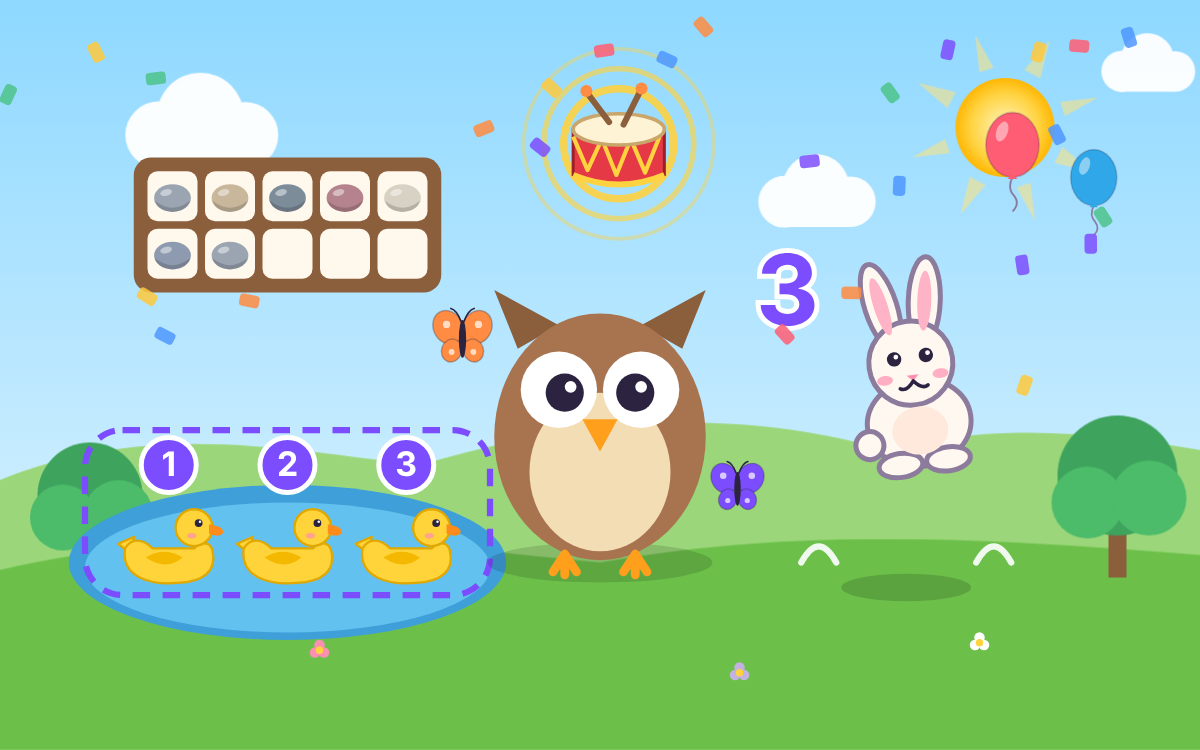
Ollie the owl talks children through every step. They tap ducks that swim aside once counted, light up stars that can't be moved, and spot Ollie's mistakes when he counts a fish twice or skips one. They learn the cardinal principle: the last number you say tells you how many, even when things are hidden or mixed up.
Children also count out pebbles into a tens frame (two rows of five), make a bunny jump, clap along, and listen for drum beats behind a curtain, using a pebble tray to keep track.
Questions and answers
What does counting objects, actions and sounds mean in Reception?
It means children can count not only things they can touch, but also things that happen, like jumps and claps, and things they hear, like drum beats. It is one of the Development Matters statements for Reception maths.
What is one-to-one correspondence in counting?
One-to-one correspondence means saying exactly one number for each thing you count. Children often count something twice or miss one out, so moving or touching each item as you count it helps.
What is the cardinal principle?
The cardinal principle is knowing that the last number you say when counting tells you how many there are altogether. A child who has it can answer 'how many?' straight away instead of counting again.
What age is this counting game for?
It is designed for children aged 4 to 5 in Reception, the last year of the Early Years Foundation Stage. Younger children who know their numbers to 10 can enjoy it with a grown-up's help.
What is in the game and how long does it take?
The game has five chapters and an 8-question counting challenge, with narration throughout. Playing everything takes about 30 minutes, and each chapter can be played on its own in around five minutes.
More to explore
See all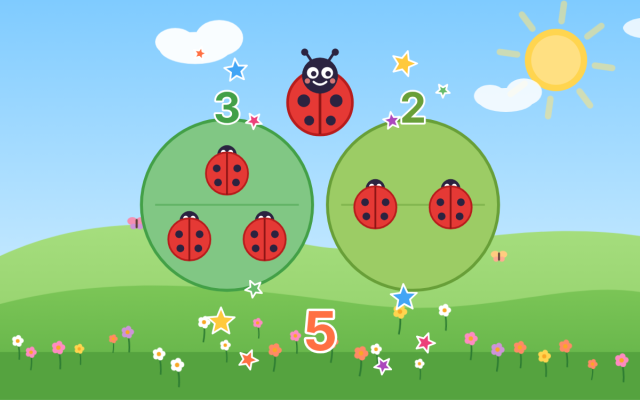
Subitising to 5: Spot It Quick with Dotty the Ladybird
Learn subitising to 5: seeing how many there are without counting. Spot dot patterns, dice, fingers and tens…
Odd and Even Numbers: Pair Up Puffins with Pip
Learn to spot odd and even numbers using pairs, the 2 times table and the ones digit, by pairing puffins in b…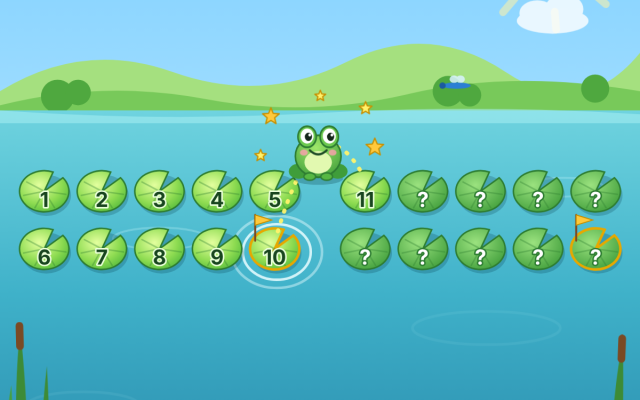
Counting to 20 and Beyond: Hop the Lily Pond with Pip
Learn counting to 20 and beyond, past 10 and on to 30, by tapping lily pads as Pip the frog hops along and ch…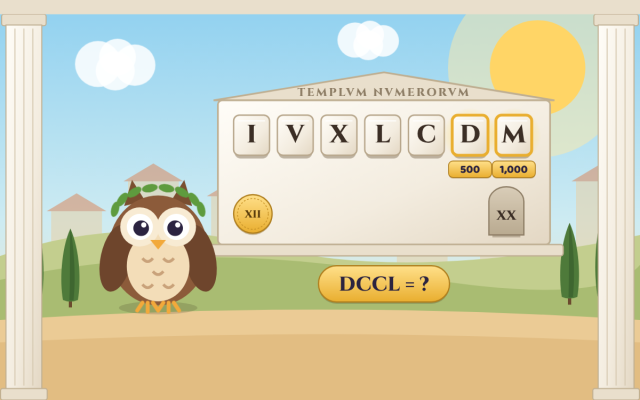
Roman Numerals to 1,000: A Roma Town Quest with Octavia
Learn to read Roman numerals to 1,000 and recognise years like MMXXVI by splitting numerals into chunks and s…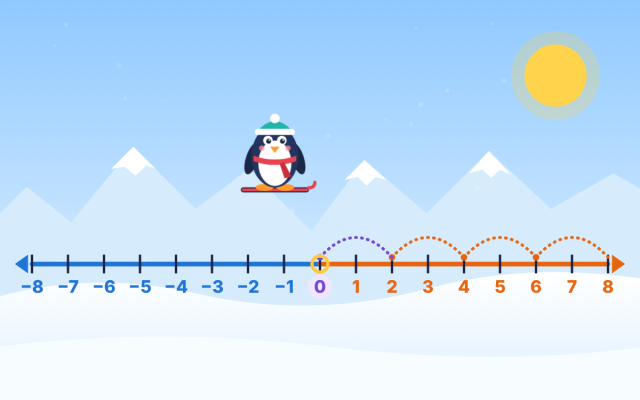
Negative Numbers: Counting Below Zero with Pip the Penguin
Learn what negative numbers are, read temperatures below zero and count through zero, helping Pip the penguin…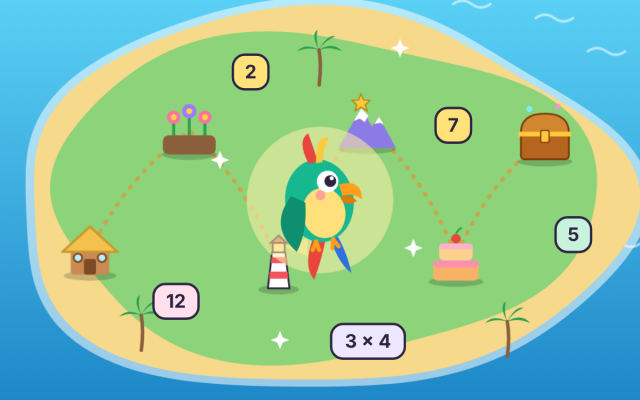
Factors, Multiples and Primes: A Number Isle Adventure
Learn to find common factors, common multiples and prime numbers by planting flower beds, timing lighthouse f…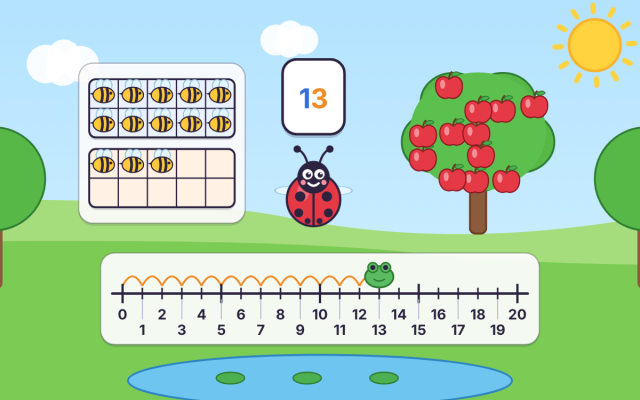
Numbers to 20: Count, Read and Compare with Dotty
Learn to read, write and compare numbers to 20 by counting apples, filling ten frames, hopping a frog along a…
 TapLearn