Learn colour mixing: name the primary colours, mix orange, green and purple, make tints and shades, and sort warm and cool colours with Pip.
Online game, chapter 1 free · Years 1 and 2 (KS1) · ages 5–7 · national curriculum in England · no adverts · plays on a phone, tablet or computer · no sign-up to start.
An online arts and music game for Years 1 and 2 (KS1). It covers the national curriculum in England, Years 1–2 art and design: “To develop a wide range of art and design techniques in using colour, pattern, texture, line, shape, form and space”.
4 short chapters, about 25 minutes in all. Children can stop after any chapter.
Start playing for free. Plays in the browser on phones, tablets and computers: no app, no adverts.
Free for teachers: every chapter on the whiteboard with a free teacher account.
Last updated · Checked against the national curriculum in England by the TapLearn team
What you'll learn
The three primary colours: red, yellow and blue
Which two primary colours make orange, green and purple
Why primary colours can't be mixed from other paints
How white makes a tint and black makes a shade
Why mixing all three primary colours makes brown
How to sort warm colours and cool colours
Chapter by chapter
Primary colours: red, yellow and blueStart playing for free
Learn that red, yellow and blue are the primary colours and that they can't be mixed from other paints, by opening paint pots, giving each a gold star and hunting for primary-coloured objects.
Years 1–2 art and design · 1
Mixing secondary colours: orange, green and purple
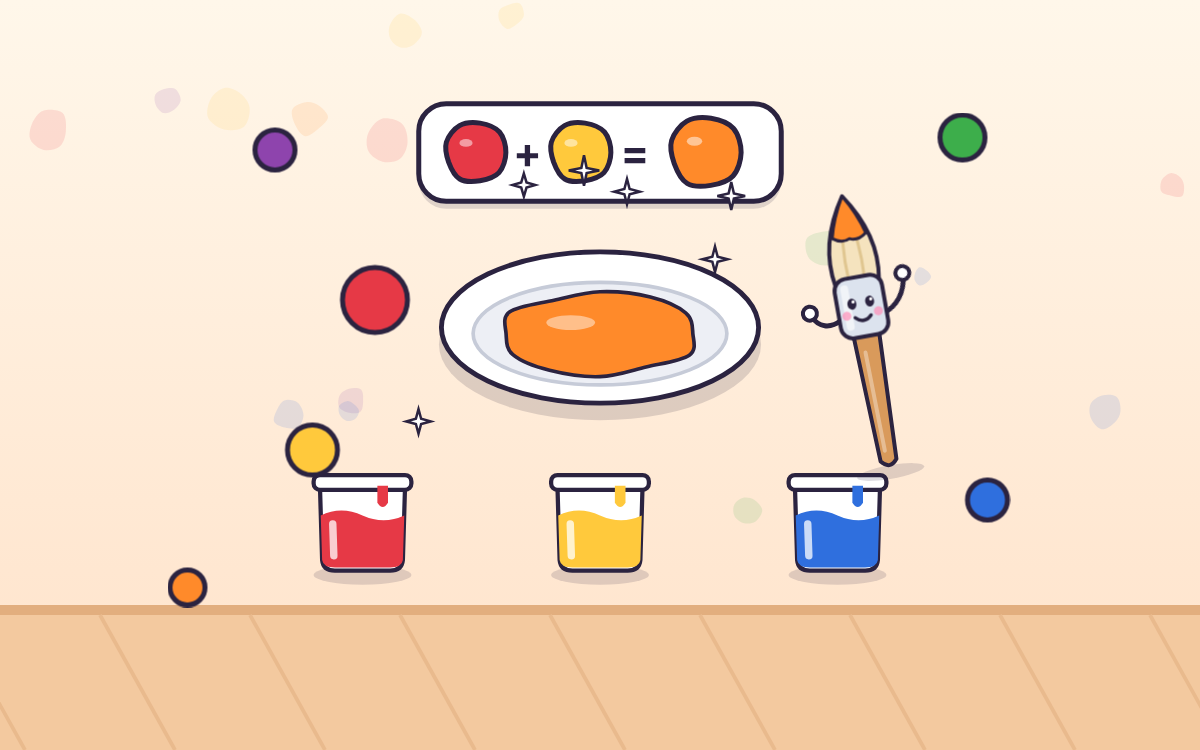
Mix two primary colours in a dish to make the secondary colours orange, green and purple, then follow colour recipe cards and see where each colour sits on the colour wheel.
Years 1–2 art and design · 1
Changing a mix: more of one colour, white and black
Change a colour by adding more yellow or blue to match a target green, make a tint with white and a shade with black, and discover that mixing all three primary colours makes brown.
Years 1–2 art and design · 1
Warm and cool colours
Sort paints into warm colours (red, orange, yellow) and cool colours (blue, green, purple), then paint a campfire picture in warm colours and a snowy night in cool colours.
What the chapters cover in the national curriculum in England:
Years 1–2 art and design: To develop a wide range of art and design techniques in using colour, pattern, texture, line, shape, form and space
About this adventure
Colour Mixing Studio is an interactive art game that teaches children aged 5–7 the primary colours, how to mix secondary colours, and how to sort warm and cool colours. It follows the KS1 Art and design curriculum, mainly at Year 1.
With Pip the paintbrush as their guide, children open paint pots, drag red, yellow and blue into a mixing dish and stir to discover orange, green and purple. They match target greens by adding more yellow or more blue, add white to make a tint and black to make a shade, and find out why mixing all three primary colours makes muddy brown.
In the last chapter they sort paints onto a sun or a snowflake and paint a campfire in warm colours and a snowy night in cool colours. Every chapter ends with a quick check, and a final challenge brings it all together.
Questions and answers
What are the primary colours in paint?
The primary colours in paint are red, yellow and blue. They are called primary, which means first, because we can't make them by mixing other paints, but we can mix them to make many other colours.
What two colours make green, orange and purple?
Yellow and blue make green, red and yellow make orange, and blue and red make purple. These three mixed colours are called secondary colours because each one is made from two primary colours.
What are warm and cool colours?
Warm colours are red, orange and yellow, which remind us of the sun and fire. Cool colours are blue, green and purple, which remind us of ice, water and leaves. Warm colours only look warm; they don't make things hotter.
What age is this colour mixing game for?
The game is made for children aged 5 to 7, in Year 1 and Year 2. It follows the KS1 Art and design curriculum and uses short spoken instructions, so children who are still learning to read can play.
What does the colour mixing game include and how long does it take?
It has four chapters, each with an animated introduction, hands-on mixing activities and a quick check, plus an eight-question final challenge. Playing everything takes about 25 minutes, and children can play one chapter at a time.
We count visits to make TapLearn better.We use one cookie, only on this site, to see how families find and use it. No adverts, and nothing is shared.One cookie, only on this site. No adverts.How we measure
 TapLearn