Spanish Verbs ser, tener and ir: Pepa's Plaza Adventure
Learn the Spanish words for I, you, he and she and how to use ser, tener and ir, by chatting with Pepa the parrot and friends in a sunny plaza.
Online game, chapter 1 free · Years 5 and 6 (KS2) · ages 9–11 · national curriculum in England · no adverts · plays on a phone, tablet or computer · no sign-up to start.
An online languages game for Years 5 and 6 (KS2). It covers the national curriculum in England, Years 3–6 languages: “Understand basic grammar appropriate to the language being studied, including (where relevant): feminine, masculine and neuter forms and the conjugation of high-frequency verbs; key features and patterns of the language; how to apply these, for instance, to build sentences; and how these differ from or are similar to English”.
6 short chapters, about 35 minutes in all. Children can stop after any chapter.
Start playing for free. Plays in the browser on phones, tablets and computers: no app, no adverts.
Free for teachers: every chapter on the whiteboard with a free teacher account.
Last updated · Checked against the national curriculum in England by the TapLearn team
What you'll learn
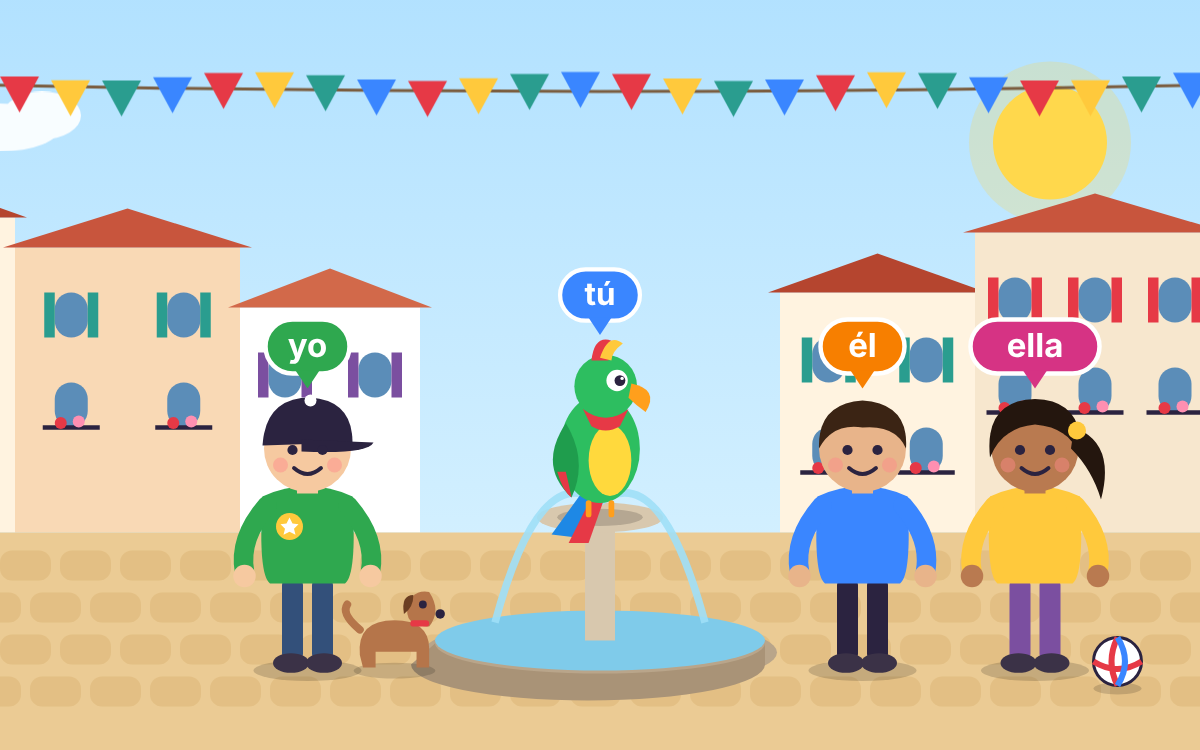
Subject pronouns yo, tú, él and ella: I, you, he and she
Conjugate ser in the present tense: soy, eres, es
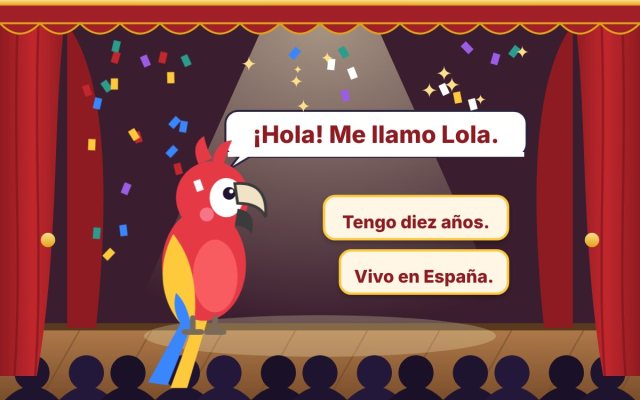
Use tener for things you have and your age: tengo diez años
Say where people go with ir: voy, vas, va
Why Spanish can drop the pronoun and needs no 'do' in questions
Read and write short Spanish sentences about yourself and others
Chapter by chapter
Who's who: yo, tú, él and ella (I, you, he, she)Start playing for free
Learn the Spanish subject pronouns yo, tú, él and ella by tapping characters in a plaza, spotting the accent that turns el (the) into él (he), and choosing the right word for each person.
Years 3–6 languages · 1
The verb ser: soy, eres, es (I am, you are, he/she is)
Conjugate the irregular verb ser in the present tense, compare soy, eres and es with English am, are and is, fill gaps, say where people are from and build sentences such as Soy valiente.
Years 3–6 languages · 1
The verb tener: tengo, tienes, tiene, and saying your age
Use tengo, tienes and tiene to say what people have, and learn that Spanish gives ages with tener, as in Tengo diez años, by handing out pets and building sentences.
Years 3–6 languages · 1
The verb ir: voy, vas, va (I go, you go, he/she goes)
Chant voy, vas, va, send characters to the park, beach, school and pool, and learn that going needs ir rather than soy, using chunks such as al parque and a la playa.
Years 3–6 languages · 1
Verb patterns: how Spanish is like and unlike English
Fill a verb table to spot patterns such as every tú form ending in -s, sort verb forms by person, drop the pronoun, and ask questions or say no without an English 'do'.
Years 3–6 languages · 1
Read and write Spanish sentences with ser, tener and ir
Read a Spanish postcard, type missing verbs and whole sentences with the right accents, then write a postcard about yourself using soy, tengo and voy.
What the chapters cover in the national curriculum in England:
Years 3–6 languages: Understand basic grammar appropriate to the language being studied, including (where relevant): feminine, masculine and neuter forms and the conjugation of high-frequency verbs; key features and patterns of the language; how to apply these, for instance, to build sentences; and how these differ from or are similar to English
About this adventure
Spanish Verbs ser, tener and ir is an interactive game that teaches children aged 9–11 the Spanish subject pronouns yo, tú, él and ella and how to conjugate three high-frequency irregular verbs in the present tense. Players tap, listen, build sentences and type answers while Pepa the parrot guides them round a Spanish town.
Children learn soy, eres and es (I am, you are, he or she is), tengo, tienes and tiene (I have, you have, he or she has) and voy, vas and va (I go, you go, he or she goes). They discover why Spanish gives your age with tener, notice that every tú form ends in -s, and see how Spanish can drop the pronoun and needs no 'do' in questions.
Every Spanish word is spoken aloud, and a ten-question fiesta challenge rounds everything off.
Questions and answers
How do you conjugate ser, tener and ir in Spanish?
For I, you, and he or she, ser is soy, eres, es; tener is tengo, tienes, tiene; and ir is voy, vas, va. All three are irregular verbs, so children learn these forms as patterns rather than by adding the usual endings.
Why do you say 'tengo diez años' instead of 'soy diez' in Spanish?
Spanish uses tener (to have) for age, so 'tengo diez años' literally means 'I have ten years'. Saying 'soy diez' is a common mistake for English speakers, because English uses 'I am' to give an age.
Do you need to say yo or tú in Spanish?
Usually not, because the verb ending already shows who is meant: 'tengo un gato' means 'I have a cat' without yo. Spanish speakers add yo, tú, él or ella for emphasis, or when it isn't clear who they are talking about.
What age is this Spanish verbs game for?
It is designed for children aged 9 to 11 in Years 5 and 6 at Key Stage 2, matching the national curriculum aim to conjugate high-frequency verbs. Confident younger learners can play too, as every Spanish word is read aloud.
What does the game include and how long does it take?
The game has six chapters, an optional warm-up about verbs and pronouns, and a ten-question challenge, taking about 35 minutes in total. Children listen, tap, sort word cards, build sentences and type answers, with spoken Spanish throughout.
We count visits to make TapLearn better.We use one cookie, only on this site, to see how families find and use it. No adverts, and nothing is shared.One cookie, only on this site. No adverts.How we measure
 TapLearn