Spanish Greetings: Say Hola in a Sunny Spanish Town
Learn Spanish greetings for kids: hello, goodbye, your name and how you feel. Chat with friends in a Spanish town and practise clear pronunciation.
Online game, chapter 1 free · Years 3 and 4 (KS2) · ages 7–9 · national curriculum in England · no adverts · plays on a phone, tablet or computer · no sign-up to start.
An online languages game for Years 3 and 4 (KS2). It covers the national curriculum in England, Years 3–6 languages: “Listen attentively to spoken language and show understanding by joining in and responding”, and 2 more statements listed under the chapters.
4 short chapters, about 30 minutes in all. Children can stop after any chapter.
Start playing for free. Plays in the browser on phones, tablets and computers: no app, no adverts.
Free for teachers: every chapter on the whiteboard with a free teacher account.
Last updated · Checked against the national curriculum in England by the TapLearn team
What you'll learn
Greet people with hola, buenos días, buenas tardes and buenas noches
Say goodbye with adiós, hasta luego and hasta mañana
Ask ¿Cómo te llamas? And answer with me llamo
Ask ¿Qué tal? And answer from fenomenal to mal
Pronounce the silent h, ll like y and rising questions
Ask someone to repeat: ¿Perdón? Repite, por favor
Chapter by chapter
Say hello and goodbye in SpanishStart playing for free
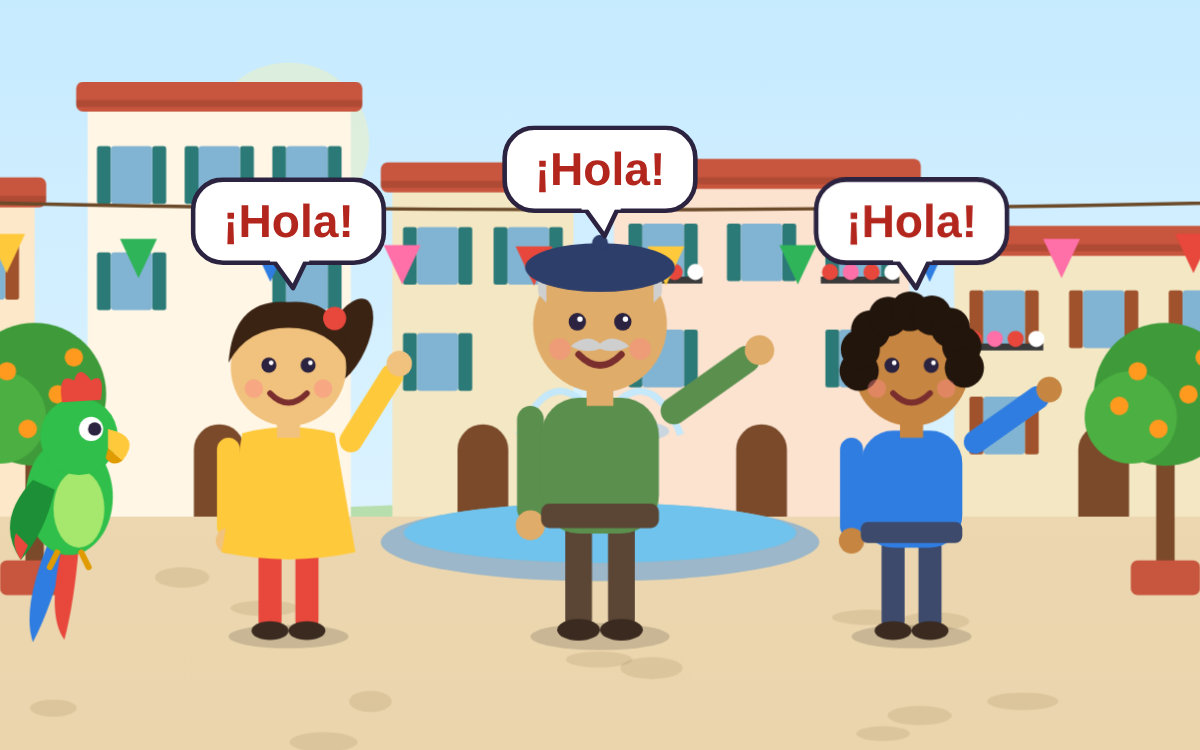
Learn hola, adiós, hasta luego and the greetings for morning, afternoon and night by dragging the sun across the sky, and hear that the h in Spanish is always silent.
Years 3–6 languages · 1Years 3–6 languages · 2
Ask someone's name and say yours in Spanish
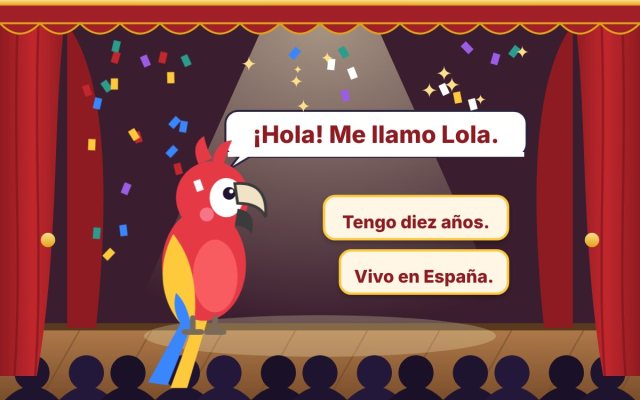
Ask ¿Cómo te llamas? with a rising question tune and answer with me llamo, by building sentences, spotting questions by ear and making a name badge to say aloud.
Years 3–6 languages · 1Years 3–6 languages · 3Years 3–6 languages · 2
Ask how someone is and say how you feel in Spanish
Ask ¿Qué tal? and ¿Cómo estás? and answer with a mood meter of five feelings, then reply politely with gracias and ¿y tú?, listening and matching faces.
Years 3–6 languages · 1Years 3–6 languages · 3Years 3–6 languages · 2
Listen and reply in a Spanish chat, and ask someone to repeat
Join whole conversations on a noisy beach, choosing replies that fit, listening without the words shown, and asking for help with ¿Perdón? Repite, por favor.
What the chapters cover in the national curriculum in England:
Years 3–6 languages: Listen attentively to spoken language and show understanding by joining in and responding
Years 3–6 languages: Develop accurate pronunciation and intonation so that others understand when they are reading aloud or using familiar words and phrases
Years 3–6 languages: Engage in conversations; ask and answer questions; express opinions and respond to those of others; seek clarification and help
About this adventure
Spanish Greetings is an interactive game that teaches children aged 7–9 how to say hello and goodbye, ask and give names, and ask how someone is in Spanish, with clear pronunciation.
Players drag the sun across the sky to discover buenos días, buenas tardes and buenas noches, build sentences such as me llamo Sofía, and use a mood meter to answer ¿Qué tal? With fenomenal, muy bien, bien, regular or mal. Every phrase can be heard at normal speed or slowly, with a "sounds like" guide.
Along the way children learn the sounds that trip English speakers up: the silent h in hola, ll said like y, the ñ in mañana and questions that rise at the end. At the beach they hold whole conversations, some by ear alone, and learn to ask ¿Perdón? Repite, por favor when they can't hear.
Questions and answers
How do you say hello and goodbye in Spanish?
Hello is hola, said OH-la because the h is silent, and goodbye is adiós. You can also say hasta luego for see you later and hasta mañana for see you tomorrow.
When do you say buenos días, buenas tardes and buenas noches?
Buenos días means good morning and is used until lunchtime. Buenas tardes means good afternoon, from lunch until it gets dark, and buenas noches is used in the evening and at night, for hello and for goodnight.
How do children answer ¿Qué tal? in Spanish?
¿Qué tal? Means how are you? Children can answer fenomenal (great), muy bien (very well), bien (fine), regular (so-so) or mal (bad), then say gracias and ask back with ¿y tú?
What age is this Spanish greetings game for?
It is made for children aged 7 to 9, in Years 3 and 4, and matches the Key Stage 2 languages curriculum in England. No earlier Spanish is needed, so it suits complete beginners too.
What does the Spanish greetings game include and how long does it take?
It has four chapters, from greetings to a full conversation, plus a ten-question fiesta challenge. Playing everything takes about 30 minutes, and each chapter can be played on its own.
We count visits to make TapLearn better.We use one cookie, only on this site, to see how families find and use it. No adverts, and nothing is shared.One cookie, only on this site. No adverts.How we measure

 TapLearn