Learn how humans change through the human life cycle, from foetus to old age, by growing a character, sorting puberty changes and comparing gestation.
Online game, chapter 1 free · Year 5 (KS2) · ages 9–11 · national curriculum in England · no adverts · plays on a phone, tablet or computer · no sign-up to start.
An online science game for Year 5 (KS2). It covers the national curriculum in England, Year 5 science: “Describe the changes as humans develop to old age”.
5 short chapters, about 35 minutes in all. Children can stop after any chapter.
Start playing for free. Plays in the browser on phones, tablets and computers: no app, no adverts.
Free for teachers: every chapter on the whiteboard with a free teacher account.
Last updated · Checked against the national curriculum in England by the TapLearn team
What you'll learn
The six life stages: foetus, baby, child, adolescent, adult and old age
What gestation is and why it lasts longer in bigger mammals
Why babies grow fastest in their first year of life
How babies' body proportions differ from adults'
The body and feeling changes that happen during puberty
How bodies change in old age and how to stay healthy
Chapter by chapter
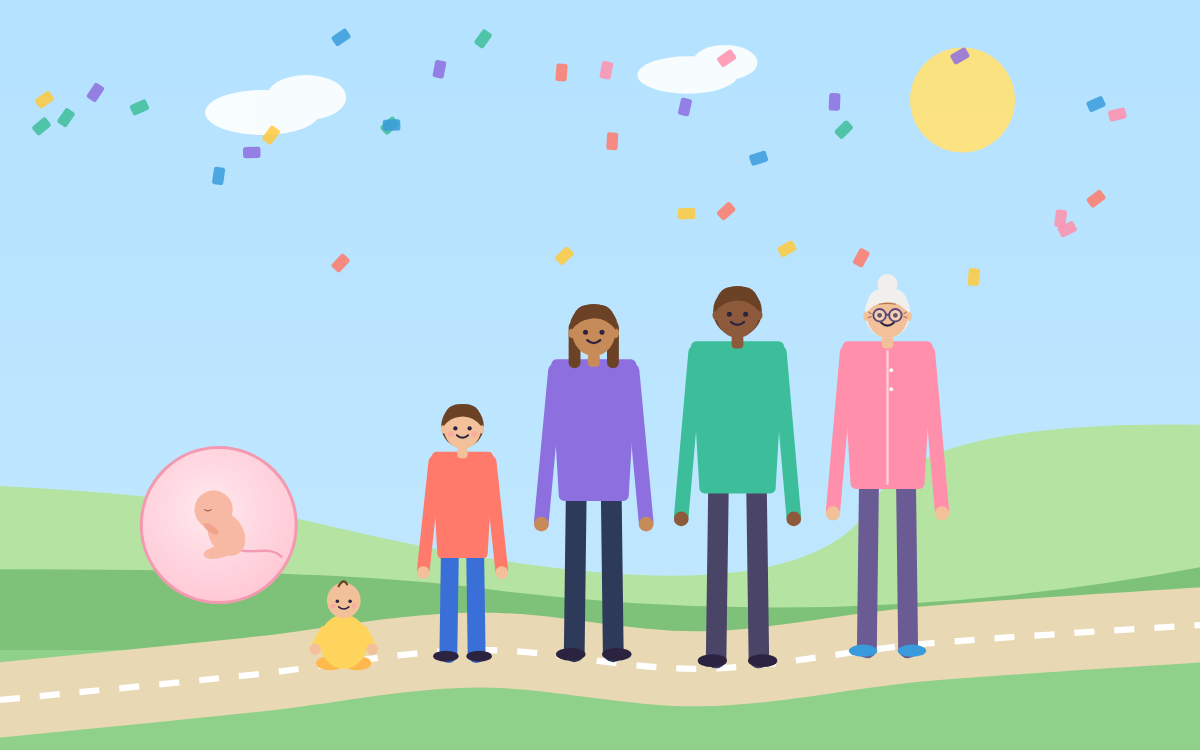
The six stages of human life, from foetus to old ageStart playing for free
Learn to name and order the six stages of human life, from foetus to old age, with rough ages for each, by growing a character on a slider and building a life timeline.
Year 5 science · 1
Before birth: gestation in humans and other animals
Learn what gestation is and how a foetus develops over nine months, then compare gestation in mice, cats, humans, horses and elephants on a bar chart and calculate the differences.
Year 5 science · 1
Babies and children: how we grow and gain skills
Learn how babies and children change in size, body proportions and skills by measuring a baby's first-year growth, reading a height graph and ordering developmental milestones.
Year 5 science · 1
Puberty: body and feeling changes in adolescence
Learn what puberty is, that hormones start it at different ages, and which body and feeling changes happen, by sorting changes into groups and packing a self-care wash bag.
Year 5 science · 1
Adulthood and old age: changes and staying healthy
Learn how bodies change in adulthood and old age, including hair, eyes, hearing, skin, bones and muscles, by exploring hotspots, busting myths and choosing healthy habits.
What the chapters cover in the national curriculum in England:
Year 5 science: Describe the changes as humans develop to old age
About this adventure
Human Life Cycle: Growing Older is an interactive science game that teaches children aged 9–11 how humans change as they develop from a foetus in the womb to old age, matching the Year 5 science curriculum.
Guided by Nana Pip, an 82-year-old who still cycles, players drag a slider to watch a character grow, put the six life stages in order, and measure how much a baby grows in its first year. They read a growth graph to spot the fastest growth and the puberty growth spurt, stack head-sized blocks to see why babies are not tiny adults, and type answers to real gestation calculations.
Later stops cover puberty (hormones, body and feeling changes, and self-care) and adulthood and old age, including why hair turns grey, why reading glasses help, and which healthy habits keep older bodies strong. A ten-question challenge checks everything at the end.
Questions and answers
What are the stages of the human life cycle?
The human life cycle has six main stages: foetus (before birth), baby, child, adolescent, adult and old age. The ages for each stage are rough guides, because everyone grows and changes at their own pace.
What is gestation, and how long is it for humans?
Gestation is the time a baby mammal grows inside its mother before it is born. For humans it lasts about nine months. Larger mammals usually have longer gestation: a mouse's is about 20 days, while an African elephant's is about 22 months.
What changes happen to the body during puberty?
Puberty is when a child's body changes into an adult's body. Everyone has a growth spurt, sweats more and may get spots; girls develop breasts and start periods, and boys' voices deepen. Feelings change too, and puberty starts at different ages for different people.
What age is this human life cycle game for?
The game is designed for children aged 9 to 11 and matches the Year 5 science objective to describe the changes as humans develop to old age. Younger curious children can enjoy it with an adult's help.
What does the Growing Older game include and how long does it take?
It has five chapters, from life stages and gestation to babies, puberty and old age, plus a ten-question challenge. Playing everything takes about 35 minutes, and each chapter can be played on its own.
We count visits to make TapLearn better.We use one cookie, only on this site, to see how families find and use it. No adverts, and nothing is shared.One cookie, only on this site. No adverts.How we measure
 TapLearn