Germs and the Immune System: Germ Defenders with Leo
Learn how germs and the immune system work: meet bacteria and viruses, block germs, fight an infection and see how vaccines and medicines help.
Online game, chapter 1 free · Years 4 to 7 (KS2 and KS3) · ages 8–11 · national curriculum in England · no adverts · plays on a phone, tablet or computer · no sign-up to start.
An online science game for Years 4 to 7 (KS2 and KS3). It covers the national curriculum in England, Years 1–6 relationships and health education: “About personal hygiene and germs including bacteria, viruses, how they are spread and treated, and the importance of handwashing”, and 1 more statement listed under the chapters.
6 short chapters, about 45 minutes in all. Children can stop after any chapter.
Start playing for free. Plays in the browser on phones, tablets and computers: no app, no adverts.
Free for teachers: every chapter on the whiteboard with a free teacher account.
Last updated · Checked against the national curriculum in England by the TapLearn team
What you'll learn
The difference between bacteria, viruses and fungi
Most microbes are harmless, and some are helpful
Four ways germs spread, and how to break the chain
How skin, white blood cells and antibodies fight infection
Why antibiotics treat bacteria but not colds or flu
How vaccines train the immune system and protect communities
Chapter by chapter
Meet the microbes: bacteria, viruses and fungiStart playing for free
Learn what bacteria, viruses and fungi are, that most microbes are harmless or helpful, and how fast bacteria multiply, by zooming in with a microscope and sorting microbe cards.
Years 1–6 relationships and health education · 1
How germs spread and how to stop them
Discover how germs spread through the air, by touch, in food and water, and through cuts and bites, then practise catch it, bin it, kill it and break a chain of germs.
Years 1–6 relationships and health education · 1
How your body's defences fight infection
Explore the body's barriers, send white blood cells to swallow bacteria in a cut, fit antibodies to germs and see how memory cells make you immune to an infection.
Years 1–6 relationships and health education · 1Years 1–6 relationships and health education · 2
How medicines treat infections: antibiotics and more
Find out how infections are treated: rest and fluids for colds, antibiotics only for bacteria, why antibiotic resistance happens and how to take medicines safely.
Years 1–6 relationships and health education · 1
How vaccines train your body to fight germs
Learn how Edward Jenner made the first vaccine, what is inside a vaccine, how it trains white blood cells and memory cells, and which vaccines the NHS offers children.
Years 1–6 relationships and health education · 2
How vaccines protect everyone: herd immunity
Run a Germ Town experiment comparing low and high vaccination to see how herd immunity protects babies and people who cannot have some vaccines, including the measles example.
What the chapters cover in the national curriculum in England:
Years 1–6 relationships and health education: About personal hygiene and germs including bacteria, viruses, how they are spread and treated, and the importance of handwashing
Years 1–6 relationships and health education: The facts and scientific evidence relating to vaccination and immunisation. The introduction of topics relating to vaccination and immunisation should be aligned with when vaccinations are offered to pupils
About this adventure
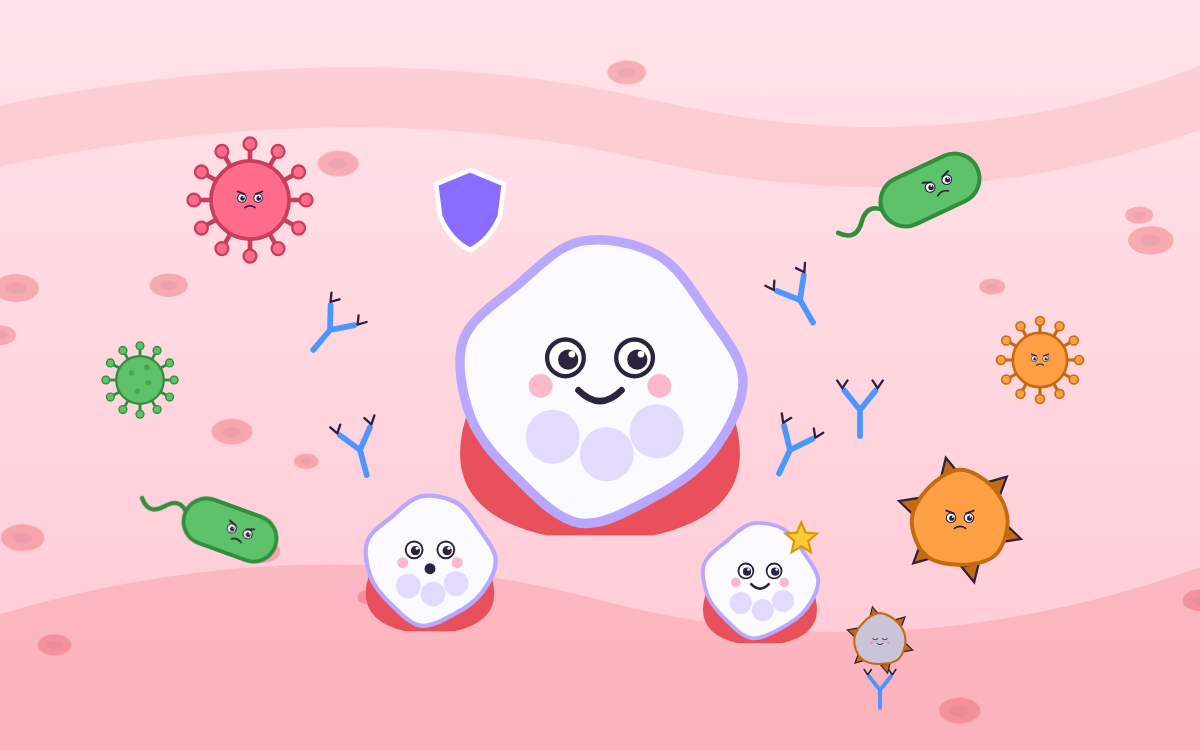
Germs and the Immune System is an interactive game that teaches children aged 8–11 what bacteria, viruses and fungi are, how germs spread, how the body fights infection, and how vaccines and medicines help keep us well. Leo, a friendly white blood cell, guides each mission.
Players zoom in on a fingertip to find microbes, watch one bacterium become 64 in two hours, catch a sneeze with 'catch it, bin it, kill it', and send white blood cells to swallow bacteria in a cut. They fit Y-shaped antibodies onto germs and see why memory cells make you immune.
Later missions test what antibiotics can and can't do, show how antibiotic resistance happens, retell Edward Jenner's first vaccine, and run a Germ Town experiment that shows herd immunity. A ten-question challenge checks everything at the end.
Questions and answers
How does the immune system fight germs, in simple words?
Your skin, mucus, tears and stomach acid keep most germs out. If germs get in, white blood cells swallow them and make antibodies that lock onto them. Memory cells then remember the germ, so the body can fight it faster next time.
What is the difference between bacteria and viruses?
Bacteria are tiny living things made of a single cell, and they multiply by splitting in two. Viruses are much smaller and can only copy themselves inside the cells of a living thing. Antibiotics can treat some bacterial infections but do not work on viruses.
How do vaccines work for kids?
A vaccine shows your immune system a harmless version or piece of a germ, so white blood cells practise making the right antibodies. Memory cells remember it, so if the real germ arrives later your body beats it quickly, often before you feel ill.
What age is this germs and immune system game for?
It is designed for children aged 8 to 11, in Years 4 to 6, and also suits Year 7. It covers the primary health education guidance on germs, hygiene, vaccination and immunisation, with spoken narration to support younger readers.
What does the game include and how long does it take?
There are six missions with hands-on activities and quick questions, plus a ten-question final challenge. Playing everything takes about 45 minutes, and children can start any mission from the menu and come back to it later.
We count visits to make TapLearn better.We use one cookie, only on this site, to see how families find and use it. No adverts, and nothing is shared.One cookie, only on this site. No adverts.How we measure

 TapLearn