What you'll learn
- Friction acts when surfaces rub, slowing things and making heat
- Rough surfaces like sandpaper create more friction than smooth ice
- Air resistance is bigger on larger surfaces, so big parachutes fall slowly
- Water resistance is stronger than air resistance because water is thicker
- Streamlined shapes meet less air resistance and water resistance
- These forces always push the opposite way to the movement
Chapter by chapter
- Friction: the grip between moving surfaces Free to try
Year 5 science · 1
- Air resistance: how air pushes back on moving things
Year 5 science · 1
- Water resistance: how water slows moving things
Year 5 science · 1
- Friction, air and water resistance: spot the force
Year 5 science · 1
- Forces challenge: friction, air and water resistance (10 questions)
What the chapters cover in the national curriculum in England:
- Year 5 science: Identify the effects of air resistance, water resistance and friction, that act between moving surfaces
About this adventure
Friction, Air and Water Resistance is an interactive science game that teaches children aged 8–11 how these three forces slow down moving objects, following the Year 5 forces curriculum in England. Skye the swift narrates every step, so children can play by listening as well as reading.
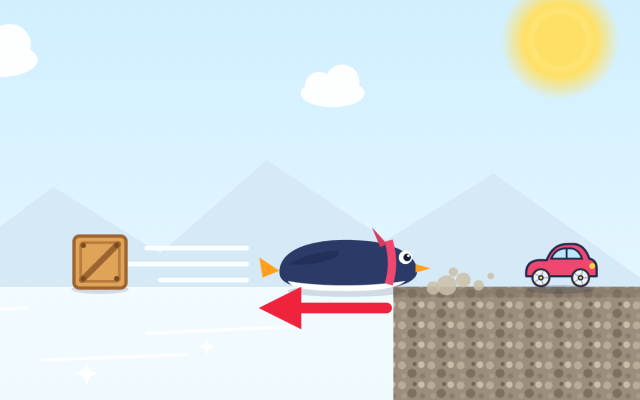
Players rub cartoon hands together to feel the heat friction makes, then run a fair test sliding a box across ice, wood, carpet and sandpaper. They time parachutes of different sizes, drop plasticine shapes through a tank of water and race boats with flat, round and pointed fronts. Along the way they meet the key idea that friction, air resistance and water resistance always push against the movement, and that streamlined shapes meet less resistance.
An optional warm-up reviews pushes, pulls and force arrows, and a ten-question challenge at the end checks what has stuck.
Questions and answers
What is friction, in simple words?
Friction is a force between two surfaces that rub or slide against each other, and it pushes against the movement. Tiny bumps on the surfaces catch on each other, so rough surfaces like sandpaper grip more than smooth ones like ice. Friction also turns some movement into heat.
Why does a bigger parachute fall more slowly?
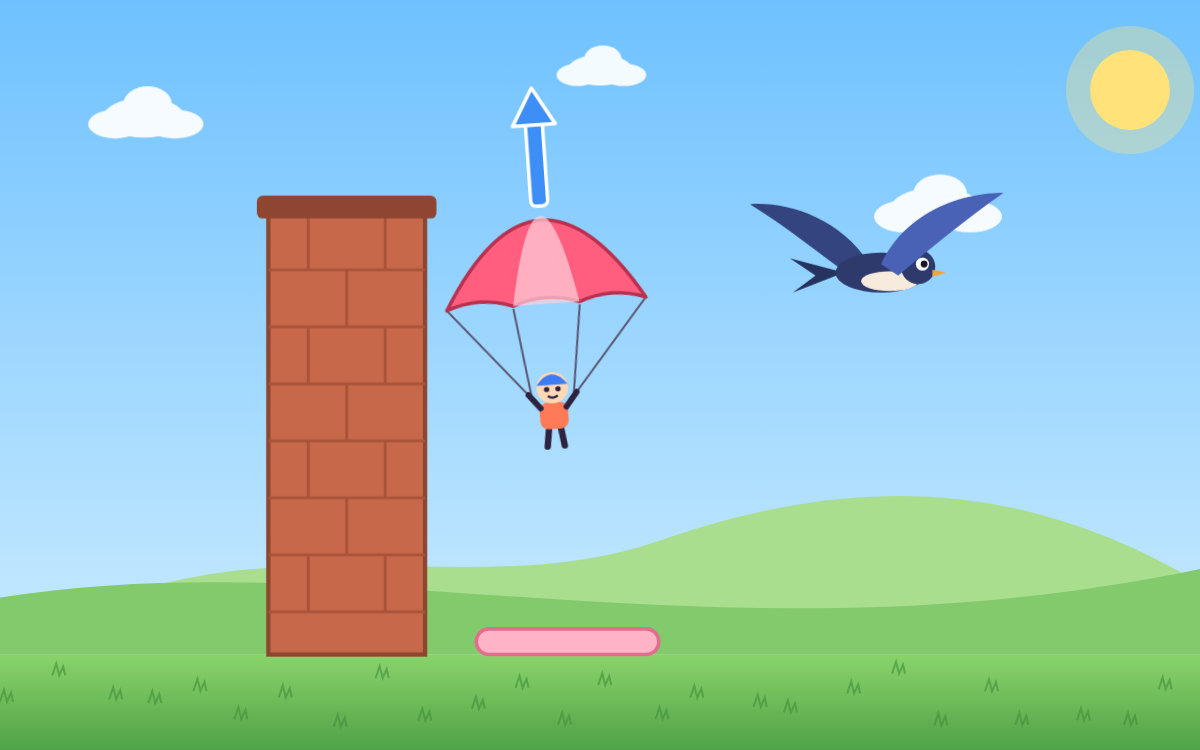
A bigger parachute falls more slowly because its large canopy pushes against more air, creating more air resistance. Air resistance pushes upwards while gravity pulls downwards, so the extra push slows the fall and gives a gentler landing.
Why are sharks and boats a pointed, streamlined shape?
A pointed, smooth shape lets water flow past easily, so it meets less water resistance and can move faster. Flat, wide shapes have to push much more water out of the way, which slows them down. Sharks, dolphins, penguins and speedboats all use streamlining.
What age is this forces game suitable for?
The game is designed for children aged 8 to 11, and it follows the Year 5 forces objective about air resistance, water resistance and friction in the national curriculum for England. Younger children can play along with an adult, as every line is read aloud.
What does the game include and how long does it take?
It includes an optional warm-up, four chapters with hands-on experiments and a ten-question final challenge, taking about 45 minutes to play through. Chapters can be played separately in any order, so it also works in shorter sessions.



 TapLearn