Likes and Dislikes in French: Hobbies with Noisette
Learn to say what you like and dislike in French with j'aime, je n'aime pas and parce que, then chat with friends about sports, hobbies and food.
Online game, chapter 1 free · Years 3 to 6 (KS2) · ages 7–11 · national curriculum in England · no adverts · plays on a phone, tablet or computer · no sign-up to start.
An online languages game for Years 3 to 6 (KS2). It covers the national curriculum in England, Years 3–6 languages: “Speak in sentences, using familiar vocabulary, phrases and basic language structures”, and 2 more statements listed under the chapters.
5 short chapters, about 45 minutes in all. Children can stop after any chapter.
Start playing for free. Plays in the browser on phones, tablets and computers: no app, no adverts.
Free for teachers: every chapter on the whiteboard with a free teacher account.
Last updated · Checked against the national curriculum in England by the TapLearn team
What you'll learn
Eighteen French words for sports, hobbies and foods, with le, la or les
Saying likes and dislikes with j'aime and je n'aime pas
Showing strong feelings with j'adore (I love) and je déteste (I hate)
Giving a reason with parce que c'est and an opinion adjective
Asking Tu aimes …? And replying moi aussi or pas moi
Writing opinion sentences from memory, using the ne … pas sandwich
Chapter by chapter
Name sports and say j'aime or je n'aime pasStart playing for free
Learn six sports with le or la, then say what you like and don't like in sentences with j'aime and je n'aime pas by listening, building sentences and telling Chloé (the ne … pas sandwich).
Years 3–6 languages · 1Years 3–6 languages · 2
Name hobbies and show how much you like them with j'adore and je déteste
Learn six hobbies, including the false friend la lecture (reading), and use a heart meter to express opinions from j'adore (I love) to je déteste (I hate) in full sentences.
Years 3–6 languages · 1Years 3–6 languages · 2
Name foods and say why with parce que c'est
Learn six foods and opinion adjectives such as délicieux, génial, nul and ennuyeux, then give opinions with reasons using parce que c'est, matching each reason to the feeling.
Years 3–6 languages · 2Years 3–6 languages · 1
Ask a friend what they like, answer and ask why
Ask and answer questions in a short conversation with Tu aimes … ?, oui and non replies, Pourquoi ?, moi aussi and pas moi, and seek help with Comment dit-on ça en français ?
Years 3–6 languages · 2Years 3–6 languages · 1
Write French opinion sentences from memory
Spot correctly written sentences, change words to make new ones, then write phrases from memory and a three-sentence postcard, checking apostrophes, le, la or les, and ne … pas.
What the chapters cover in the national curriculum in England:
Years 3–6 languages: Speak in sentences, using familiar vocabulary, phrases and basic language structures
Years 3–6 languages: Engage in conversations; ask and answer questions; express opinions and respond to those of others; seek clarification and help
Years 3–6 languages: Write phrases from memory, and adapt these to create new sentences, to express ideas clearly
About this adventure
Likes and Dislikes in French is an interactive game that teaches children aged 7–11 to name sports, hobbies and foods in French and say what they like, what they don't like and why. It follows the KS2 languages curriculum for Years 3 to 6.
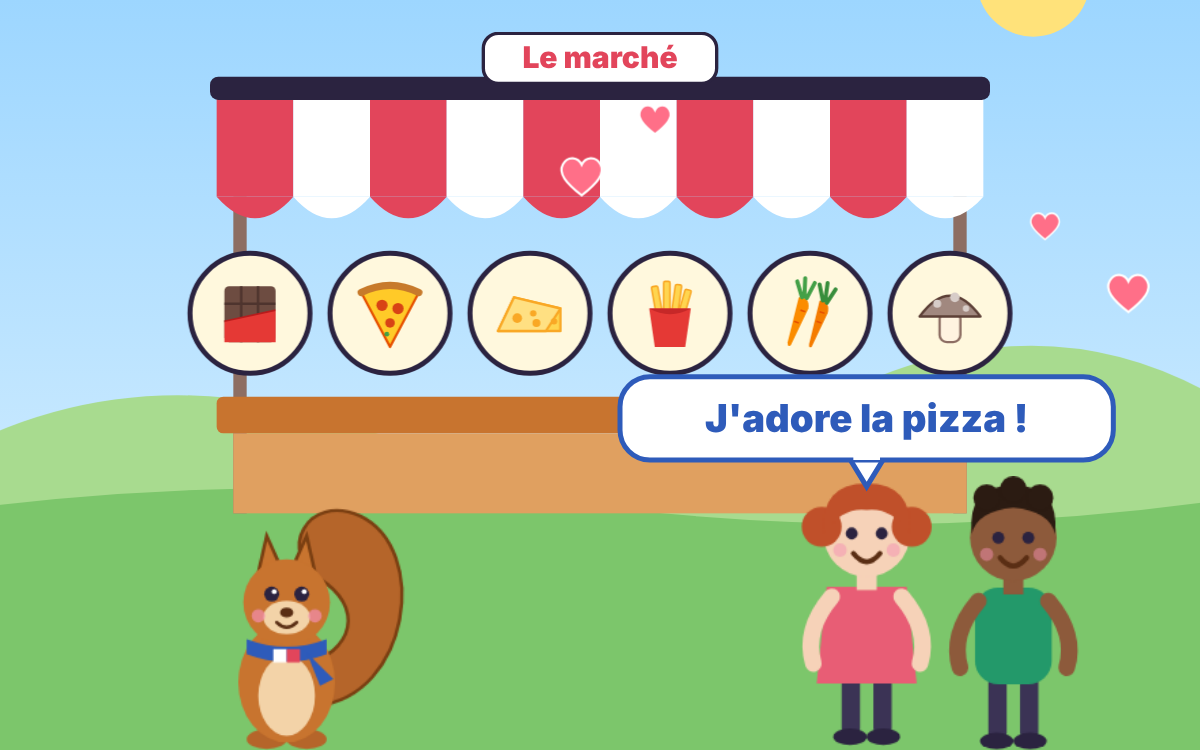
Guided by Noisette the squirrel, players explore a French village with Chloé and Malik. They hear every word in French, read a 'sounds like' guide and build sentences with j'aime (I like), je n'aime pas (I don't like), j'adore and je déteste, adding a reason with parce que c'est (because it's).
Along the way they learn why French keeps le, la or les in front of a noun, how ne and pas wrap around the verb like a sandwich, and how a question rises at the end. They finish by writing a postcard from memory and taking a 10-question challenge.
Questions and answers
How do you say I like and I don't like in French?
You say j'aime for I like and je n'aime pas for I don't like, for example j'aime le tennis and je n'aime pas le rugby. Ne and pas wrap around aime like a sandwich, and ne shortens to n' before a vowel.
Why do you say j'aime le chocolat and not j'aime chocolat?
French keeps the little word le, la or les when you talk about a thing in general, so you say j'aime le chocolat. English leaves that word out, which is why children learning French often forget it.
How do you say because in French?
Because is parce que, and children usually add c'est and an opinion word, such as parce que c'est amusant (because it's fun) or parce que c'est nul (because it's rubbish). To ask why, you say Pourquoi?
What age is this French likes and dislikes game for?
It is made for children aged 7 to 11 in KS2 French, Years 3 to 6. Younger players can focus on listening and building sentences, while older ones also write sentences from memory and a short postcard.
What does the game include and how long does it take?
There are five chapters, on sports, hobbies, foods with reasons, asking a friend and writing, plus a 10-question challenge. Playing everything takes about 45 minutes, and children can start any chapter from the village map.
We count visits to make TapLearn better.We use one cookie, only on this site, to see how families find and use it. No adverts, and nothing is shared.One cookie, only on this site. No adverts.How we measure

 TapLearn