French Greetings: Say Bonjour in a Little French Village
Learn French greetings: say hello, ask names and ask how someone is, then chat with villagers using real French sounds and question tunes.
Online game, chapter 1 free · Years 3 and 4 (KS2) · ages 7–9 · national curriculum in England · no adverts · plays on a phone, tablet or computer · no sign-up to start.
An online languages game for Years 3 and 4 (KS2). It covers the national curriculum in England, Years 3–6 languages: “Listen attentively to spoken language and show understanding by joining in and responding”, and 2 more statements listed under the chapters.
4 short chapters, about 40 minutes in all. Children can stop after any chapter.
Start playing for free. Plays in the browser on phones, tablets and computers: no app, no adverts.
Free for teachers: every chapter on the whiteboard with a free teacher account.
Last updated · Checked against the national curriculum in England by the TapLearn team
What you'll learn
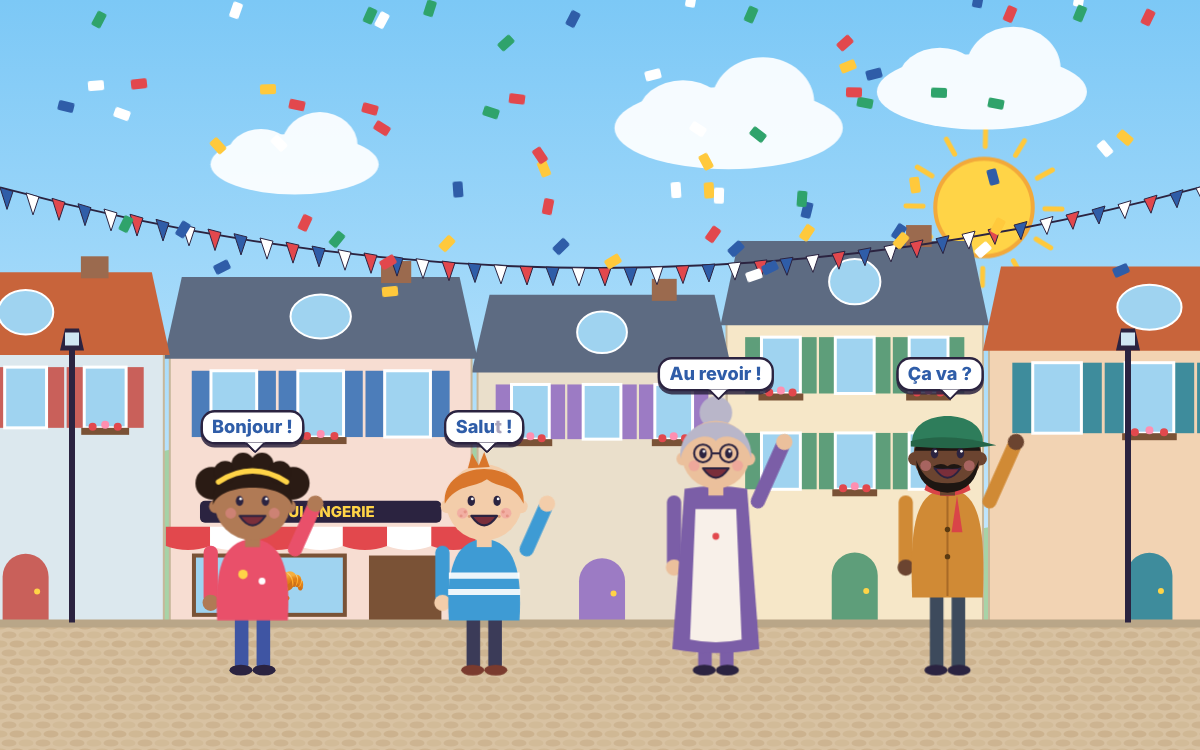
When to say bonjour, salut, bonsoir and au revoir
How to ask someone's name and answer with je m'appelle
How to ask ça va? And say how you feel in French
How to ask back with et toi? To keep a chat going
How to ask someone to repeat: Pardon? Répète, s'il te plaît! French sounds: silent letters, the cedilla and a rising question tune
Chapter by chapter
Say hello and goodbye in FrenchStart playing for free
Years 3–6 languages · 1Years 3–6 languages · 2
Ask someone's name and say yours in French
Years 3–6 languages · 1Years 3–6 languages · 3Years 3–6 languages · 2
Ask how someone is and say how you feel in French
Years 3–6 languages · 1Years 3–6 languages · 3Years 3–6 languages · 2
Listen and reply in a French chat, and ask someone to repeat
What the chapters cover in the national curriculum in England:
Years 3–6 languages: Listen attentively to spoken language and show understanding by joining in and responding
Years 3–6 languages: Develop accurate pronunciation and intonation so that others understand when they are reading aloud or using familiar words and phrases
Years 3–6 languages: Engage in conversations; ask and answer questions; express opinions and respond to those of others; seek clarification and help
About this adventure
French Greetings is an interactive game that teaches children aged 7–9 how to say hello and goodbye, ask someone's name and ask how someone is in French. It follows the KS2 languages curriculum for Year 3 and needs no earlier French.
Players explore a little French village with Minou the cat, meeting Léa, Hugo, their teacher and a neighbour. They hear each phrase in a French voice, read a 'sounds like' guide and say it out loud, then pick the right greeting for the time of day and the person, build sentences and reply in short conversations.
Along the way they meet key pronunciation ideas: silent letters (the t in salut), the cedilla that makes ç sound like s, and intonation, where the voice rises at the end of a question. A 10-question challenge checks what they remember.
Questions and answers
How do you say hello in French?
You say bonjour (bon-ZHOOR) to anyone during the day, and salut (sa-LOO) as a friendly hi to friends and family. In the evening, French speakers switch to bonsoir, which means good evening, and au revoir means goodbye.
How do you say 'my name is' in French?
You say je m'appelle followed by your name, for example 'Je m'appelle Léa.' It literally means 'I call myself', so there is no extra word for 'is'. To ask someone's name, say 'Comment tu t'appelles?'
How do you answer ça va in French?
Ça va? Means 'How are you?' You can answer très bien (very well), ça va bien (I'm fine), comme ci, comme ça (so-so) or ça ne va pas (I'm not good), then ask back with et toi? (and you?).
What age is this French greetings game for?
It is made for children aged 7 to 9, mainly Year 3 at the start of KS2 French, and needs no earlier French. Year 4 children can use it to revise greetings and practise pronunciation.
How long does the French greetings game take to play?
Playing all four chapters and the 10-question challenge takes about 40 minutes. Each chapter mixes listening, say-it-aloud practice and quick questions, and children can open any chapter from the village map.
We count visits to make TapLearn better.We use one cookie, only on this site, to see how families find and use it. No adverts, and nothing is shared.One cookie, only on this site. No adverts.How we measure

 TapLearn