What you'll learn
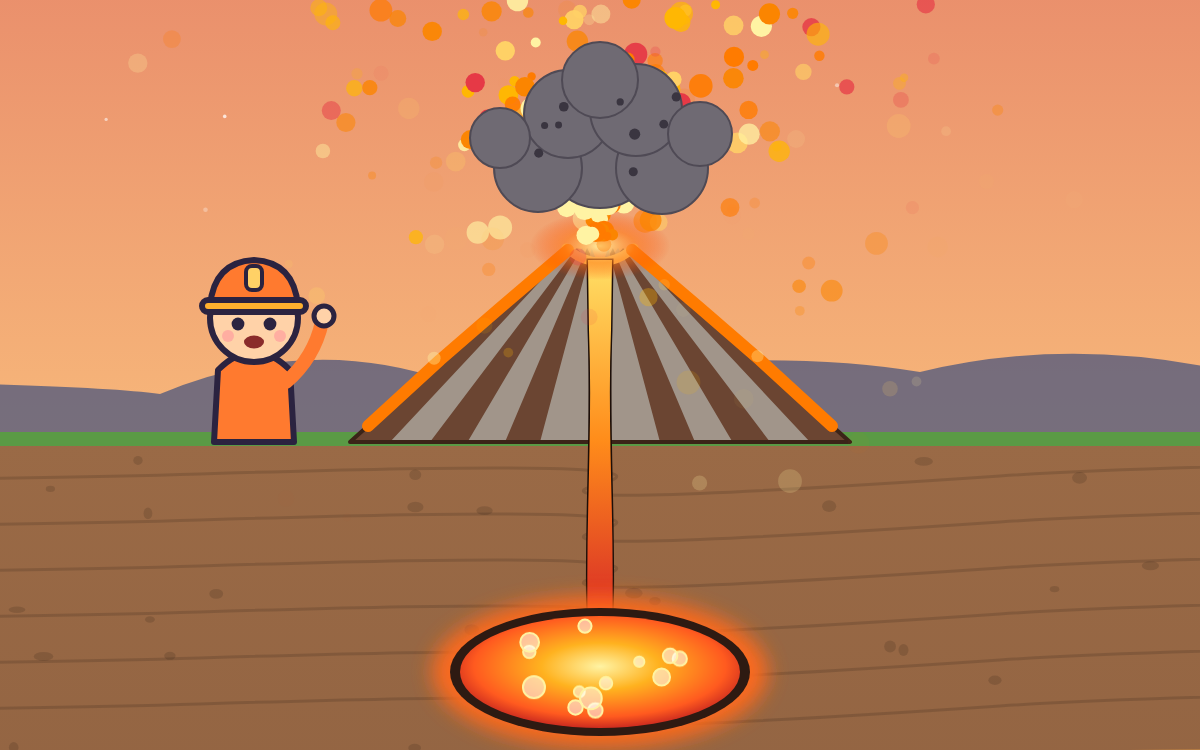
- Name the magma chamber, main vent, crater, side vent and ash cloud
- The difference between magma underground and lava above ground
- How gas pressure in magma makes a volcano erupt
- Why most volcanoes form where tectonic plates meet
- Where the Ring of Fire is and which ocean it surrounds
- What active, dormant and extinct volcanoes mean
Chapter by chapter
- What is a volcano? Magma chamber, vent, crater, magma and lava Free to try
Years 3–6 geography · 1
- Why volcanoes erupt: magma, gas and pressure
Years 3–6 geography · 1
- Where volcanoes are found: tectonic plates and the Ring of Fire
Years 3–6 geography · 1
- Active, dormant and extinct volcanoes
Years 3–6 geography · 1
- Final Volcano Challenge (10 questions)
See every Earth & Geography chapter in the chapter library
What the chapters cover in the national curriculum in England:
- Years 3–6 geography: Describe and understand key aspects of physical geography, including: climate zones, biomes and vegetation belts, rivers, mountains, volcanoes and earthquakes, and the water cycle
About this adventure
Volcano Explorers is an interactive geography game that teaches children aged 7–11 about volcanoes: what they are, why they erupt and where in the world they are found. It follows the KS2 Geography curriculum for England and is pitched at Year 4.
Guided by Vee, a volcanologist, players build a cut-away volcano part by part, push melted rock up the main vent and watch magma (melted rock underground) become lava (melted rock above ground). They pump gas into the magma chamber until the pressure makes the volcano erupt, then slide tectonic plates together and apart to see how volcanoes form.
Along the way they bust common myths, such as magma coming from the Earth's core, and meet real places like Mount Fuji, Iceland and Edinburgh Castle. Every line is read aloud, and a 10-question challenge checks what they remember.
Questions and answers
Why do volcanoes erupt, in simple words?
Volcanoes erupt because gas trapped in magma builds up pressure underground. Magma is lighter than the solid rock around it, so it rises into a magma chamber, and when the pressure gets too great it bursts up the vent and out as lava, ash and gas.
What is the difference between magma and lava?
Magma and lava are the same melted rock in different places. It is called magma while it is still underground, and lava once it has come out of a volcano. When lava cools down, it hardens into new rock.
Where are most volcanoes found?
Most volcanoes are found where tectonic plates meet. About three quarters of the world's active volcanoes sit on the Ring of Fire, a horseshoe of volcanoes around the Pacific Ocean, but some, like Hawaii's, form over hotspots in the middle of a plate.
What age is this volcano game for?
The game is for children aged 7 to 11 and is pitched mainly at Year 4, when volcanoes are usually taught in KS2 Geography. Spoken narration and short captions mean younger or less confident readers can follow along.
What does the volcano game include and how long does it take?
The game has four chapters and a 10-question final challenge, and takes about 40 minutes to play from start to finish. Players can pick any chapter from the island menu and come back to the rest later.




 TapLearn